Why Does He Get to Just Do That?

Join my Patreon to get early access to posts, plus bonus material and a backlog of essays, fiction, and games!
As I continue grappling with understanding and crafting good stories, one trend I’ve noticed is how a villain will make me ask the deceptively simple question, “Why does he get to just do that?”
The Kill James Bond podcast led me to watch several of the Bond films. They vary wildly in quality, which I expect when a franchise has been going for 60+ years. Skyfall (2012) was one of those films that I enjoyed a lot in the theater but couldn’t be bothered to watch a second time. The Austin Powers trilogy so effectively mocked the tropes of classic Bond that it forced the Daniel Craig movies to take a more serious approach. The series has always chased trends, and the influences of Star Wars, kung fu movies, the Rambo movies, the Mission: Impossible films, the general parkour trend in action movies, and the Bourne trilogy have all shown themselves in Bond films. During Daniel Craig’s tenure, the character was persistently miserable and desperate, interrupted mainly by intense, tragic love affairs. Bond movies have traditionally been a bit campy, with Bond using silly gadgets and dropping bad puns, which made it easier to overlook flaws in the plotting. Putting James Bond into a deathtrap instead of just shooting him is silly, but when the guy behind it is a gold-obsessed weirdo literally named “Auric Goldfinger” (who has a woman named Pussy Galore as his personal pilot no less), it’s a lot easier to overlook.
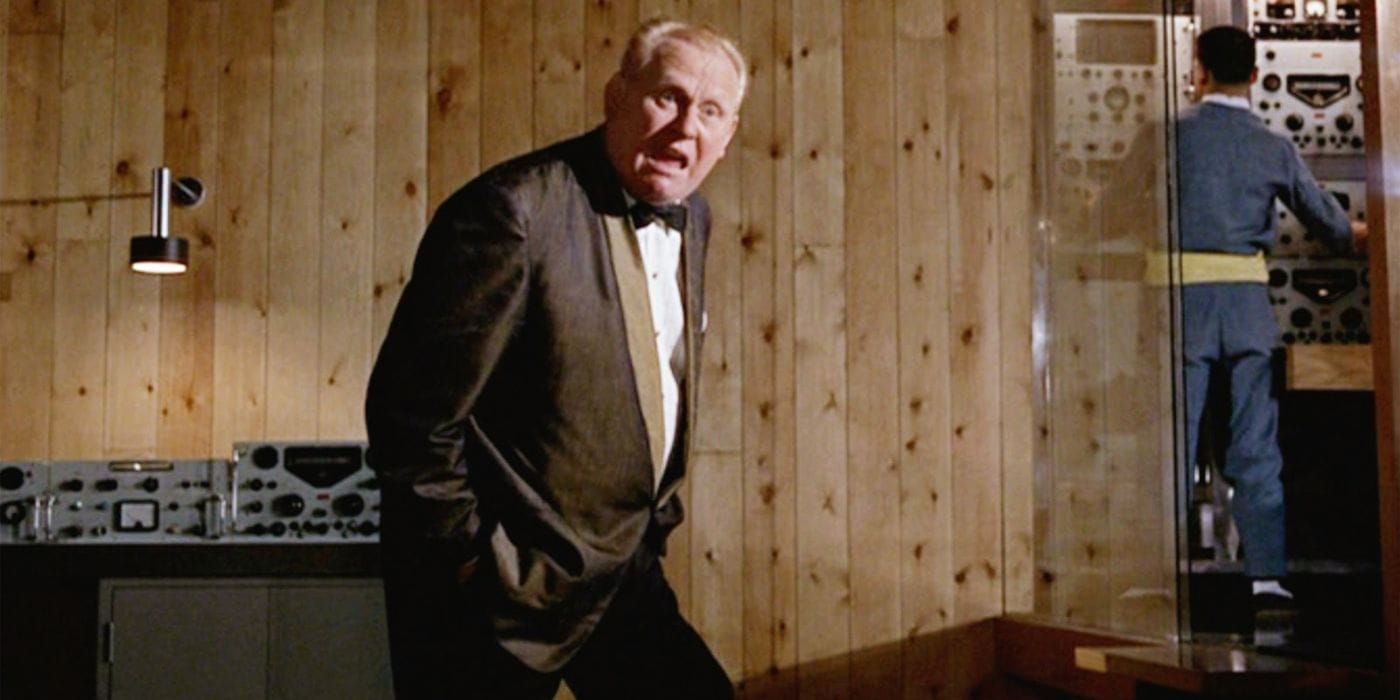
In Skyfall, a former MI6 agent named Raoul Silva is executing a complex plan to take revenge for how M sold him out in exchange for the return of six other agents. It’s a really compelling setup for a Bond story that asks questions about why agents loyally serve a government that treats them as disposable, and Javier Bardem is great in the role of Silva. Problems arise when he’s executing his plan, which has countless points of failure. His gambit involves deliberately letting himself get captured, which is great for villainous menace, but less so for a plan plausibly working. It relies on Silva letting them capture his laptop, which he’s loaded with a virus that will wreak havoc on MI6. Now, in real life, if you have a laptop from an adversary, you absolutely would not connect it directly to the network of a national intelligence agency, but we see Q happily attach not one but two ethernet cables. While a layman wouldn’t be able to point out the problems with that in as much detail as your average IT professional, it should be pretty obvious if you think about it. After Q does something incredibly stupid so the plot can continue, Silva escapes and Bond gives chase.
Later, Bond has Silva cornered and at gunpoint. In a catacomb under the London Underground, Silva is on a ladder, and Bond has a gun in his hand. Instead of taking the shot, he gives Silva enough time to activate a radio transmitter, which triggers a bomb that drops a subway train down into the area, forcing Bond to flee. Despite leaving me wondering why Bond hesitated, the bit with the train looked pretty badass, but it too falls apart under scrutiny. Bond could’ve easily shot him before he got a chance to set off the bomb, and there was no guarantee that the chase would’ve led to a confrontation in that particular location. Silva more or less keeps Just Doing That throughout the movie until Bond throws a knife into his back and kills him at the very end.
The Joker in The Dark Knight was an agent of chaos, but his cunning and sadistic plans nonetheless left so much to chance that he could’ve failed even without Batman trying to stop him. The trope where the villain lets himself get captured is rife with this. When the Joker is in police custody, he taunts a cop, giving him the opportunity to take the officer hostage, his only demand being to make a phone call. He calls a cellphone that was sewn into another inmate’s body along with a bomb, allowing him to escape. A cop with a cooler head could’ve unintentionally foiled that plan completely, not to mention the Gotham police easily could’ve put the Joker in a different cell, and probably should have put him in an isolated, high-security prison, given that he was Gotham’s most wanted.
Lex Luthor’s plan in Batman v. Superman only works if he successfully frames Superman, gets Batman to seek revenge, and Batman successfully steals kryptonite from him and weaponizes it. The “Martha” moment was silly, but Luthor’s scheme was poised to collapse the moment the two heroes actually talked to each other. In The Dark Knight Rises, Bane’s scheme requires luring the entire GCPD underground and then detonating bombs he and his minions have hidden all over Gotham to trap them and block all exits from the city. No sane police commissioner would send every cop into one place, and a conspiracy to plant that many explosives would run into all kinds of obstacles. But they really wanted to do the thing where Bane holds Gotham hostage and the police are out of the picture, and apparently that was the best the writers could come up with.
So what the heck is going on here? I see two major phenomena conspiring to produce bad writing.
The first is what I guess I’m going to call “two-dimensional writing.” While writing, it’s completely normal to first and foremost think about things from the protagonist’s perspective. With the possible exception of some intense use of mind-altering substances, a human being experiences every moment of their lives from their own distinct perspective. When you write from a character’s POV, it will shape not only the ways their perceptions filter events, but what those events are.
When a writer hasn’t given any thought to what happens off-camera, the results can be pretty bizarre. In Avengers: Infinity War we find out that the Red Skull is now on the planet Vormir, where he’s become the guardian of the Soul Stone (and acquired a new voice and accent for some reason). At the end of Avengers: Endgame, Steve Rogers travels through time off-camera to put all the Infinity Stones back. The movies made no comment on it, but fans realized that he would’ve inevitably run into this ethereal, cryptic version of his old nemesis.
Batman v. Superman frequently checks in with Lex Luthor but leaves out how he finds time to manage mercenaries overseas, send a long series of fake notes to Bruce Wayne, acquire kryptonite and deliberately let Bruce Wayne steal it, plant explosives in a lead-lined wheelchair to blow up a congressional hearing, piss in a jar as a taunt at Senator Finch, kidnap Martha Kent, and create a monster from a dead alien. On top of the contrivance of his plan, the sheer amount of logistics would keep him busy for weeks, to the point where the LexCorp board would be asking where he’s been. The focus was so much on the specific things that happened on-camera that the writing neglected to think through what happened off-camera.
The second issue is a villainous inverse of “plot armor,” which I’ll call “scheme armor.” Plot armor is when the protagonist can emerge unscathed from things that they probably shouldn’t, seemingly for the writer’s convenience. In Star Wars, the Storm Troopers’ inability to hit anything gets downright comedic, especially after Obi-Wan hyped up their pinpoint accuracy. They can mow down unnamed Rebels, but the blasts are a mild inconvenience for the heroes. The French parody spy film OSS 117: Lost in Rio mocks this tendency with a scene where the hero avoids getting peppered with dozens of bullets while standing in the open seemingly by sort of crouching. He even goes back for his stuff, despite the constant hail of bullets. The examples of the Joker and Silva show how villainous schemes also get a kind of metafictional “armor” against being foiled, even when it leads the narrative towards incoherence.
D&D borrowed the concept of “hit points” from naval wargames, and its success made the concept of abstracting damage into points become ubiquitous. A lot of people spend a lot of time immersed in worlds where things have X hit points, attacks do Y damage, and when a creature’s HP reaches zero, they’re dead or at least incapacitated. Damage to a living creature is more complicated than that of course, but TTRPGs with detailed systems for tracking specific wounds add complexity that most gamers aren’t on board for. While D&D textually encourages more nuance with characters potentially using negotiation, tricks, traps, intimidation, etc. to deal with enemies instead of always fighting head-on, in practice and especially in video games, a lot of fights go on until every enemy’s HP get whittled away.
A real-life opponent can potentially be whittled down, but it’s not unusual for MMA fights to end when one fighter gets in an impressive blow that abruptly brings an opponent down. When Jorge Masvidal fought Ben Askren at UFC 239, a long public rivalry went out the window when Masvidal charged in and delivered a punch that ended the fight in a mere five seconds, the fastest in UFC history. Obviously matches tend to take a bit longer—more like 15 minutes on average, and closer to 30 minutes for a five-round championship bout—but there have been matches that ended in one thunderous blow after mere seconds.
In stories, a fight that’s just a series of strikes and parries until one guy goes down is boring. The best fights have wider stakes and embody characters and themes. It’s why although the lightsaber fights in the Star Wars prequels are far better technically, the ones in the original trilogy had vastly more emotional weight. Compare Qui-Gon Jinn fighting the nearly silent Darth Maul who he’s barely even met to Luke Skywalker facing down Darth Vader, learning that Vader is his father, and losing a hand.
Even if a fight scene doesn’t have a lot of emotional weight, the fight itself can become a kind of storytelling. The better professional wrestlers are highly skilled at doing this, so that whoever wins, it feels like it happened for a reason, even if the show didn’t give them a chance to establish any motivations or stakes. Heels often succeed either by exploiting an opponent’s weakness or outright cheating. If the good guy hurt his leg, it’s all but inevitable that the bad guy will sadistically target that leg. If the bad guy is having trouble, he’ll get a friend to distract the referee and hit the good guy with a steel chair. MMA has shown us how little pro-wrestling resembles real fighting, but the whole point is that it’s a kind of athletic storytelling.
Fictional fights don’t have the mechanisms of real or even simulated fights to determine outcomes. You could roll dice and compare stats to determine a winner in a solo journaling RPG, but generally, a writer writes the ending of a fight without any formal guidance. One-sided battles where the outcome is clear and inevitable have their place (in pro-wrestling those are “squash matches”), but we generally want there to be some doubt and something the characters do that ultimately decides the outcome. Reality has chains of cause and effect, but they can be so obscure that from a human perspective they’re effectively random. However, storytelling is so fundamental to how we understand the world around us that we really want things to happen for a reason.
A conflict to thwart a villain’s scheme is essentially a fight on a larger scale, involving more than just the comparatively simple mechanisms of combat. In real life, conspiracies are difficult to actually keep secret. One of the most obvious counters to fake moon landing conspiracies is simply that the sheer number of people involved in the Apollo program means that leaks would’ve been inevitable. When bad actors get away with stuff in real life, they tend to do it out in the open, in ways that variously fade into the background or sit outside of what anyone with any real power can be bothered to stop. Enshittification makes our lives worse by prioritizing shareholder value over everything else, and it’s pervasive, underreported, and generally legal. The Iraq War was in part a program to force radical neoliberalism on Iraq, with devastating consequences for the Iraqi people and massive profits for Bush’s cronies. While opposition to the war helped propel Obama into office in 2008, hardly anyone talks about the inhuman economic ideology that underpinned it.
As with fights, a writer needs a villain’s scheme to last for the right amount of time. That could be anywhere from a half-hour TV episode to a multi-season arc of a series, but in films they tend to last up until the conclusion, so roughly two hours of screen time. Finding a way for a scheme to persist until a hero manages to bring it down is hard, and it becomes easy to fall into two-dimensional writing. Raoul Silva’s scheme in Skyfall is full of obvious points of failure, requiring incompetence on the part of what are supposed to be highly competent MI6 personnel. The Joker in The Dark Knight, despite being a force of chaos, has incredibly complex schemes with significant logistical hurdles, which are dependent on virtually all of Gotham’s underworld falling in line and the GPD being incompetent at key moments. In Spectre, Blofeld tells Bond that he’s “the author of all your pain,” retroactively making each villain from the previous Daniel Craig Bond movies into a minion doing his bidding. This turned the actions of Le Chiffre (Casino Royale), Dominic Green (Quantum of Solace), and Raoul Silva all into stuff that Blofeld orchestrated, but to anyone following the Daniel Craig Bond movies, it was obvious that the writers hadn’t planned that from the beginning. The revelation that Blofeld is Bond’s adoptive brother is even more contrived, and it doesn’t really accomplish anything.

In this framework I’ve just made up, scheme armor and plot armor are two common forms of two-dimensional writing, and it’s a common enough problem to routinely show up in big budget movies and other popular works of fiction. The antidote is “three-dimensional writing,” which means stopping to think through wider perspectives, even if they don’t directly matter to the story. It wouldn’t be all that hard to have the Joker or Raoul Silva succeed by less contrived means by working out how they get around competent opposition. The “captured on purpose” trope would mostly disappear, but there are a million other ways to have a villain taunt the heroes with what initially seems like unearned confidence. You don’t have to write and then toss out a chronicle of every moment of the villain’s day, but if readers step back and examine what he did, it should make sense. Good worldbuilding—and in realistic stories, a good understanding of how things work in real life—let a writer better anticipate what will and won’t make sense to audiences, but it’s also important to not be too attached to a single character’s perspective.
People have a lot of instincts that lead us away from rational thinking, but by understanding those, we can work around them. Two-dimensional writing plays into the inherent protagonism of inevitably perceiving the world from a first-person perspective, but we can learn to step back and think about multiple characters’ perspectives and the wider world. I regularly get reminded of Kumail Nanjiani’s comedy bit about how he, a Pakistani American comedian, tried out a Call of Duty game that took place in Karachi, only to find NPCs speaking Arabic instead of Urdu. The devs had found time to animate the characters’ shoelaces bouncing as they walked but couldn’t be bothered to google “Pakistan language.” Similarly, someone working on the script for Skyfall didn’t care enough to do a quick search to learn how computer security works, or else Q would’ve definitely had an air gap setup for Silva’s laptop.
For me, one of the joys of writing is that it leads me to learn more about aspects of the world at large. I’m currently reading Salt: A World History by Mark Kurlansky, in part because it seemed like it would give me more ideas for developing the fictional foods and practical setting details in Memes of the Prophets. I now have a page of notes about how different cultures in Galania acquire and use salt, and while it’s not the most important thing in my fictional world, it shows how a little curiosity can make your writing better and lead to something entertaining in its own right.