Zen and the Art of Character Arcs

Join my Patreon to get early access to posts, plus bonus material and a backlog of essays, fiction, and games!
“I always know who you are. It’s just sometimes I don’t recognize you.”
—Charles Xavier, Logan
I generally take the view that the true test of a piece of media is rewatchability. (Or however you’d phrase that for things like reading and listening.) A movie or TV series doesn’t have to have infinite rewatchability, but I keep running into titles where I like them okay the first time around but just can’t be bothered to watch a second time. I tend to instinctively divide media not into good and bad, but “stuff I like” and “stuff I don’t care about.” That’s good for being chill about stuff that isn’t for me, but it’s a problem when I want to deeply analyze stories. I’ve long felt like a “critic” is someone who reacts to their first time seeing a piece of media the way a normal person would their second, or fifth, or tenth, but that may be me trying to paint myself as the normal one. Regardless, there’s a certain critical instinct that I lack, so that I have to get there more via intellect.
I want to understand these things both as a writer trying to hone my craft and because understanding them is an interesting challenge. We live in a golden age of media in terms of production values, but other factors keep dragging shows down. I think the overall issue boils down to those other things getting in the way of telling a good story. Superhero films highlight that because of a combination of the disconnect between media and the sheer scale of those film productions. Comics and film are two very different formats, which has all sorts of consequences. Big film franchises try to shoehorn serialization into a medium that’s not really meant for it, at least not as practiced by the American film industry today, and the success of the MCU led Hollywood to chase after those kinds of franchises. The DCEU managed to be an also-ran with a thoroughly mixed track record, while others either succeeded by not overextending themselves (the Monsterverse) or fell apart almost immediately (the Dark Universe and the attempt at a Valiant Comics cinematic universe).
Comics are serialized yet agile. Marvel and DC are a little too willing to cancel a title that underperforms, but the amount of money, labor, and organization that goes into a comic is trivial compared to a blockbuster movie. I keep coming back to the way the MCU turned the Civil War into a two-hour film that took place over the course of a few days. The comic version of the Civil War event affected most Marvel Comics titles, and it came from a deep rift over a registration act that also allowed the U.S. government to conscript superhumans at will. Its effects filtered down to the smallest players in the setting, and while Marvel did of course return to some semblance of a familiar status quo, readers got to really feel its influence. The film version was essentially a conflict involving about a dozen people, and it was more about what to do with Bucky than the Sokovia Accords.
The process of making a modern film, especially an effects-heavy blockbuster, is grueling and staggeringly complex. I haven’t experienced it firsthand, but works like Superhero: A Novel and The Franchise comport with everything I’ve heard about the industry as they make it seem like a miracle that these movies get made at all, much less that some of them are good. A lone novelist can craft a narrative without having to worry much about others demanding changes, whereas a big film production is drowning in such demands. Executives, sponsors, government consultants, and actors make their own demands, and for better or for worse, sufficiently vocal fans can have a say too.
Television can ameliorate some of these problems, but it has its own set of challenges. Where films face pressure to keep to runtimes of around two hours, a successful TV series can face the burden of the studio wanting more episodes than the writers are ready to provide. When a movie runs too long, it’s usually due to either questionable decisions by an auteur director or a strike limiting the ability to cut it down to size in time for the original release date. Some shows get canceled before they can have a proper ending, and the presumption or at least hope of a continuation means that television seasons can be at least as bad as films when it comes to feeling the need to tease what’s coming next. When they’re always teetering between continuation and cancellation, it’s no wonder that multi-season TV series routinely fail to stick the landing.
When I think of series like Breaking Bad that did end well, I see that they put the story itself first, and neither stretched it out into extra seasons nor had actors demanding to stay or leave. For Babylon 5, J. Michael Straczynski was still working in syndicated television of the 1990s—not a good environment in terms of being sure to get enough seasons—and while he wasn’t completely successful at telling his intended story, he got a lot closer by crafting strategies to reduce those problems. He gave several characters “escape hatches” in case actors wanted to leave the show, and set the story up to allow for changes on the fly. When it looked like it was only getting four seasons instead of the intended five, he was able to craft a satisfying conclusion. When they got a fifth season anyway, it wound up stretching out too little material.
There are now a lot of titles that are excellent on production values, casting, and acting, but their downfall is writing, particularly when it comes to character arcs. Steven Moffat’s Sherlock (2010) was the first series I encountered that had incredible actors and production values but plots that completely fall apart under scrutiny. It wasn’t anywhere near the last. Game of Thrones had a good start owing to adapting well-written novels fairly faithfully, but fans disagree about when it went irredeemably downhill, not if. The showrunners were under a lot of pressure, and they stuck to their original plans—based on an outline from George R.R. Martin—even for moments that ended up feeling contrived or unearned. They clearly wanted the confrontation between the Hound and the Mountain to be a gripping conclusion to the stories of the two brothers, but by the time they got to the finale, it felt forced and perfunctory.
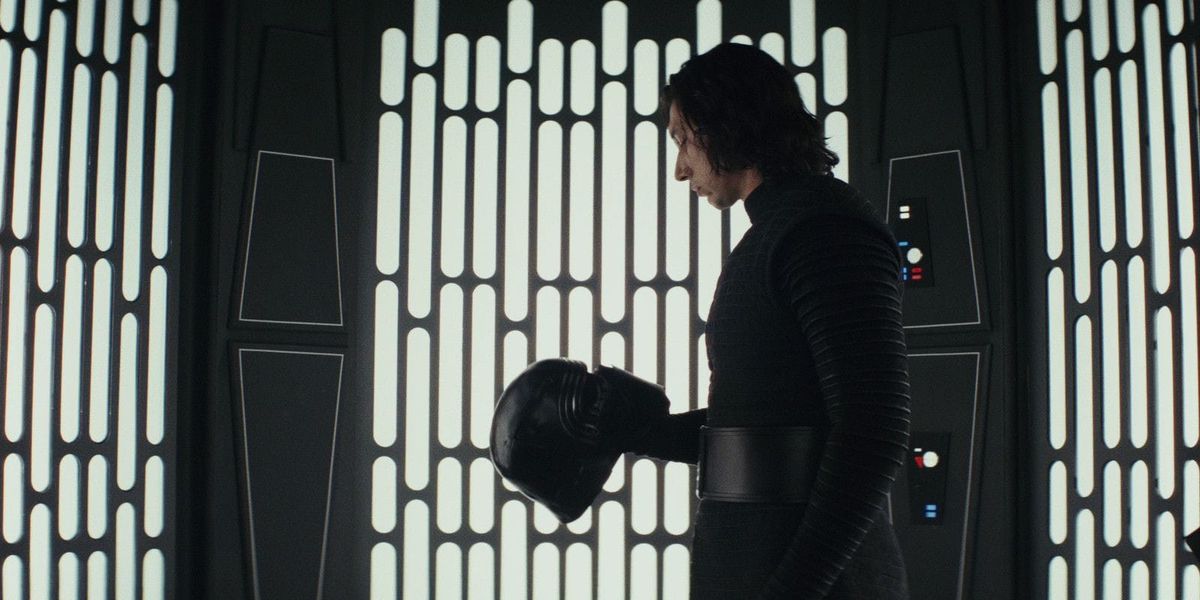
The Last Jedi got a decidedly mixed reception, and the complaints were a mix of legitimate, shallow, and missing the point completely. Rian Johnson made a meta-commentary on the Star Wars franchise, summed up by Kylo Ren’s line, “Let the past die. Kill it if you have to.”[1] In my life in general, I have a bad habit of clinging to things longer than I should. Some part of me fears change, even when it could make my life better. Job searches stress me out because of the leap into the unknown, even when I’m in a job that doesn’t pay well and that I kind of hate. That even extends to media, and I’ve stuck with some a lot longer than most out of habit or in pursuit of comfort. I eventually got tired of Epic Rap Battles of History and late night comedy, but it took a while. It’s one of the many things I’m trying to get better about as a person. Some things stand the test of time while others fade, and while there’s value in preserving as much media as possible, fetishistic or financially motivated continuation doesn’t serve the story itself. Sometimes studios manage to tap someone who can do something genuinely worthwhile with a legacy sequel project (Mad Max: Fury Road comes to mind), but that doesn’t happen a lot.
Killing the past is anathema to showbiz though. The stuff we remember from the past worked, and in the minds of Hollywood executives, it ought to work again and again, whereas original stories are a leap into the unknown. It’s a rare creator that has people clamoring for sequels and doesn’t give it to them, especially if the studio is determined to make it happen. Lily Wachowski made it blatantly clear that she directed The Matrix Resurrections not because she really wanted to do another Matrix movie, but because if she didn’t, WB would’ve gotten someone else to do it. Legacy sequels are routine now, and superhero movies in particular are foremost in the trend of mega-franchises where every entry has to double as a preview for the next thing, even when there’s no guarantee there’ll be a next thing. Capitalism demands that Number Go Up, and rarely listens to mere writers saying a story needs a different length than the people with the money want.
There are different ways to achieve a good story, but it’s very difficult to weave a good tale without good character development. Things like well-crafted prose, production values, and imaginative imagery also contribute, but one of the most central areas where stories fall flat is having nonexistent or nonsensical character arcs. When TV writers try to force more story, they often end up distorting character development, making characters’ behavior inconsistent or having story beats repeat.
Sequels have the pitfall that they then need new character arcs, but the easiest way to do that is to just retread the same arc as the first time. I have a hard time imagining a sequel to Groundhog Day actually working for example. If there were a movie called “Arbor Day” or whatever, Bill Murray’s character would need a new character arc that didn’t invalidate or retread the original, and a movie without him would just be another entry in the “trapped in a time loop” microgenre.
One of the major flaws with the Star Wars Extended Universe is how they treat the movies as so sacrosanct that any character from the films is frozen in amber. The events of the original trilogy profoundly change Luke Skywalker, from a naïve farmboy to a hero of the Rebellion and the foremost Jedi in the galaxy, and by the end he has fully accepted and integrated his identity as the son of Anakin Skywalker. The novels tended to just repeat what the movies did, and Luke became dramatically less compelling as a character. The Last Jedi’s portrayal as a cynical recluse wallowing in his failures was a shock to many dedicated fans, but the character badly needed to evolve, even if it didn’t necessarily have to be that specific direction.
While watching Amphibia I had the realization that one way for me to handle plotting is to ask myself, “What do they need to learn?” Amphibia is a cartoon series from Disney about a Thai American girl who winds up in a whimsical world populated by talking amphibians, and it’s a lot about growing and learning. Talking in terms of creating a “conflict” never really worked for me, I think because it’s not actually the correct fulcrum point. Turning everything into a lesson the protagonist needs to learn would become predictable, but it points to how characters, like people, need to grow and develop, to rise to the occasion. I don’t hold Joseph Campbell’s Hero’s Journey in high esteem, but the transformative nature of the journey is one thing he got right.
The isekai genre fundamentally demands a certain amount of character development. The archetypal isekai protagonist gets hit by a truck and goes from being a shut-in to having to adapt to a wildly different world, and sometimes a wildly different physical body. That crucible of personal change is one of the most compelling parts of the genre, which helps explain why audiences have so much appetite for new isekai titles. The LitRPG elements, the game mechanics that define characters’ lives, can cause all sorts of superficial growth in the sense of getting new skills and better stats, but that’s not a substitute for character growth. Those game elements can be part of the circumstances that lead characters to change and grow, but that’s no different from other setting elements.
In superhero stories, heroes often have some intense character development over the course of an origin story, but then tend to fall into whatever stagnant, archetypal version of the character the publisher thinks the audience will like best. New developments happen, but it’s rare for them to not fall prey to the “illusion of change” editorial policy. A lot of the superhero comics held in the highest esteem, like Watchmen and Kingdom Come, are more self-contained, doing what they do and coming to an end. DC has tried to do follow-ups to those titles, but they’ve largely failed, due to both the stature of the originals and the fact that continuations and spinoffs are in no way necessary. Watchmen lets the characters escape the samsara of endless serialization, so their character development is secure.
There are some exceptions, films that manage to be transcendent in some other area (Ghostbusters, The Big Lebowski, Indiana Jones and the Raiders of the Lost Ark), but I think character arcs are the crux of the issue I’ve been struggling to articulate. If there’s a “rewatchability crisis” in Hollywood, it originates principally in an arcless character crisis. Comedies can get away with it because their appeal lies in the jokes, which emerge from subverted expectations, and thus an overall context that creates amusing incongruities. The Dude can be a fairly static character because he lives in a hilariously kaleidoscopic world, letting him be the eye of a storm of yelling weirdos,[2] but by himself, he isn’t anywhere near the basis of an actual story. Not every story lives and dies by the strength of its character arcs, but Hollywood keeps trying to make the kinds of stories that do while turning most endings into sequel bait.
[1] It’s not really the point, but I thought Rey should’ve made the obvious retort, “Okay, let’s start by killing the First Order.”
[2] And I’m just now realizing that that’s what Sam Elliot’s monologues are really about.