Being Funny

Join my Patreon to get early access to posts, plus bonus material and a backlog of essays, fiction, and games!
I didn’t especially intend it that way, but a large portion of my creative content has been comedic. On DriveThruRPG, I made sections for Serious Games and Comedy Games, but the comedy category wound up being far bigger. Likewise, my fiction has some serious moments and themes, but it’s been more comedy than not. Naturally, I have thoughts about comedy. In the world of tabletop RPGs, comedy is a weird thing. In my experience it’s rare for anyone to sit down and play D&D without laughing a lot, whereas a lot of “comedy” RPGs fall flat. It’s legitimately hard to craft a TTRPG in such a way that people take it seriously, but explicitly designing for comedy is still a challenge, something few designers seem to do well. Some games like Ghostbusters and Maid RPG pull it off, but they’re exceptions to the rule.
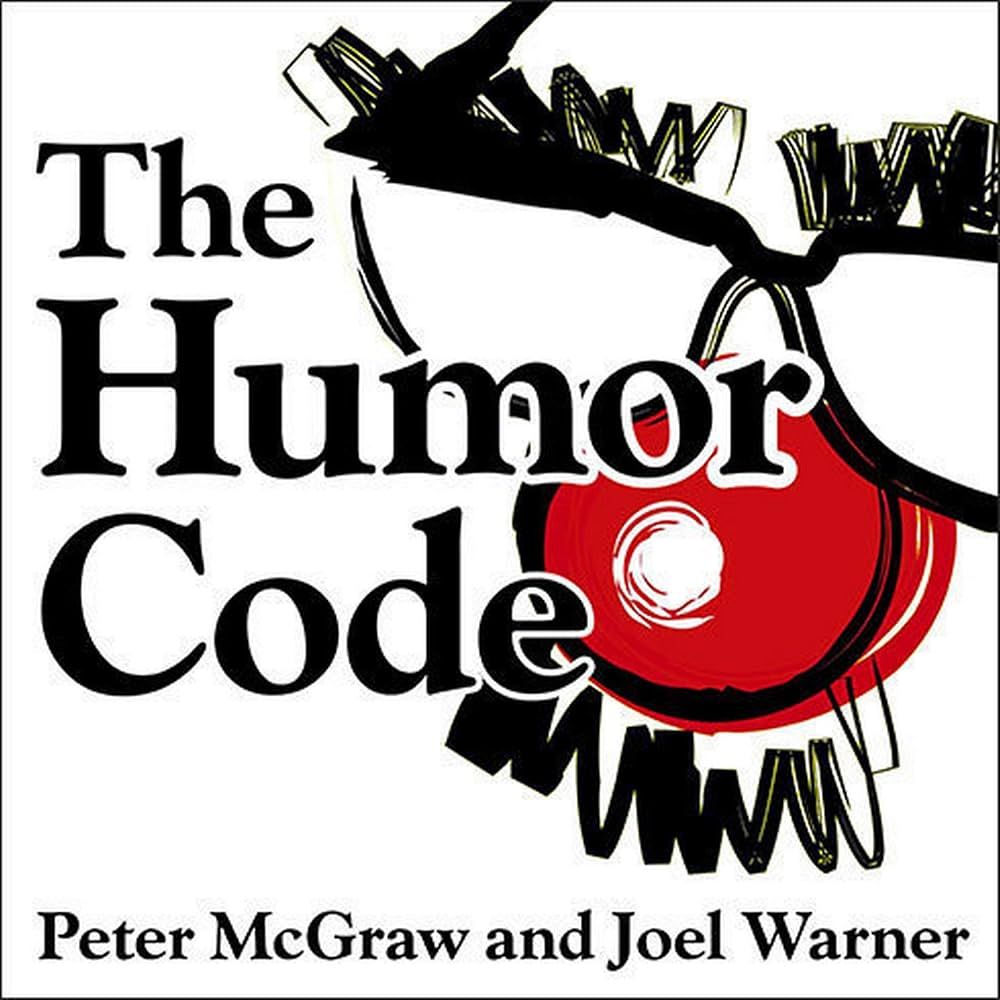
The question, “What makes something funny?” is surprisingly difficult, and there are countless theories on the subject. The book The Humor Code presents Peter McGraw’s “benign violation theory” by way of a chronicle of he and journalist Joel Warner traveling all over the world experiencing different kinds of comedy firsthand. Benign violation theory is basically the idea that laughter comes from violations of actual or perceived norms in ways that the audience can find benign. Puns are benign violations of how we expect language to work, and while they’re not exactly the highest form of comedy, a good pun gets a strong reaction, even if it’s just a groan. The theory isn’t a recipe for crafting good joke—you’re not likely to come up with something good by mechanically picking out violation and making it benign—but it’s a useful lens for understanding how a joke affects the audience.
There’s a cultural expectation that a father is the competent and strong Man of the House. The reality is mixed of course, but there are plenty of great dads out there. The Simpsons subverts that image by depicting Homer as a comically stupid man. Even though the dad being a dumb slob is enough of a sitcom trope to be predictable, the mismatch between perceived expectations of fatherhood and how Homer acts in the show still helps produce laughs. The series has declined in quality over the years, I think in part because it subverts a view of the American family from the late 1980s that isn’t nearly as relevant to most people. In Japan, The Simpsons was a flop from the start, most notable for the characters appearing in commercials for a soft drink called C.C. Lemon. Buffoonish fathers just don’t really work for Japanese audiences. The nearest equivalent in Japan is probably Sazae-san, a long-running manga and anime about the everyday life of a housewife and her family. Its humor is so situated in Japanese culture that it can be hard to even explain to an American audience, with gags that rely on benign violations of cultural concepts like hon’ne and tatemae.
Benign violation theory is also a handy way to explain why some jokes fall flat. Both what counts as a violation and what makes one benign varies between cultures, circumstances, and individuals. Some comedians complain about audiences becoming too sensitive, but it’s ultimately the simple fact that there are more people who don’t find the violations in their jokes to be benign. There are comedians who’ve managed to thread the needle of using a slur in a way that a lot of people find acceptable, but most have to either cultivate an audience that finds slurs funny or find something better to tell jokes about. No one is entitled to laughter, and acting like you are is a great way to be unfunny. I like to post jokes on social media, but I have the humility to recognize when one of my posts is a dud and just try to do better next time.
Games are in a sense systems for guiding certain kinds of human behavior, and TTRPGs are among the types of games that emphasize creative, social elements. That makes them instructive in terms of how they can foster comedy. D&D draws a ton of inspiration from mythology and fantasy literature, but it explicitly doesn’t try to recreate those kinds of narratives. Gygax would get letters from fans asking why a given thing in D&D doesn’t work like in Lord of the Rings, and he’d reply that D&D is D&D and not a Tolkien simulator. D&D tends to foster play where you have a diverse group of characters with divergent motivations and few ties to the world around them, and those characters go into a world that’s full to the brim with classic tropes, plus some truly strange original elements. Add in the distance between player and character, and PCs wind up being weird “murderhoboes,” who wander the land killing things and taking anything that isn’t nailed down. They also quickly become stronger and wealthier than average people, so they tend to run roughshod over normal society until a more powerful authority figure steps in.
There’s also the swingy d20, which lets characters randomly be transcendent or total chumps regardless of their purported level of competence. Critical hits were a popular house rule (that Gygax opposed), and while the D&D team at Wizards of the Coast has made them a routine part of the game for the past 25 years, a lot of people operate on the informal assumption that a natural 20 on any check is an exceptional success that ignores the DM’s original plans. A whole lot of funny D&D anecdotes involve a character getting a natural 20 that lets them do something incredible and out of character.
All of that utterly thwarts our ideas about how the fantasy genre is supposed to work. In books Gandalf is always dignified and Elric isn’t going to lose Stormbringer to a hungry rust monster. Your D&D characters meanwhile have a small but very real chance of getting a roll that makes their supposed areas of competence utterly meaningless, which can be hilarious or frustrating depending on how benign of a violation that turns out to be.
TTRPGs specifically marketed as being for comedy are often bad. I don’t think that’s because comedy is an invalid or even terribly difficult goal for a game, but rather because so many designers take the wrong approach. A lot of comedy TTRPGs are essentially mediocre or even non-functional games in books packed with lame jokes. The creators of the Ghostbusters RPG are luminaries of the industry and the game itself is excellent and ahead of its time, but the jokes in the books aren’t anywhere near the caliber of the movie.
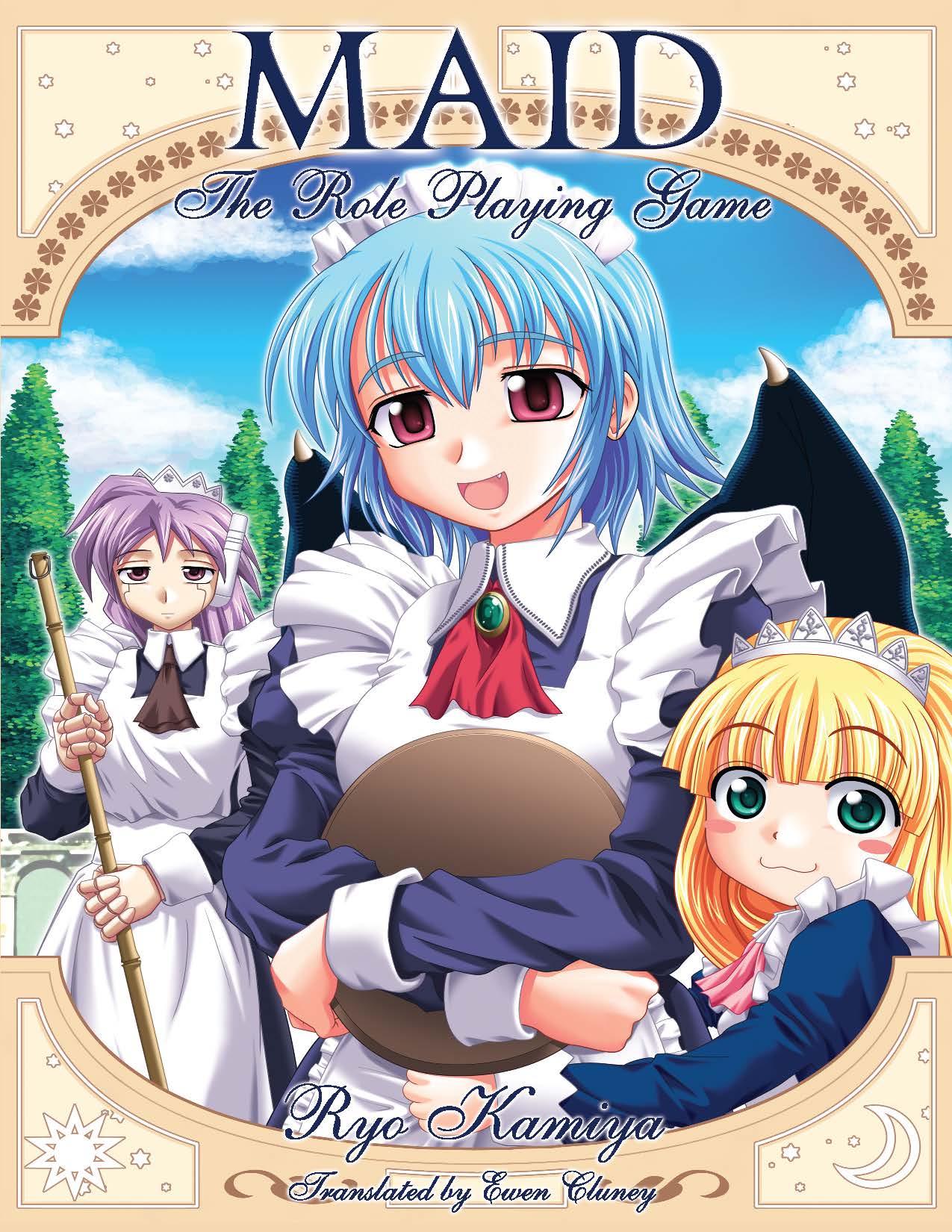
Generally speaking, a good TTRPG has a clear premise that it supports well. I have my share of criticisms about D&D, but its iconic status is in part because it has a simple and cohesive premise at its core. The better comedy RPGs support their tendency to foster comedy in part by putting a benign violation at the heart of the premise. Maid RPG not only has the conceit of maids serving a master who is blatantly weaker than them, but it uses randomness to such an extent that the dice continually thwart our ideas about basically everything. You can roll up a chainsaw-wielding cyborg mermaid out for revenge as your character, and if you’re using the random event rules it’s entirely possible that your quiet day at the mansion will devolve into a series of ninja attacks and dimensional portals. Not everyone finds role-playing as anime maids—something that can veer into fetish territory—a benign violation, but it did find an audience.
Comedic fiction writing is at its most effective when there’s a wider context to it, since that creates expectations that the writer can violate. Parody relies on an existing work or genre, so its benign violations come from taking on the audience’s expectations of that work or genre. Superman is a square-jawed paragon of justice, whereas parody characters like Superduperman and Wonder Wart-Hog are selfish weirdos. The Halo games have very serious storylines and fairly realistic sci-fi military action, but Red vs. Blue plays with our expectations of both the games and military life in general by presenting two squads of losers stuck in a box canyon. Any expectations of military competence or clear objectives from command go out the window, and all the gear featured in Halo’s multiplayer gets recontextualized as junk the teams have sitting around that may or may not ever be useful.
Humor is ultimately so human, so bound to context and culture and individual experience, that you can’t systematize it or make it predictable. Comedy TTRPGs work best when they combine a premise with a benign violation at its core and rules that allow for more spontaneous benign violations to spring up during play. Ghostbusters turns the terrifying supernatural into something that the Ghostbusters can usually confront with the nonchalance of an exterminator spraying for termites, and its “Ghost Die” adds a 1 in 6 chance of some extra chaos to every roll.
Some designers take the tack that “failure is funny,” but I’ve never found giving all the characters low stats so they fail rolls for things to produce all that much hilarity. Instead, success and failure can both be funny when they’re unexpected. To make them unexpected you need some kind of baseline that the audience can recognize, whether it comes from the characters’ typical results or the expectations of the genre.
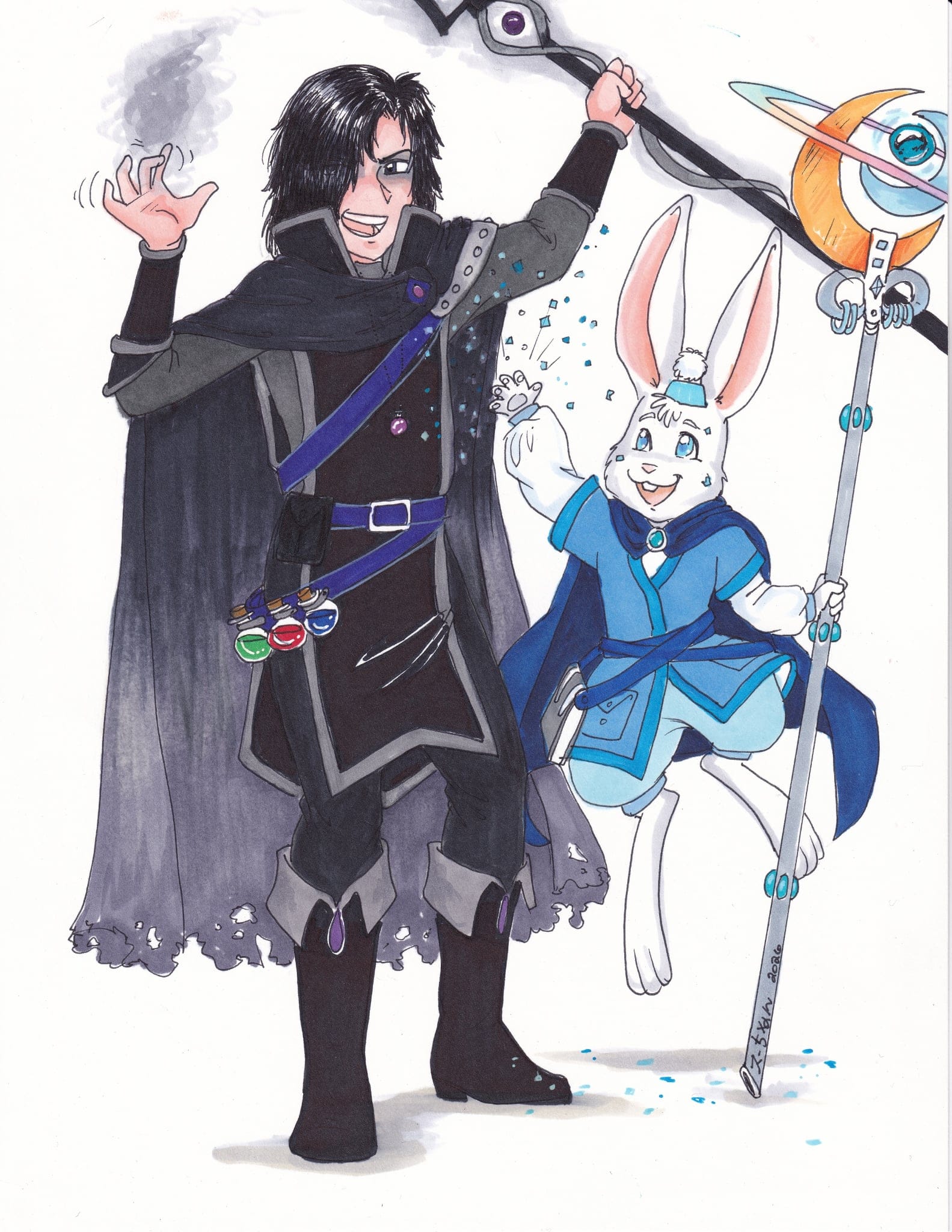
A character who fails all the time can be funny, but the failure itself isn’t likely to be the source of the humor. Memes of the Prophets features a guy named Clark, who is the self-proclaimed “World’s Greatest Shadowmancer.” One of the other characters is quick to point out that he’s actually a low-level mage who learned a handful of shadow spells and got delusions of grandeur, and the humor comes not from his failures but from his Main Character Syndrome and sheer persistence despite his paltry abilities. When he casts his Shadow Bolt spell and someone says it caused a mild itching, rather than rethinking his life, he’ll escalate to Shadow Barrage and then Shadow Storm. It’s a benign violation because Clark is just a loud guy at the local adventurers’ guild, whereas it wouldn’t be if I tried to get laughs out of, say, some guy walking up to Clark and beating the shit out of him. Clark is annoying, but he’s harmless to a fault. I get a lot of mileage out of having my characters run into annoying weirdos, really.
Explaining the joke this way risks running afoul of the old saying:
Analyzing humor is a bit like dissecting a frog: You learn how it works but you end up with a dead frog.
Even so, I think it’s worth looking at what makes a joke work, even if it’s more of an intellectual pursuit, and not a formula for writing jokes. I’m very firmly a “seat of the pants” writer, and jokes are mostly something I come up in the moment, like a lot of other things.