How I Do Worldbuilding

Join my Patreon to get early access to posts, plus bonus material and a backlog of essays, fiction, and games!
I got into anime in the mid-1990s, back when it was a niche fandom that people mostly just found confusing rather than cool or uncool. We were huge into Ranma ½, Tenchi Muyo!, Project A-ko, and others that have become even more obscure. (More people should watch Bubblegum Crisis for example.) One thing I’ve always noticed about anime is that it’s unusual for it to do all that much worldbuilding. Tenchi Muyo! has the kingdom of Jurai, with extremely powerful space trees and quasi-magical plant-based technology. We meet several members of the royal family and get glimpses of their homeworld, but there’s very little sense of what Juraian culture is really like apart from being vaguely like feudal Japan. Dragon Ball has a bonkers kitchen sink setting with cute high technology, ancient magic, mystical martial arts, and eventually weird aliens (most of whom have one or more of those other genre elements) and literal gods, but we don’t have much idea what everyday life is like apart from it being vaguely like modern Japan and having animal people running around (who are almost never of any consequence to the plot) and some whimsical technology. There are exceptions to the rule like Delicious in Dungeon and Fullmetal Alchemist, but overall, anime tends to be a lot more character driven. You may not know what kind of currency they use in Jurai, but you sure as hell know how Aeka and Ryoko feel about Tenchi.
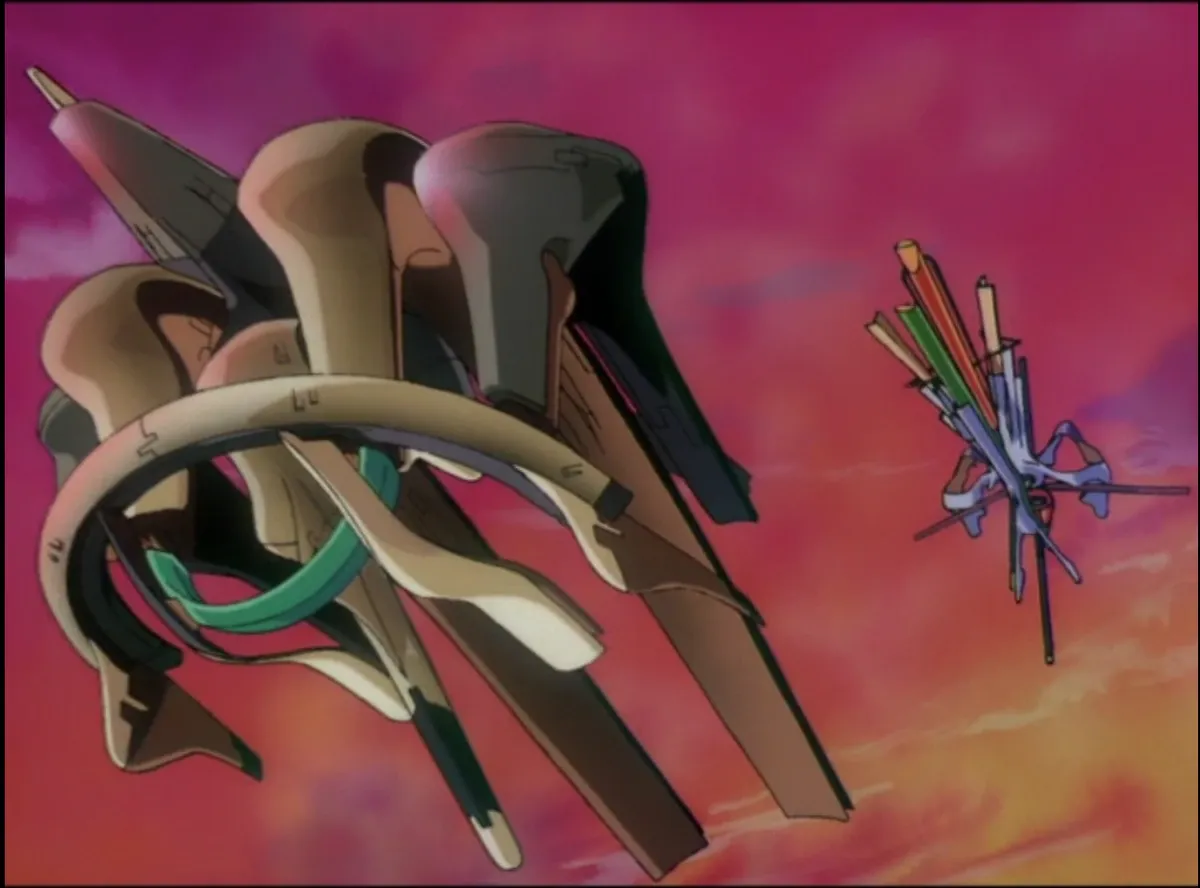
Isekai titles tend to follow this trend as well. Their baseline isn’t modern Japan but rather a kind of modernist take on the fantasy genre, with heavy influence from Japanese fantasy video games, including MMOs. It’s the fantasy genre via a game of telephone, where Dungeons & Dragons was one of the most important links in the chain. While the stereotypical isekai fantasy setting has a king and nobles, it also has a society where the general population are citizens free to live their lives. If farmers show up, they’re just commoners, without any indication that they’re serfs who can’t leave. Even if they don’t have indoor plumbing, these societies tend to be very modern in outlook. There are shops, currency (usually gold pieces), restaurants, entertainment, and so on.
A given title will typically have some distinctive setting elements, but overall, they tend to play out the tropes and focus more on the characters. KonoSuba has things like vicious but delicious cabbage creatures, the Crimson Magic Clan, and the specifics of the Demon King and his Generals, but it doesn’t try to create a novel setting per se. That’s partly because KonoSuba is a parody of the genre, but its focus is more on each character being a cynical, ridiculous take on an archetype. The NEET protagonist (Kazuma) is selfish and starts out still a loser, the party’s tank (Darkness) is an outright masochist who can’t hit anything, and so on.
With Memes of the Prophets, I’m doing a lot of worldbuilding. It isn’t so much a jab at other isekai stories—though I do see a lot of wasted potential there—but a natural result of me doing my thing with the genre. I was big into Star Trek and Babylon 5, ate up The Wheel of Time (until I eventually got tired of it), and more recently enjoyed Game of Thrones (the last book in the main series was in 2011 and I won’t even get into all the problems with how the series ended). While I don’t always enjoy the gameplay of BioWare games, their worldbuilding is usually great. The Dragon Age series has a lot of stock fantasy elements, but freely steps away from cliches to give players unique takes on things like elves, dwarves, and magic. Sci-fi doesn’t have as many established cliches as fantasy, but Mass Effect nonetheless has a more detailed and engaging setting than most. While I still find things to enjoy in titles that don’t do much worldbuilding (and those with real-life settings that don’t need it per se), good worldbuilding deepens themes and characters, and it helps a writer step away from tired cliches.
MotP prominently features elves. They’re a cliché in fantasy, to the point where “elf fatigue” has been a thing for a long time. Relatively early in the history of D&D, there were gamers championing dwarves and orcs and making “Elf: The Other White Meat” T-shirts. I didn’t completely defy convention, but my take on elves isn’t just lazy tropes. There are multiple elf ethnicities, but the story takes place in Eitania, where around half the population are Eitalethi, pale-skinned forest elves. They value beauty, excel in archery, and live about three times longer than humans, but there’s also a whole thing about how leaves are the core of their cuisine, to the point where “leafers” are a highly respected profession. Then there are the Kalanethi (which is actually the Eitalethi exonym; they call themselves “Haldara”), dark-skinned desert elves, who mostly live in the neighboring nation of Yunqarth. It didn’t take all that much to make my elves a bit more than a Tolkien knockoff, and dipping into what I’ve established about them makes it easy to think up new details. They have a certain distaste for the heavier food favored by the local humans (Calitanians), and regarding the “grundy” (a savory pastry with a bacon and onion filling), one elven chef remarked, “It’s called a ‘grundy.’ Humans eat them. We think it’s why they’re like that.”
Humor comes from perceived or actual benign violations of expectations (or at least that’s a theory of humor I find compelling), so worldbuilding can actually make for better comedy, since you have that much more of a baseline of expectations to violate. A lot of the humor in Dragon Ball Z Abridged derives from taking established details about the world and highlighting or recontextualizing them. We see the psychological toll of spending a year training in the white void of the Hyperbolic Time Chamber, Piccolo has to put up with the voices of the other Namekians he’s absorbed in his head, and the Capsule Corp is straining its finances repairing all the damage that the heroes’ epic battles cause. Team Four Star also invented some elements whole cloth for gags (Muffin Button), but they got a lot of mileage simply from coming at things from a different angle than Akira Toriyama.
Elements of a fictional world don’t have to—and to some extent shouldn’t—exactly follow how they work in real life, but the more you know how they work, the easier it is to craft a believable alternative. When I say that “Kalanethi” is the Eitalethi exonym (a rough translation of Haldara as “Oasis Walkers”), I’m referring to a very real phenomenon. In Japanese, Japan is called “Nihon” (日本, sometimes read as “Nippon”). Japanese people are “Nihonjin” (日本人), and the Japanese language is “Nihongo” (日本語). A combination of haphazard tradition and legitimate difficulties with foreign pronunciation leads us to use alternatives to the native words for things, which are called “exonyms.” “Japan” derives from the way the Portuguese interpreted a Chinese reading of “Nihon” as “Cipan,” likely further filtered through Malay as “Jipan.” In modern Mandarin, the Chinese characters used to write “Nihon” become “Rìběn,” and countless other languages have yet more exonyms for Japan. Some exonyms are close approximations of the native term (“France” in Japanese is Furansu/フランス), while others are wildly different (“China” is derived from the Qin Dynasty, and not directly related to the native term, Zhōngguó/中国, which means “Middle Kingdom”).
In MotP, most nations in the continent of Galania use “rings” as their main currency. Japanese fantasy and isekai media tend to default to “gold pieces” being the main currency, which is essentially a trope they inherited from the Japanese video game versions of D&D’s dungeon fantasy subgenre (which dropped the other metals). When I was trying to think about what kind of money they’d use in Eitania, I pulled up Wikipedia articles listing current, historical, and fictional currencies. It turns out that “gold pieces” were never really a thing in real life. In medieval times, people mostly used silver pennies, and nobles would accumulate barrels of the things. Gold coins did exist, but your average peasant never even laid eyes on one. The “platinum pieces” in D&D are even more ahistorical. Europeans didn’t discover platinum until the 1500s, and while archaeologists occasionally found it in burial items in Egypt and the Americas from long before that, it only became valuable to the world at large via its industrial uses in things like catalytic converters. Even then, it costs significantly less than gold.
There are exceptions, but most currencies throughout world history have round coins and later add paper bills. Most are also named for a unit of weight (pound, dollar, peso, etc.), with some Asian ones having names derived from the round shape of the coins (yen, won, yuan, etc). “Rings” as a currency started as a dumb Sonic the Hedgehog joke, but it made the money a little different from what’s in the typical fantasy setting. Keeping that in mind as the story kept going led me to develop other elements of the setting in various ways:
- It further developed how there was an ancient Galanian Empire, whose influence is still felt across the continent.
- It led to Eitanians marking marriages with bracelets rather than rings worn on the fingers. Finger rings aren’t really a thing in the culture.
- While purses are a common way to store rings, people also put them on strings.
- The currency symbols are circles with an S, G, or P in them to indicate the metal (Silver, Gold, or Platinum). If something at a shop costs 20 gold rings, it will typically have Ⓖ20 listed as the price.
- There’s also a thing where humans would say Ⓖ20 as “20 rings” (and specify if they mean silver or platinum), while elves tend to say “20 gold.” Naturally this causes confusion sometimes.
- The idea of “flipping a coin” is foreign to Eitanians unless they’re familiar with the dwarven nation of Ironforge, which is one of the few Galanian nations that uses coins instead of rings. If they need to decide something like that, they’ll roll a die or play Sword-Shield-Flail, the local equivalent of Rock-Paper-Scissors.
You can read about religion in my previous essay on the topic, but in short, it doesn’t work how a lot of people in the Western world think it does, owing to Christianity dominating our cultures despite being an outlier among religions. (I likened it to D&D’s status among TTRPGs, which may be in poor taste, but isn’t wrong.) In Memes of the Prophets, the religion of Valrunism does resemble Christianity significantly more than it would normally, but that was a deliberate choice I made, as a result of the copious Earth influence on the culture.
There are tons of articles on worldbuilding that list off various topics to consider, like climate, geography, species, languages, gender roles, politics, ethics, clothing, physical laws, cosmology, etc., and my friend Steven Savage did an entire series of books on the topic called Way With Worlds. Given all that precedent, I’m not going to retread that ground here. Instead, I want to talk about broader principles, albeit illustrated with numerous examples. You don’t have to address every possible aspect of your fictional world, but all of them are worth considering, especially if you can make them relevant. I wouldn’t normally care about how a world came to exist, but for example in MotP I decided that the gods literally created the world only about 10,000 years ago. It serves as both a contrast to Earth (which in my setting came about as described in modern science) and explains why there are no fossil fuels apart from some coal deposits that the gods put in place.
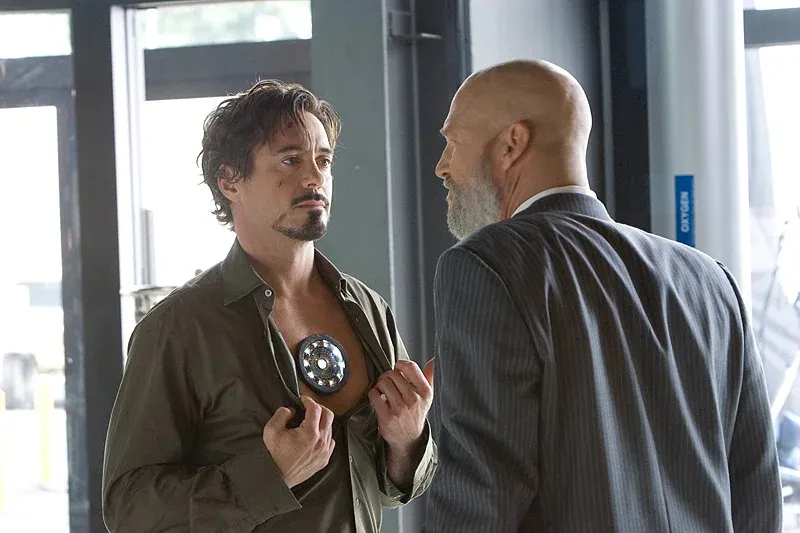
For me, worldbuilding is really about thinking through the implications of things. One of my critiques of superhero movie franchises is how they avoid doing substantive worldbuilding, even when it’s staring us in the face. In the first Iron Man movie, Tony Stark perfects a miniaturized arc reactor, letting him generate an amazing amount of power from a softball-sized device he made from scraps in a cave. In subsequent movies we see him build a bunch more suits and start powering Stark Tower with an arc reactor and… that’s about it. There could be a valid reason why there was no arc reactor energy revolution, no mass effort to switch everyone to arc reactor-powered cars and such, but Marvel Studios simply ignored it and moved on.
One of my pet peeves with J.J. Abrams’ entries in both Star Trek and Star Wars is that they introduce genre elements that are poised to be downright revolutionary for those settings, essentially as plot devices. Among the many problems with The Rise of Skywalker was how it introduced a bevy of new Force powers that, if they’re possible for other Force-users, could have an incalculable influence on the galaxy. Rey and Ben find that they start teleporting objects between them across interstellar distances, which would be a ridiculously useful trick for any Force-using spies and saboteurs. (The prisoner who appeared to be totally unarmed suddenly has a lightsaber and some thermal detonators, and he’s escaped and blown your base to hell!) While I found a lot to like about Rian Johnson’s The Last Jedi in terms of its deeper themes, it does have some of that kind of thing with Luke projecting across the galaxy and the Holdo Maneuver. It’s all genre fiction nonsense, so limitations and explanations are possible, but ideally they’d be things the writer has already thought about.
Alan Dean Foster, the king of sci-fi movie novelizations, wrote a memoir called The Director Should’ve Shot You. The book is mostly a series of essays about the different novelizations he’s done, from an obscure “jungle girl” flick he got to watch once in Italian without subtitles, up through franchises like Alien, Star Wars, and Transformers. He also wrote a chapter on writing the novelization of Star Trek Into Darkness, Abrams’ second and final Star Trek film from 2013. As a science fiction author and fan of science, Foster has tried many times to send feedback to filmmakers in the hopes of fixing the more blatant scientific errors and plot holes he finds. Most ignored him, a few took his advice, and after a productive chat with Vin Diesel on the set of The Chronicles of Riddick, he got an angry phone call from some executive demanding that he have no further contact with anyone in the production. (Once a movie has started production, changes cost extra money, even ones that make the end product stronger.)
For Star Trek Into Darkness, he tried to explain that it didn’t make sense for Khan to have a transporter take him from Earth all the way to the Klingon homeworld, and there were any number of ways he could more plausibly make a getaway and arrive on Qo'noS. There might be a way to make interstellar teleportation not completely upend the political order of the galaxy and greatly reduce the role of starships, but instead it was left poised to do exactly that. Foster’s novelization changed it so that Khan instead transported to a waiting ship he’d rigged it to travel so fast it burned out the engines, giving him a one-way express ticket. I haven’t read the novelization, but I really like how it turned questionable deus ex machina into a bold yet calculated maneuver by the villain.
These kinds of things can descend into nitpicking, but when the audience can see a hole in the story, the result is a less satisfying experience for them. Critics of The Last Jedi brought up how there was a continuity error with a knife used in the battle against Snoke’s guards, but a lot of people simply didn’t notice it. The film would’ve been better without that error, but not by a lot. The Holdo Maneuver was stunning as a filmic spectacle and as a character moment for Holdo, but it genuinely raised questions about why hyperspace acceleration attacks weren’t a routine thing. Most spaceships in the setting have hyperspace engines, and based on the established lore it wouldn’t be too difficult to build unmanned hyperspace weapons. The Rise of Skywalker included a throw-away line about how it was a million-to-one shot, which wasn’t especially satisfying. It raises the obvious question of why Holdo thought it was a viable option to head off the First Order’s assault on the Resistance if it was so likely to fail. There are any number of ways the writers could’ve either had Holdo sacrifice herself by different means or explained why the maneuver is possible but rarely used, and an Alan Dean Foster type could’ve spotted the issue before it got into theaters.
People aren’t always rational, but when a thing exists, someone will inevitably try to exploit it to their maximum advantage. A writer needs to consider what that means, and change or abandon ideas if necessary, and game designers really have to think about the devious ways players will wield game mechanics. I’m a fan of Ryan George’s Pitch Meeting skits, where he plays both Screenwriter Guy and Producer Guy (the writer wears glasses!), with the pitch essentially serving as a vehicle for critiquing plot holes and studio decisions. In those it’s very common for Producer Guy to ask, “Why doesn’t he just use [established element]?” and get a response of “Unclear!” or “I don’t know!” Like I’ve been harping on, there’s usually a way that these things could work, but someone has to notice and think it through. That’s yet another reason why it’s always good to have other people look over your work, though good critics will ask “How could this work?” rather than dismissing things out of hand.
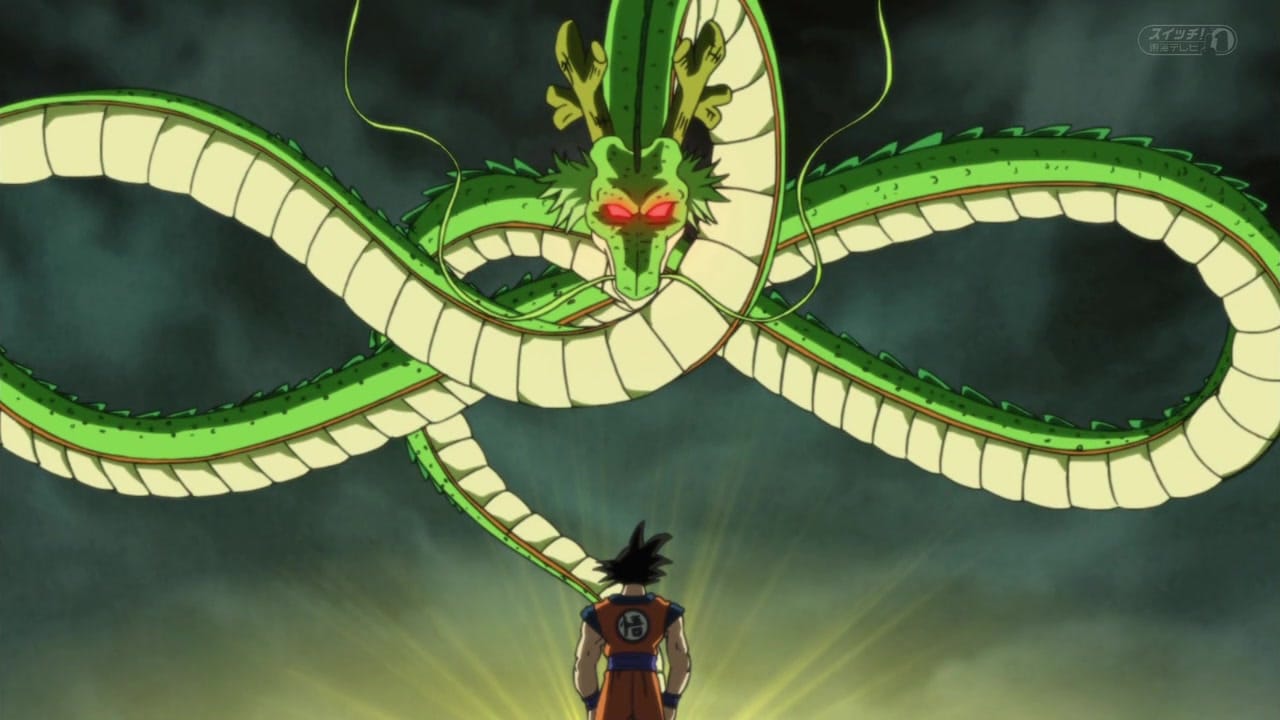
A writer can have magic, psionics, advanced technology, and so on do basically anything they want, but of course there’s a danger of it becoming unsatisfying deus ex machina. If you don’t want something to fix every problem, you need to think about what might be keeping it from doing so. In Dragon Ball, the titular magical orbs can grant wishes, and while they do let the heroes magically fix a lot of problems, they have enough limitations that the characters still have to struggle and fight hard to prevail. They have to collect all seven Dragon Balls and perform a simple ritual to summon the dragon who grants their wishes, but there are limits to the dragon’s power. (The specifics vary a bit, as there are multiple iterations of the dragon.) They can generally bring dead people back to life up to a point, restore destroyed cities and even planets, and so on, but they need the guy who created the Dragon Balls to be alive. The Dragon Balls become inert for a year after being used too, and of course if the bad guy kills everyone in the world, there won’t be anyone alive to make wishes. The dragon also can’t just make a powerful villain disappear or make the heroes invincible, so Goku and company have to find a way to defeat him. There’s also the fact that the Dragon Balls are just out there in the world, and while Bulma’s Dragon Radar lets the heroes find them more easily than anyone else, bad guys have managed to gather and use them on occasion, causing serious problems. All of those issues add up to a wish-granting plot device giving the characters a substantial advantage while leaving them plenty of serious challenges.
Fantasy writers often talk in terms of magic “systems,” where they create unique specifics of how magic works. In Wheel of Time, the “magic” is an ability to wield the raw power of creation, and there’s a lot of detail about how channelers weave together strands of elemental power, find the power downright addictive, and risk burning themselves out if they use too much. There’s also the part where the source is divided into male and female sides (Robert Jordan was big on gender essentialism), and the Dark One corrupted the male side, so that male channelers face madness and eventual death if they use their powers. That in turn means that the main organization of female channelers (the Aes Sedai) have a division dedicated to finding and de-powering male channelers (the Red Ajah), and a host of issues arise from that.
Magic doesn’t have to be super-unique or baroque, but it does need to have limitations. It’s also important to think its implications for the setting through, which means looking at what role it has in society. When people in real life believe in magic, they don’t generally see it as the sole purview of dedicated sorcerers so much as techniques anyone can potentially do if they know how. In Ancient Rome if you wanted to put a curse on someone, you didn’t have to find a warlock to do it for you, but rather you bought or made a curse tablet. Keeping magic as the domain of a select few (like in Lord of the Rings for example) means the writer doesn’t have to think quite so hard about its implications, but there will still be implications to consider.
Magic that objectively and reliably works is very different from real life as we experience it today, and like a technology, it can have all kinds of implications for society. In MotP I went as far as to develop the concept of a “Thaumaturgical Revolution,” which changed magic from an esoteric practice to a quasi-scientific one. It brought magic into the mainstream, and in the era when the novels take place, basically anyone can learn at least a couple basic spells, even though there are also types of magic that require years of study. Since most people can manage a basic light spell, there’s little need for things like torches or lanterns, and to the locals a lightbulb is a curiosity rather than an upgrade. Not unlike the role of electricity in the real world, the way I’ve chosen to portray magic has a profound effect on society, including making other “technologies” superfluous.
I do a lot of worldbuilding on the fly, as various things come up in the course of a project. Worldbuilding that accompanies a TTRPG design is necessarily a bit more top-down, where I’ll deliberately pick out relevant topics and start filling them out, with an eye towards what’s most relevant for the core activities of the game. If I were to decide to create a game primarily based around dungeon crawls for example, I’d sit down and work out why the dungeons exist and how they function, both as environments and their interactions with adventurers and society at large. When running a campaign, I’ll start with some semblance of a base setting, either my own or pulled from published game books, and add more when I plan out game sessions and larger arcs. If I were to decide that a bank is going to be important for the next part of a fantasy TTRPG campaign, I’d sit down and work out some details about how banking works in that world, something I might not bother with otherwise.
With fiction, I do some top-down worldbuilding, but I produce more setting details on the fly. As with running a TTRPG campaign, writing a given scene of a story forces me to look at the relevant setting details. MotP has a lot of scenes of the protagonist encountering aspects of everyday life in a magical world, which has led to adding a lot of details about food, to the point where I’m working on a cookbook. I even gave the elves a distinctive set of utensils, a pairing of a wooden spoon and small tongs. As elsewhere, I looked at real life and found that humanity’s “utensil traditions” are essentially divided into Western cutlery, chopsticks, and eating with one’s hands, with only minor variations. The elven “taveol” spoon-and-tongs was inspired by the Korean sujeo set of chopsticks and a spoon. I even went as far as to put together taveol sets IRL, and they do indeed work well for eating salads. It’s not the most important part of the setting, but it adds richness to the world and reinforces how humans and elves have wide-ranging cultural differences.
In general, my approach tends to vary a bit depending on the project and where I am in it at any given moment. With MotP, I came up with some important details before I seriously started writing the story, but there was a significant period when I was just throwing stuff at the wall, and in fact deliberately choosing to make impulsive creative decisions. I couldn’t tell you why I decided to have Eitania be the result of human and elven nations unifying in the aftermath of a devastating war against a common enemy, but it wound up having massive and interesting ramifications throughout the story. On the other hand, while I thought up the Church of Valrune’s Order of St. Caligrus simply as the order of scribes that Langella belonged to, I later wrote up an entire appendix detailing each of the twelve orders. It was a type of writing more reminiscent of my TTRPG work, very deliberate and top-down, and while having that reference available was helpful going forward, I’m still adding details as I go along. Book 3 is going to have a prologue scene where Langella has breakfast in her order’s cafeteria, which involved devising several small details and some new characters.
I think worldbuilding needs to be grounded in the needs of the overall project, and shouldn’t become an end in itself, unless establishing a world is the whole point of the project. In both fiction writing and TTRPG design, it can become a distraction from the core creative process. Figuring out details about the different countries in my fantasy world can be helpful for writing about events taking place in them of course, but at a certain point it stops serving the story. The overall world where Memes of the Prophets takes place has a whole other continent called Corvath, and for now the only things I’ve established about it are that it has a lot of dragons and is far away. Until some relevant characters go from Galania to Corvath or vice versa, I don’t have any particular reason to flesh Corvath out.
There’s definitely a danger of fetishizing worldbuilding to the point where it obscures other important aspects of storytelling, but ignoring it in the manner of a lot of superhero movies and anime is at best wasting some potential. When I see good worldbuilding, it mostly comes in media that allow for a singular creator (or a smaller team) to realize their vision. Movie productions, especially for expensive blockbusters, are so complex and involve so many conflicting desires and practicalities that it’s a miracle that they get made at all, much less made well. As Slavoj Žižek put it, “All modern films are ultimately films about the possibility or impossibility to make a film.” Films are a contrivance of clips—which these days often undergo substantial modifications—stitched together to create the semblance of a story, and particularly for a blockbuster, every frame is the result of intensive labor by a massive number of people. Studio directives and the need to appeal to the widest audience possible can hamstring worldbuilding and other creative aspects, since a detailed and unique world can be harder for the audience to get into and harder to maintain during the filmmaking process. The MCU already has titles where you’d want to have seen at least half a dozen other movies first to understand everything, which is yet another example of how superhero stories work better in a serialized format. A novelist on the other hand can potentially create worlds as weird and detailed as they want.
All of that said, worldbuilding is not the end-all be-all of good writing. Literary classics are much more about skillful prose and what they have to say about the human condition, and enthusiastic fandom often gravitates towards titles that have gaps that fans can fill in with their own imaginations. In hindsight the Harry Potter novels have really bad worldbuilding (among many other issues), but along with the characters and the ease of imagining yourself as a student at Hogwarts, the flaws in its worldbuilding leave countless questions that fanfic writers can devise their own answers for. Worldbuilding is one of the ways I enrich my writing to the point where I feel it’s worthwhile—with humor being another pillar of how I write—but it’s not the only way to arrive at a good story.