The Elephant in the Multiverse

“I often wonder, how many alternate timelines do you destroy the world because, frankly, you don't have the cojones to die yourself. Hmm? So, as usual, I'll be the bigger man.”
—The Joker, Zack Snyder’s Justice League
One of the big contrasts between Japanese manga and American superhero comics is that manga don’t continue indefinitely. There are some manga that run incredibly long, but they generally remain single titles without a sprawl of spinoffs and crossovers. Dragon Ball ran for 512 chapters (collected into 42 volumes) from 1984 to 1995. To keep up such a long narrative—significantly longer than he’d originally intended—Akira Toriyama had several major story arcs. He introduced new heroes and villains along the way, but he also embraced power creep, letting his characters and the new threats they faced grow more powerful to an absurd degree. American superheroes occasionally become more powerful, but they generally change along other axes. Their powers can change or temporarily become lost, specific characters die and come back, mantles are passed on, team lineups change, and so on.
The biggest escalations in superhero stories tend to involve alternate universes or time travel, both of which can be interesting but are hard to get right. Both the MCU and DCEU got into multiverse stuff around the same time (the early 2020s), and WB may have pushed The Flash out into the world more as a lead-in to a planned Crisis on Infinite Earths movie than on its merits as a film. Marvel and DC have both accumulated a ridiculous number of alternate worlds over the course of various ventures into other media, crossovers, What If…? and Elseworlds comics, and interdimensional storylines. The precedent was there in spades, but so far, it’s proven to be a creative quagmire. (The Spider-Verse movies being the biggest example of doing it right in a superhero movie.) There are good stories that use the concept of parallel universes, but even the MCU has struggled. It’s hard to say how much is issues with the overall concept and how much is just that it’s the trope both studios (and others besides) were obsessing with at their low points.
Rick and Morty makes extensive use of the concept of a multiverse. Rick’s signature invention is a portal gun that can easily take him between parallel universes, and he routinely goes on adventures in other dimensions. It plays into the show’s cynical worldview, and Rick isn’t merely trying to get home like in Sliders or finding problems to solve like in Doctor Who. Instead, having infinite alternate versions of himself and his family available profoundly changes how he lives his life.
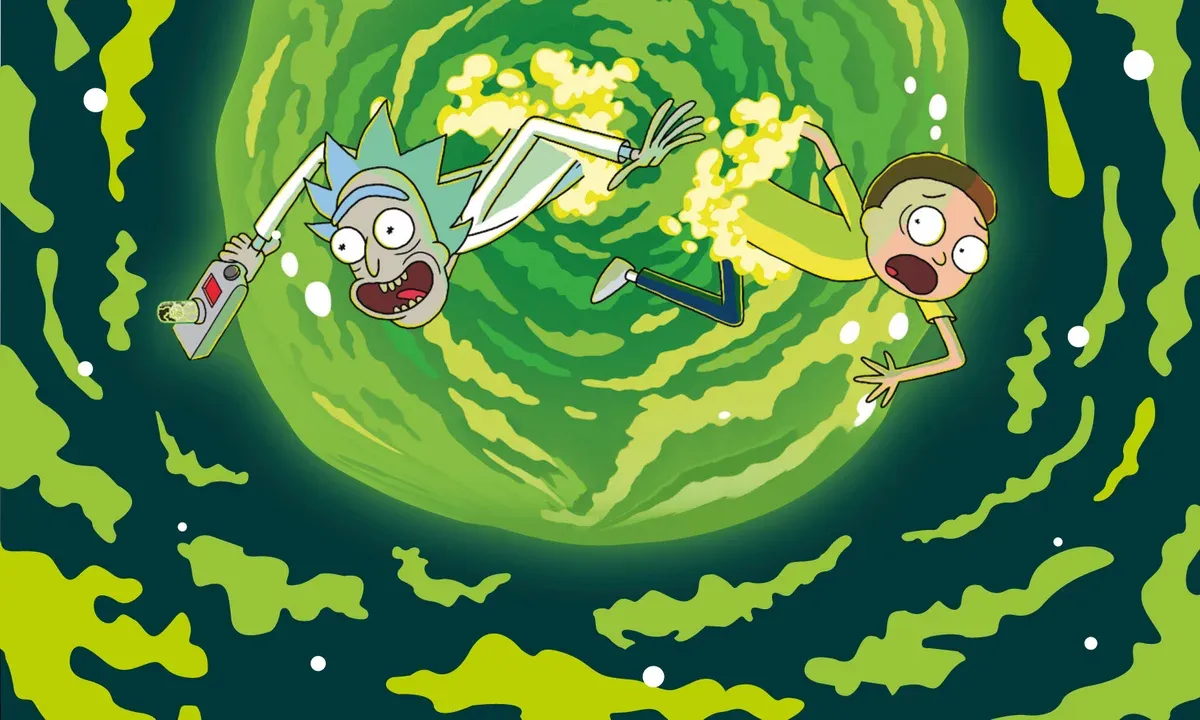
In an early episode, a bit of science gone wrong turns most of the world’s population into grotesque “Cronenbergs.” How does Rick deal with this? He takes Morty to a parallel universe where the local Rick and Morty just died, and they simply take their doubles’ places. He brought about an apocalypse, but thanks to his portal gun, it was a mild inconvenience (and a bit more trauma for Morty). With every possibility played out somewhere in the multiverse, it’s yet another reason why Rick feels untethered from the normal human experience. When any choice you could make, any trait you could conceivably take on, has already been done somewhere in the multiverse, what’s left for you to do? The show’s main Rick rebels against his fellow Ricks and spends his time messing around having fun, but it’s never enough to fill the void that the portal gun opened up in him.
Since a portal gun is pure genre fiction, it can work however the writers want, but the potential for the multiverse to undercut tension and degrade life’s meaning is always there. The multiverse can be an intriguing idea when used well—Everything Everywhere All at Once comes to mind—but it also opens up options for cynical pandering. Rick and Morty tries to show its audience some measure of respect, but there was an episode where Rick disposed of the bodies of the versions of himself and Morty that were in Space Jam: A New Legacy. That’s nothing compared to what some superhero movies have done though. The multiverse gives studios an excuse to bring back characters and actors from older titles, a goldmine of pandering that otherwise wouldn’t otherwise make sense. Doctor Strange in the Multiverse of Madness used it for shock value, bringing back several characters from older media and then brutally killing them off to show just how dangerous the antagonist is. Some of the other films in the Multiverse Saga used it better, with more respect for the stuff they were reviving, but there’s nonetheless an undercurrent of pandering.
The Flash (2023) was probably the single most cynical example of the multiverse trope in superhero movies. With star Ezra Miller now toxic due to serious crimes, WB shoved the movie out the door with awful effects seemingly to recoup some of the costs. That was galling given all the movies that WB scrapped for tax write-offs. This turd got into theaters, but the Batgirl film will never see the light of day. The Flash brought Keaton’s version of Batman back for a hot mess of a movie, throwing an aging version of a street-level hero into a conflict between godlike metahumans. It also had a sequence that showed the multiverse and past portrayals of superheroes, including recreations of George Reeves, Adam West, and Christopher Reeve that some fans derided as “digital necromancy.” Its ending underwent several changes during production as WB tried to figure out where the franchise was going, eventually settling on George Clooney doing a cameo as Bruce Wayne. As is often the case with these things now, it amounted to a little gag, and not foreshadowing of further appearances by Clooney’s version of Batman.
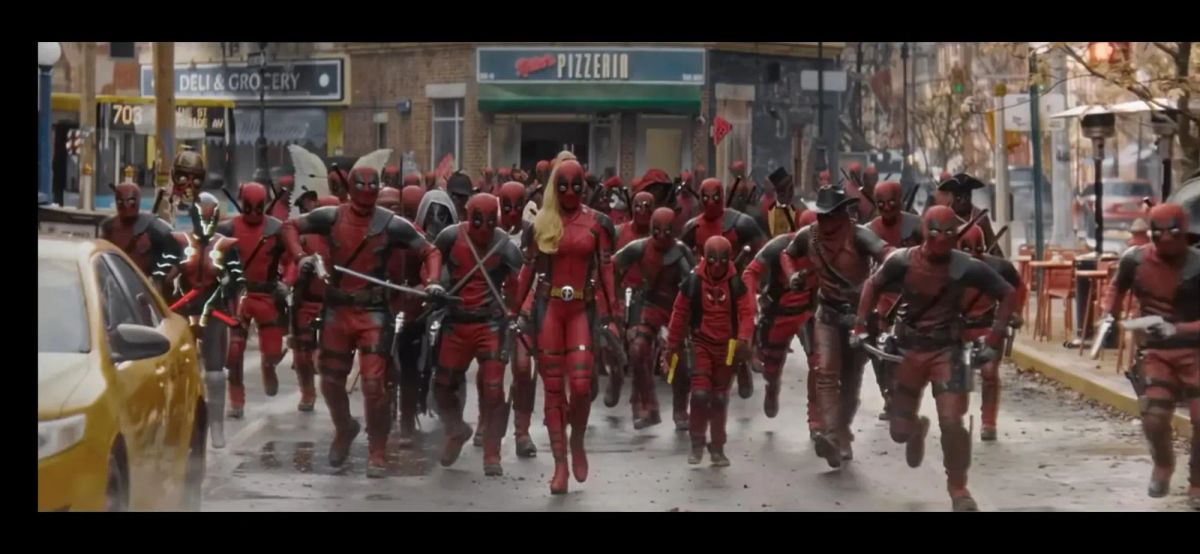
Deadpool & Wolverine was a long time coming. When Disney bought Fox, Marvel regained the film rights to the X-Men, and they decided to take their time figuring out how exactly to go about bringing those characters into the fold. As of this writing the X-Men proper are still waiting in the wings, but having already had two successful movies, Deadpool was an obvious choice. They went as far as to do a test run with Once Upon a Deadpool, a PG-13 cut of Deadpool 2 with the addition of Fred Savage in a framing device inspired by The Princess Bride. Deadpool & Wolverine wound up being the first R-rated MCU movie, and a film that was very much the child of its circumstances. It brought in the Time Variance Authority from the Loki series and essentially operated on the premise that every Marvel film happened somewhere in the multiverse. Several previous characters returned—Blade, Elektra, X-23, etc.—though in a context that felt less like pandering and more like a fond farewell. Near the end of the film, Deadpool addresses a horde of alternate versions of himself and says:
“Can we just be done? With the whole multiverse thing? It’s not great. It’s just been miss after miss after miss. The Wizard of Oz did the multiverse first and they did it best! The gays knew it! But we didn’t listen. Let’s just take the ‘L’ and move on.”
He’s not wrong. Creatively, Marvel’s “Multiverse Saga” has been its worst era so far. Of course, calling it out in a movie they’re making bank on ($1.338 billion at the box office) is profiting from critique, much like capitalist realism does.
The multiverse trend coincided with a glut of content. Marvel put out more movies per year and started releasing series and specials on Disney+. The MCU got harder to keep up with, and there were a lot of mediocre to bad releases. While basically everyone concerned—executives, shareholders, fans—wanted more, giving people exactly what they claim they want isn’t a winning formula. Flooding the market with both copious nostalgia and reams of new content helped foster the current “superhero fatigue” that we keep hearing about. It hasn’t been enough to kill these franchises outright, but cracks are showing.
Where producing a comic only requires about three to six people with computers and art supplies, Marvel’s live action releases need hundreds of people and tens or hundreds of millions of dollars. While Marvel Studios inherently can’t create the same volume of monthly content as the comics, they’re running into the same problem of asking the audience to keep up with more and more titles. The shared universe can be so overbearing that they sometimes deliberately limit how much other stuff a new hero connects with, as in Moon Knight. The movies still have post-credits scenes hinting at future plot developments, but it’s become rare for those setups to go anywhere. There’s been nothing further with Starfox, Black Knight, Clea, Hercules, Immortus, or Binary, and no one should fault you if you don’t know any of those characters.
With superheroes being such a massive success, people naturally took the opportunity to ask established filmmakers what they thought of it all. People who take the craft of filmmaking seriously are not typically big fans of blockbuster popcorn flicks, which is exactly what most superhero movies are. Martin Scorsese called them “theme park movies,” and he wasn’t wrong. That doesn’t make them invalid or even inferior, but it does mean they come from very different values and methods than those of your typical auteur director. The theme park comparison can seem belittling—and maybe it is—but the point of theme parks is to be fun. Some superhero movies are better than others, but they do provide a lot of fun to a lot of people. On the other hand, if you’re after things like visual artistry, deep characterization, or serious themes, most superhero movies are going to disappoint. The medium of film can encompass all of these and more, but it’s gotten harder for smaller productions to make headway.
Blockbusters used to be rare things. Filmmakers would try stuff, sometimes stuff that a studio had put a lot of money behind, and sometimes it would be a runaway hit. Tim Burton’s 1989 Batman was the first of those I really remember. Given the sheer scale and pervasiveness of the marketing campaign I’m pretty sure Warner Bros. had confidence in the film, but it exceeded all expectations. It broke several records, stayed in theaters for some time, and brought in a ton of money through merchandising and cross-promotions.
When something makes you money, it’s entirely reasonable to want to keep doing that thing, but that doesn’t always mesh well with the creative process. Batman Returns (1992) did well, but not nearly as well as its predecessor. Joel Schumacher’s follow-up films Batman Forever (1995) and Batman & Robin (1997) dropped off further. While Batman specifically couldn’t be a consistent money-maker, studios nonetheless hoped they could find some with other characters or new takes on Batman. Now attempted blockbusters crowd out other kinds of films, and studios are constantly chasing the biggest payoffs possible. Emphasizing franchises worked, so they tried to create new franchises, new shared universes that could draw audience into an unending series of films. None have managed to sustain consistent quality or sales, and none have taken the MCU’s crown either. The Monsterverse is doing okay in part because they’re not overdoing it, while the “Dark Universe” was a nonstarter. Shared universes have their merits, but they’re not the reliable path to success that many film executives seem to be hoping.