Days of Mutants Past

“Does it ever wake you in the middle of the night? The feeling that one day they will pass that foolish law or one just like it, and come for you? And your children?”
—Magneto, X-Men (2000)
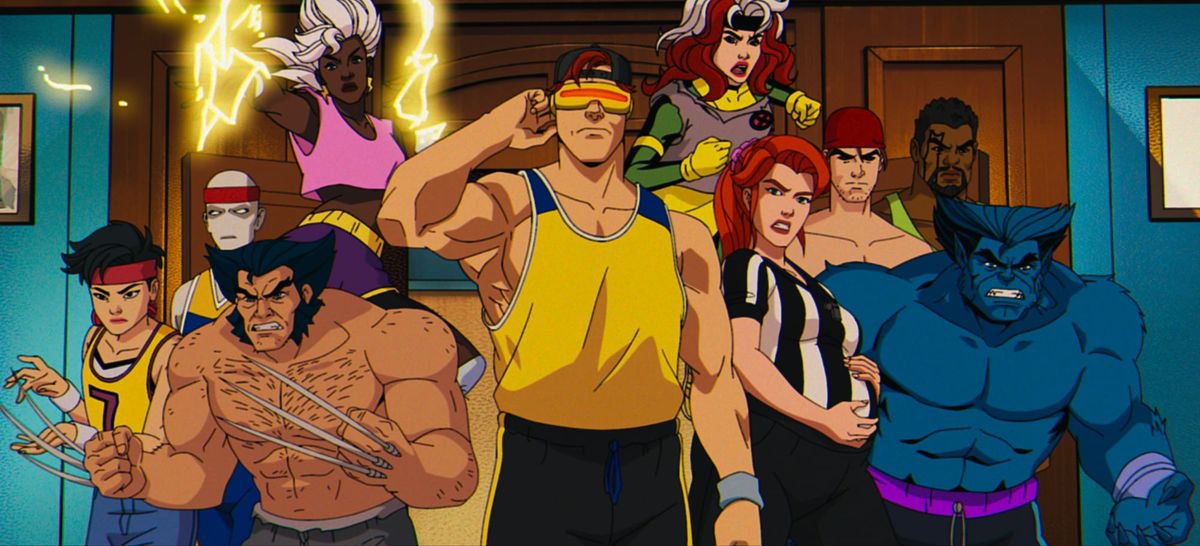
X-Men is a big deal among superhero franchises. It went from a new creation by Stan Lee and Jack Kirby to a comic mainstay. The comics inspired multiple TV shows (including the iconic 1992 animated series), and more than a dozen films, not to mention video games, books, and merchandise. I’ve always been a bit lukewarm on the X-Men, but since the second “movie” in my Xeroverse tetralogy will be framed as an M-Force title (“M-Force” being my thinly veiled parody of the X-Men), I looked a bit deeper. I started with watching the movies, and before long I went looking for books on the topic. For whatever reason there’s not much in terms of nonfiction books about the X-Men specifically. The best I could find was X-Men and Philosophy, one of a long series of “[Pop Culture Franchise] and Philosophy” books the publisher churns out. Despite it being mass-produced and a little old (it came out in 2009, before X-Men: First Class), I found it helpful for honing my understanding of the franchise and its underlying themes.
The core premise of the X-Men feels like it ought to take place in another universe, separate from the main Marvel setting. A new kind of human, homo superior, is emerging, with incredible powers and sometimes odd appearances, and they are hated and feared by the world at large. That raises the question of why humanity is so bigoted against mutants compared to every other kind of enhanced human. The likes of Spider-Man and the Thing do face fear and prejudice at times, but years of the Fantastic Four being in the public eye and saving the world multiple times seemingly did nothing to prepare the public to accept mutants specifically. The Inhumans have enough parallels to mutants that when Marvel was trying to de-emphasize the X-Men due to Fox hanging onto the movie rights, they tried (but failed) to make them into a substitute. The image of an unsuspecting person experiencing the Terrigen Mists and becoming superhuman—due to the Kree meddling with proto-human DNA eons ago to create living weapons—is compelling, but audiences don’t seem to care about Black Bolt & co., especially the boring, low-budget version that ABC attempted in 2017.
I don’t know of any comics that have managed to square that circle, and I don’t know how the MCU is going to do it either. In the MCU’s Earth-616, people are ambivalent about superhumans and aliens, but they’ve had a long time to get used to the idea, without the kind of outright bigotry adaptations typically show aimed at mutants. The anti-mutant prejudice makes a bit more sense when there are far fewer people with superpowers around, like in the Marvels and Ultimates comics, but in a setting that’s already dealt with Thanos and watched President Ross turn into Red Hulk, humans with weird powers and occasionally blue skin feel like a relatively minor concern. In a world like that, mutants’ lives wouldn’t be perfectly rosy, but stuff like the Mutant Registration Act, Sentinels, and Genosha’s mutant enslavement feel a bit extreme. Deadpool & Wolverine, the first MCU movie to include X-Men characters concluded with Deadpool and Wolverine settling down in their own home universe (Earth-10005). The next announced appearance of mutants in the MCU will be with the ones from the original trilogy showing up in Avengers: Doomsday, presumably somehow visiting the MCU or at least characters from it.
Even so, the concept of mutants as an embattled minority, and thus allegories for most any kind of civil rights struggle, is compelling. Although the origin of the mutations was never especially important to the story per se, it pointed to nuclear fears, as atom bomb testing was implied to be one of the major drivers of mutation. (Hence “Children of the Atom” being one of the X-Men’s sobriquets.) By bringing up the topic of mutation at all, it was also implicitly endorsing the theory of evolution—or at least a pop culture caricature of it—and the superhuman abilities of mutants make it into an allegory for anxieties of minorities and immigrants replacing or outpacing the majority. In real life no one can shoot laser beams from their eyes, but some people talk about POC or LGBT people as though they’re every bit as dangerous as Cyclops.
Although they were all white in their original incarnation, the X-Men became a very a very international team after their 1975 revamp, with members hailing from all over the globe.[1] More importantly, the comics tell stories of the brutal, inhuman folly of bigotry. When the X-Men launched, the civil rights movement was in full swing, and their struggle for equality no doubt resonated with people enduring such struggles in real life.
A Matter of Time
One thing that I’ve found a bit off-putting about X-Men is that it has a disproportionate amount of genre fiction plot devices. They have even more time travel, clones, reality rewriting, magic, aliens, etc. than is usual for superheroes, when the core premise feels like it would lend itself to stories with more grounded characters dealing with prejudice, political developments, and Magneto’s machinations, like Heroes (the 2006 NBC series) turned up a bit. Looking for answers as to why time travel is so prevalent in X-Men storylines led me to a better understanding of the heart of the X-Men franchise though.
Ultimately, X-Men is first and foremost about competing visions for the future. Magneto wants mutants to dominate, the likes of Stryker and Trask want humans to eliminate mutants, and Xavier hopes for peaceful coexistence.[2] With that thematic core, time travel is an obvious and effective conceit for exploring where these visions might go, heightening the stakes for the present. Many of the alternate futures the X-Men encounter are dystopian, with mutants in camps or outright slaughtered. Comic writers have arguably overdone it with the time travel, but they did it because it worked so well in stories like Days of Future Past.
Playing With Toys
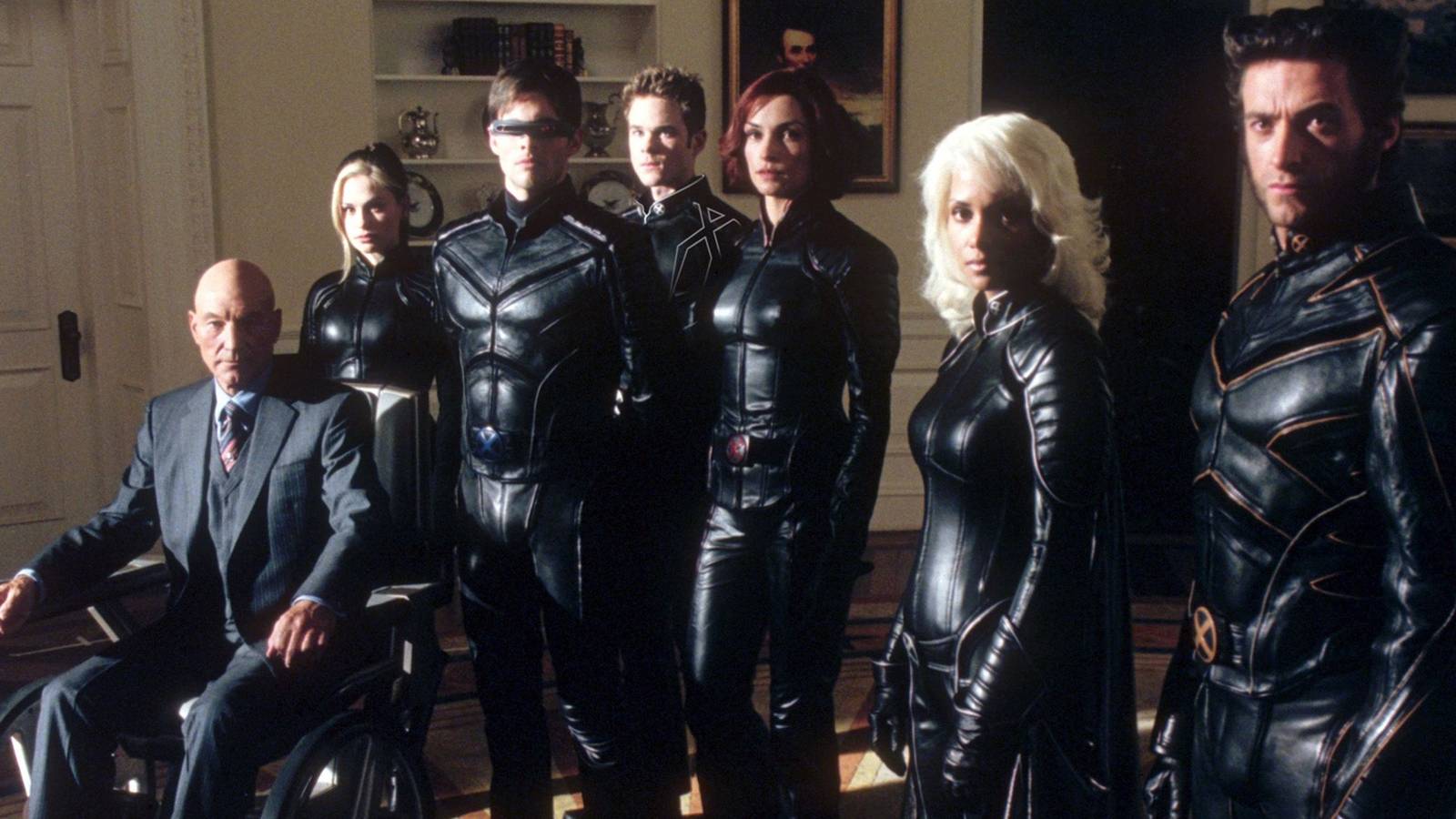
The 2000 X-Men movie and its sequels were a major milestone in the development of superheroes in film. Bryan Singer[3] took superheroes more seriously than any filmmaker really had before. There were a few places where they avoided staying too close to the comics, like replacing yellow spandex with black leather, but it was a far cry from how superheroes had been treated in the past.
Watching those films again… I can’t say I found them all that compelling. Some of it is undoubtedly how much they feel like a product of the early 2000s, and very little was the cast’s fault. I felt like the screenwriters had a habit of throwing cool stuff at the screen without having much in the way of motives or character development. Toad and Deathstrike both presented difficult battles for the heroes without really being characters per se.
While the first two movies enjoy a good reputation, the third was widely derided. Singer wasn’t involved, but that was because he chose to direct the decidedly forgettable Superman Returns instead. To me the tendencies that I saw here and there in the first two films were essentially what X-Men: The Last Stand was made of. They tried to do the Dark Phoenix without doing the regular Phoenix first, and awkwardly stapled that to a storyline about a cure for mutants. Cyclops and Professor X both die pointless deaths, and the movie’s climax is a big, messy, loud fight on Alcatraz.
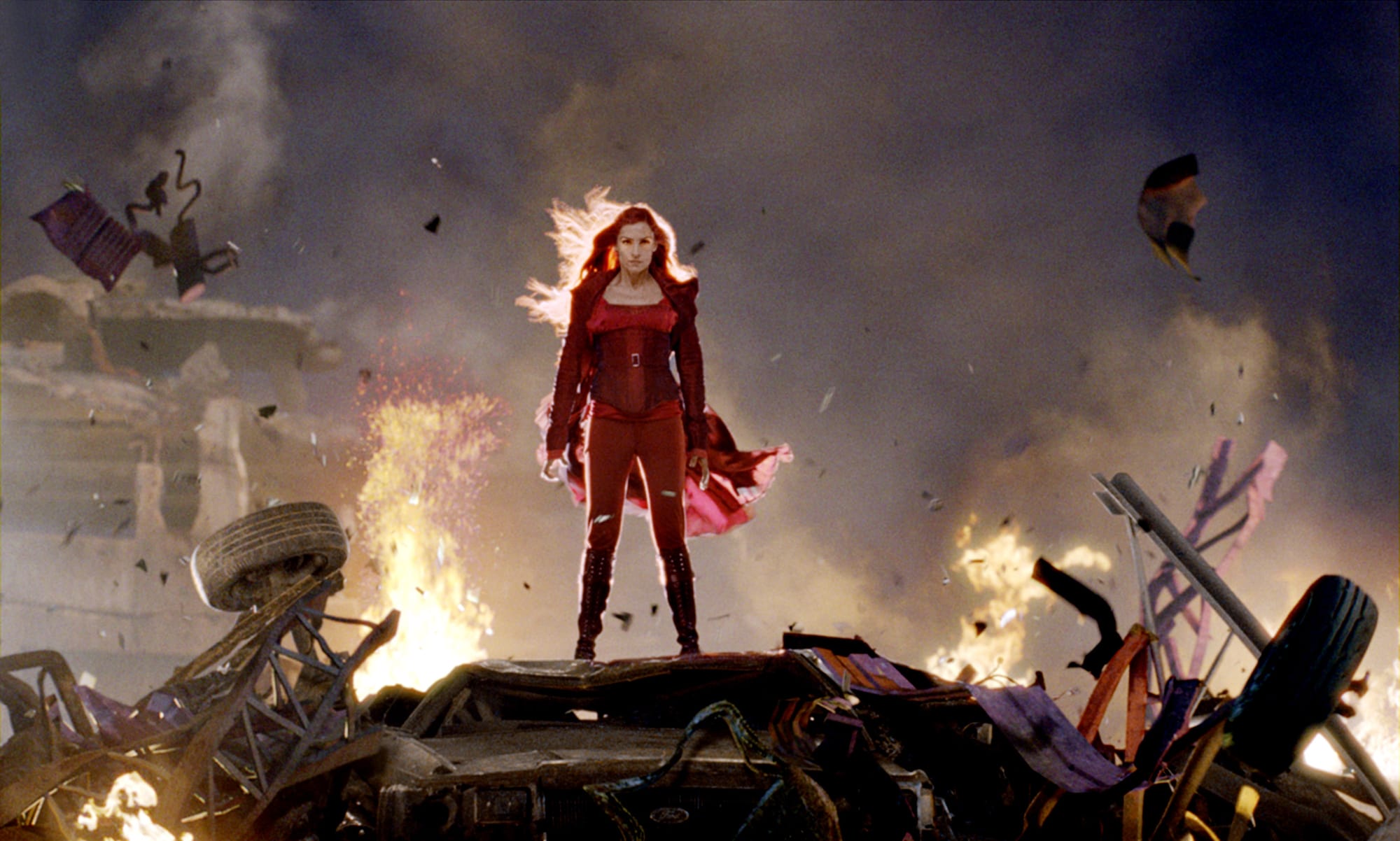
The franchise overall has a definite history of putting in lots of mutant characters to essentially just… exist. Jubilee doesn’t do much more than sit in class, and Psylocke does some flippy fighting stuff without particularly influencing the plot. The setting does call for establishing that millions of mutants exist, but the willingness to let them be present yet inconsequential is kind of glaring. Part of why Logan works so well is that it largely lacks this tendency, giving us fewer and better-developed characters.
Prequels
Starting in 2011, Fox did a series of four prequel movies. First Class and Days of Future Past are pretty good, while Apocalypse is pretty bad, and Dark Phoenix is somehow even worse. Prequels aren’t inherently bad, but they have certain pitfalls. Patton Oswalt did a comedy routine titled “At Midnight I Will Kill George Lucas With A Shovel,” where he bitterly complains about how the Star Wars prequels keep showing him things he loved from before they became what he loved. If Dark Vader is one of your all-time favorite villains, seeing him as a whiny kid is going to disappoint, albeit not enough to justify the abuse that Jake Lloyd got from fans. The X-Men prequels at least give the audience versions of beloved characters that are closer to the ones fans know, though the distance between Erik Lehnsherr the superpowered Nazi hunter and Magneto the radical mutant leader may still disappoint some.
The biggest issue with prequels in general is that the audience inherently knows future events. First Class has a bevy of characters the audience is certain will not die, and if they do it’ll be a bizarre betrayal of expectations. For whatever reason screenwriters working on prequels also love to create origin stories for stuff that doesn’t really matter. Solo: A Star Wars Story (2018) showed us how Han got his blaster, dice, and surname, in scenes that ranged from pointless to infamous. One of the X-Men movies likewise showed how Wolverine got his leather jacket (some guy gave it to him), and it’s not like the jacket had sentimental value or something special sewn in the lining.
The continuity of the films is also… let’s say loose. In one movie an adamantium bullet erases Wolverine’s memory, while in another it can kill him. There are time travel shenanigans and a lot of movies, and I’d want to forget some of them too, but still. When they’re spending tens of millions on each film, they can afford to pay a guy to check this stuff. Instead, they keep forgetting that characters met for the first time in the original trilogy. When they run into Wolverine in Apocalypse, that conflicts with how Jean and Cyclops meet him for the first time in the first movie (or roughly a 20 years later in-universe). It gets much worse in Dark Phoenix when Jean kills Mystique, raising the question of how the hell Mystique is going to be back as Magneto’s right-hand woman a decade later. Of course, without the opportunity to impersonate and infiltrate, Mystique is just a sexy blue lady who’s good at martial arts, so they weren’t doing much with her in the films anyway.
In general, when characters have a resource, they should use it insofar as it makes sense for them to attempt to do so. In Days of Future Past, Quicksilver has one scene where he proves to be incredibly powerful, and then just… leaves the story. There are any number of reasons he might not help them with the final confrontation, but in this case, it feels like the screenwriters simply couldn’t think of a way to have him involved without fixing everything in the blink of an eye. He doesn’t fare well against Apocalypse or Dark Phoenix in subsequent movies, but they’re both significantly more powerful than Magneto or Shaw. This kind of thing could have a perfectly reasonable explanation, but the films don’t bother.
The prequels also have several places where things went a certain way because of the preferences of actors, or simply to save money. In Days of Future Past James McAvoy didn’t want to be in a wheelchair the whole time, so there was the conceit of a serum that temporarily suppresses Xavier’s mutant powers while fixing his spine. Mystique and Beast spend a lot of time in their human forms, essentially to save time and money on makeup. Granted, I can’t blame them for not wanting to spend endless hours in makeup chairs, but it nonetheless feels like a contrivance. Similarly, the movies progress from 1962 to the 1990s without the characters appreciably aging, until Xavier is supposed to go from James McAvoy to Patrick Stewart—a difference of nearly 40 years in real life—in an implausibly short time.
The prequels also feature what Lindsay Ellis called the “Forrest Gumpification” of the franchise, where the characters would show up in historical events. The Cuban Missile Crisis is a key part of the plot of First Class, and Days of Future Past has an encounter with Richard Nixon and the revelation that Magneto tried to stop the assassination of JFK (because JFK was a mutant). It does make sense for mutants to affect the course of history and be part of major events, but doing so risks trivializing those historical events.
More Movies, Bub
Alongside those were the “Wolverine trilogy,” three movies that center on Wolverine, of wildly varying quality. They’re not really a trilogy per se, and the films relate to one another mainly in that they share a protagonist and setting. Personally I don’t dislike Wolverine, but I find the character overrated. He’s a gruff antihero, with the bizarre conceit of an adamantium-infused skeleton. Wolverine is like Iron Man in that the character had a decent following, but a portrayal by a talented and charismatic actor catapulted his popularity into the stratosphere.
X-Men is an ensemble piece, but the 1992 cartoon started with Jubilee as its initial protagonist and POV character, a way to ease the audience into the setting with a character who herself was new to the team. Bryan Singer similarly put Wolverine at the center of the original films. Hugh Jackman, at the time an unknown actor who attracted intense skepticism from fans, gave an iconic performance that won audiences over and defined the character going forward. The influence of the films made Wolverine the face of the X-Men, and one of the more popular superheroes in the world. That goes a long way towards explaining why Fox was willing to produce three movies focused on Wolverine, even after the first one was so reviled. Jackman genuinely loves the character, hence he’s been willing to keep coming back to the role. It’s now hard to imagine anyone else being a live-action Wolverine, even though the actor is now in his fifties.
X-Men Origins: Wolverine (2009) was a terrible movie with some comically bad creative decisions. It’s not as boring as Dark Phoenix, but it’s a savagely stupid film without much in the way of characterization or message underlying its succession of big action sequences. It attempted to include Wolverine’s origins as a fancy lad in the 19th Century, his time serving in a bunch of wars, and his involvement in Team X and Weapon X together into one movie, doing justice to none of them. Its portrayal of Deadpool (or “Weapon XI”) is downright infamous, with the character becoming an amalgamation of several mutants’ powers, with adamantium katanas that inexplicably retract into his arms and a mouth fused shut. Seriously, they looked at a character with the nickname “the Merc with a Mouth” and took away his mouth. It also features versions of Sabertooth, Gambit, Cyclops, and Emma Frost that subsequent films totally ignored. I criticized the series for its loose continuity, but ignoring this one is understandable. The studio intended for it to be the beginning of a series of X-Men Origins movies—the next would’ve been about Magneto—but needless to say they gave up on the idea.
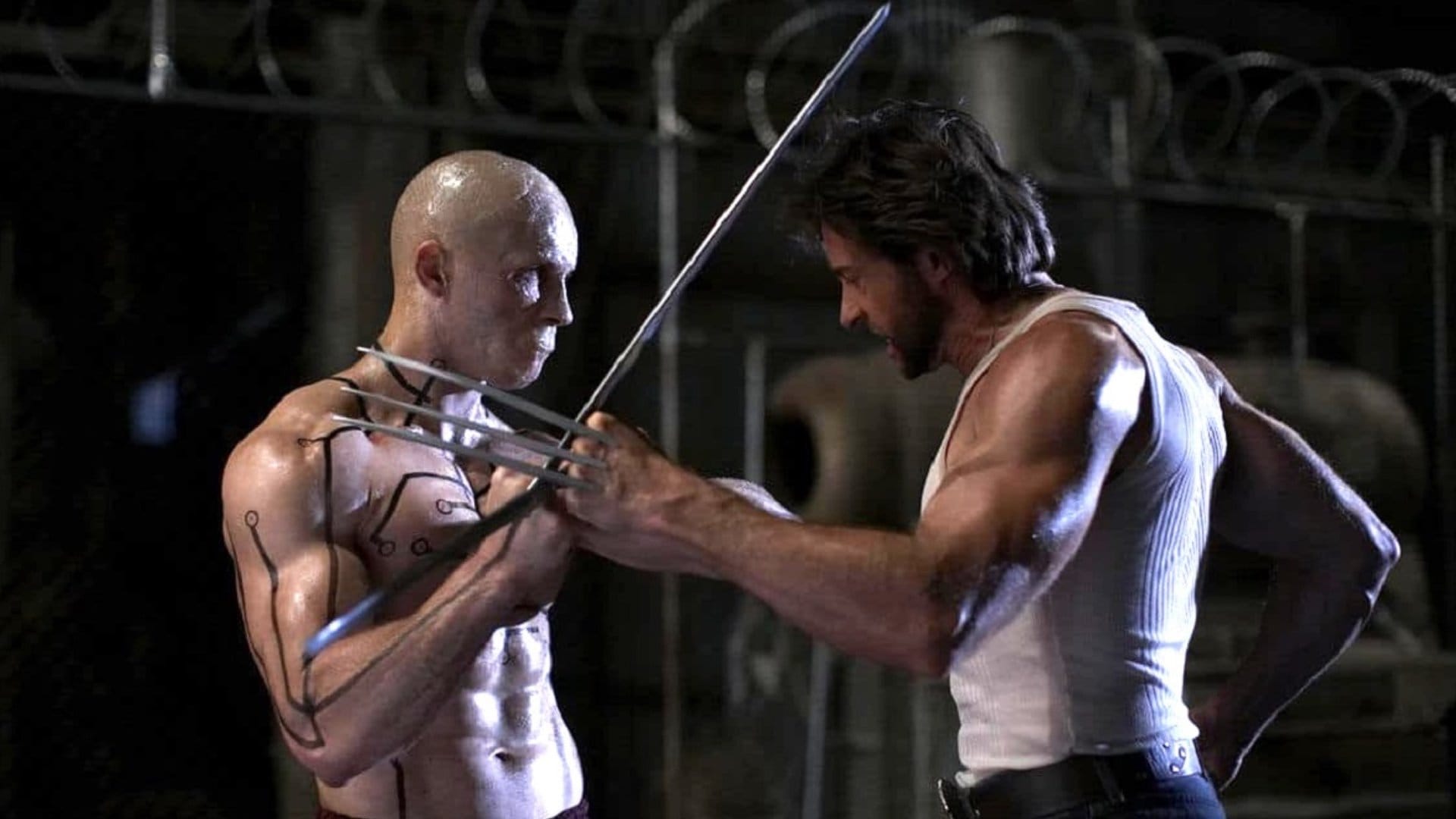
The Wolverine (2014) is a decent movie that no one was really asking for. It’s loosely based on the four-part limited series that was the start of Wolverine’s first solo title in 1982, which has Logan going to Japan. The movie inherited some of the 1990s tropes for Asians in superhero comics, meaning ninjas, samurai, and Japanese femme fatales with high cheekbones. The Wolverine mostly takes place in Tokyo and involves the character dealing with yakuza and ninjas before facing Silver Samurai. In the comics this happened while the X-Men were still doing their thing, but the movie takes place after The Last Stand, giving us a depressed Logan with a lot of dead friends. That means that Days of Future Past erased The Wolverine from the continuity, not that continuity was ever a high priority for the movies. Since Wolverine is unnaturally long-lived, The Wolverine explores the character as a weary immortal, and the villain is trying to steal his healing factor so that he can live forever instead.
The Wolverine was successful enough for Fox to greenlight a sequel, which ultimately became Logan, one of the best X-Men movies and an Oscar contender. Logan does have some of the continuity issues that are so common in the series. In The Wolverine, Logan lost his adamantium claws during the fight with Silver Samurai, but in Logan he has them back for whatever reason. Caliban meanwhile lost his accent and tendency to refer to himself in the third person somewhere between X-Men: Apocalypse and this movie. In a very brief post-credits scene in The Last Stand, it’s strongly implied that Xavier somehow survived having Jean make him explode, which means his cameo at the very end of The Wolverine does more or less track. That cameo has Magneto and Xavier warn Wolverine that humans are working on a dangerous anti-mutant weapon, a vague setup for Days of Future Past and the film version of the Sentinels.
The heart of Logan is the relationships between Logan, Xavier, and Laura, and what those connections say about the past and future of mutants. Laura (a.k.a. X-23) is an 11-year-old girl that the Transigen Project created from Wolverine’s DNA. She’s taciturn and aggressive, full of piss and vinegar. These are unusual traits for a little girl as portrayed in pop culture, but she’s actually a lot like a very young Wolverine as a person as well as in terms of her set of superpowers. The genre conceit of superpowers means that female superheroes can be as effective as the writers want them to be, but the genre nonetheless reflects and explores our views on gender. Making a girl version of Wolverine isn’t as radical now as it could have been in the past, but he’s exactly the kind of character that’s normally male.
The character of Laura Kinney/X-23 originated in the X-Men: Evolution (2000) animated series, but made the jump to canon comics in 2004, in which she went to Xavier’s academy, became a full team member, and eventually stepped up as Wolverine’s successor. Laura wasn’t even the first female Wolverine-like character, though Wolverina (Logana) and Wild Thing (Rina Logan, who has psychic claws) are obscure alternate universe characters.
Although Laura was created in a lab—and her antisocial behavior is in part simply a lack of experience with normal life—she is in a sense Logan’s daughter. In the comics, Logan had several children with many different women over his centuries-long lifetime, enough that five of them formed a gang called the Mongrels to take revenge on him. Logan is the kind of superhero who’s hard to imagine becoming a family man, and in the comics most of his kids never knew him growing up. He had a daughter named Amiko Kobayashi, and he fulfilled his promise to take care of her by leaving her with Mariko (his fiancée and head of the Yashida Clan, the same one adapted in The Wolverine) and checking in occasionally.
Free Toy Inside
One thing the X-Men films made me look at harder is the nature of serialization. American superhero comics are normally ongoing, dispensing about 20 pages of comics a month (plus another 10 pages of ads) for as long as the publisher feels a given title is worthwhile.[4] Sometimes a comic flops and only lasts a few issues, and sometimes it’s a hit that lasts for decades.[5] These comics vary between episodic tales and long arcs, but both approaches are distinct from how films operate. There were serial films, where audiences were expected to come back week after week for 15 installments of about 20 minutes each, but they died off once television became popular. Today, a movie is normally a self-contained experience of about 2 hours (plus trailers, ads, and whatever Maria Menounos does). Obviously, there are outright masterpieces in that format, but it doesn’t fit every kind of story.
This occurred to me because there are now two different X-Men movies that tried to do the Dark Phoenix Saga without ever showing us the heroic version of Phoenix first. While I can imagine a 2-hour adaptation that works better than the previous two attempts (a low bar), the story as presented in the comics is simply too long to fit into a movie format. In the comics, well, there was some retcon stuff going on, so what they thought was Jean Grey turned out to be the Phoenix Force taking her form while she was healing in a special cocoon. (That way they could bring Jean back as a hero.) But also, in the comics, Phoenix was a hero until the Hellfire Club corrupted her and unwittingly unleashed the Dark Phoenix. The saga concludes with the Shi’ar putting Dark Phoenix on trial for her destruction of the D’bari homeworld, culminating in the X-Men dueling the Royal Guard and Phoenix killing herself to put the Dark Phoenix to rest. (Spoiler alert, albeit for a comic from 1980.) Director Simon Kinberg (who had never directed before) wanted to do two films that would show us both the good and bad sides of Phoenix, but the poor reception of Apocalypse made the studio change course. By the time Dark Phoenix was nearing release, Disney had bought Fox, putting all X-Men-related productions on hold.
The MCU created a massive series of feature films, but the connections between one film and the next are significantly looser than between episodes of a TV series or issues or a comic. There are some films that form series with overarching plots—notably Harry Potter, Twilight, and the imitators they attracted—but they were rare before Hollywood decided that the real money is in franchises. In the MCU, the conflict with Thanos that formed the overall arc of Phases 1 to 3 was made up as they went along, only truly becoming a serialized story for Avengers: Infinity War and Avengers: Endgame. The Infinity Gauntlet story in the comics was relatively short, unlike a lot of the famous comic storylines they would want to adapt. Cutting a story like Age of Ultron or Civil War—both big crossover events in the comics—down to a single feature film simply can’t convey the whole tale, even if they may be able to craft something compelling from a general premise.
A TV show would be a better fit in terms of achieving the length needed—to give you an idea, there’s an audiobook adaptation of the Dark Phoenix Saga that runs for about 11½ hours—but the costs of effects and bringing in superstar actors make it an expensive and risky proposition. That helps explain why Marvel’s Disney+ series are mostly about secondary characters. They can get Hawkeye, Scarlet Witch, and even Loki to be the focus of a series (with a budget of about $25 million per episode) but getting a top-tier actor like Chris Evans or Robert Downey Jr. isn’t going to happen.
Normality
Across the entire franchise there’s an interesting exploration of the question of what it means to be “normal.” People naturally want to stand out in ways that are beneficial to them, and mutants vary wildly in that respect. Many of the core X-Men look fully human—and are conventionally attractive to boot—so for them being a mutant is basically being a human with cool powers. Storm and Jubilee for example can pass as homo sapiens as long as they don’t use their powers. However, Cyclops and Rogue have powers that can cut them off from basic human experiences— direct eye contact and skin-to-skin touch respectively—and Beast and Nightcrawler simply don’t look human. Personally, I’m inevitably a bit awkward when I come across strangers with e.g. a missing limb or vitiligo, because I’m consciously trying not to stare or be cruel or patronizing. Other people can’t seem to muster even that level of basic decency towards those who are outwardly different, and that’s without the differences being blue skin or laser eyes.
The question of what one would do if there were a cure for such conditions is a provocative one. People should be able to live their lives regardless, but forcing such a change would be unethical, even if we could be sure the cure was perfectly safe. The notion of a cure was central to the plot of The Last Stand. The film showed some mutants lining up to receive the cure, while Magneto formed a mutant army to destroy it. The concept existed in the comics as the Hope Serum (introduced in 2004), but it had a much smaller role, as Dr. Kavita Rao, the creator of the serum, did not wish it to be used on anyone involuntarily. They’re unusual, but there are mutant characters whose powers are detrimental enough that they’d rather get rid of them. Rogue, who can’t touch any normal person without hurting them, has been portrayed as volunteering for a cure more than once. The movie version of Dr. Rao seems well-meaning, but unlike her comic book incarnation she’s fully on board with making her cure available to the general public.
Fixes for disabilities can still be controversial. While there are plenty of stories of deaf people overjoyed when they first switch on new cochlear implants, there’s an entire deaf community that has forged an identity that some are hesitant to leave. Many trans people would be ecstatic if they could magically have a body that perfectly fits their gender, but part of the premise of the trans movement is that a person’s sincere gender identity is valid regardless of what medical interventions they do or don’t pursue. However, that kind of hypothetical becomes much dicier for a magical “cure” that could make a gay person straight or change a person’s race.
George Schuyler’s satirical novel Black No More (1931), one of the first works of Afrofuturism, presents a world where an African American scientist has devised an affordable and fast treatment that turns a Black person white. It costs a mere $50, a few weeks’ pay for an average Black adult of the time. The only caveat is that it doesn’t change their DNA, which will become obvious if they have children. The Black No More company is a huge success, and as it rapidly expands, it draws the ire of white supremacists and Black leaders alike. The former hate the idea of Black people hiding among them in white skin, while the latter are watching Black American culture and businesses wither. Schuyler took the opportunity to do some vicious caricatures of Black leaders, painting many of them as hypocritical grifters who are mainly worried about losing their meal tickets.
Despite the public uproar, Black No More continues, and dark skin becomes a rarity in the U.S. The controversy becomes the top issue of the presidential campaign, and when the Democratic President and VP candidates hire a statistician in the hopes of undermining their opposition as ex-Black, it reveals their own mixed heritages, ultimately leading to a small-town mob lynching them.[6] Later, the news that Black No More makes patients become particularly pale leads to discrimination against people with lighter skin, and everyone starts looking for ways to look darker. It isn’t the sort of story that calls for sequels, but it’s easy to imagine that world eventually having a “White No More” company pop up as people look for a new way to distinguish themselves.
[1] I remember a friend of mine telling me that his stepfather was upset to learn that Storm is Black, though said stepfather used a slur.
[2] Apocalypse meanwhile is not only a mutant supremacist but believes only the strongest of them should survive.
[3] He was however terrible behind the scenes. During production he used drugs and was prone to angry outbursts and tantrums on set, and one of Kevin Feige’s tasks as assistant producer was to keep Singer in line. Even so, it got to the point where the cast attempted to stage an intervention. Despite that and serious sexual assault allegations, Fox continued employing him on X-Men projects up through his work on the pilot for The Gifted (2017). He claims to currently be working on a documentary that will clear his name, and I’m guessing you’re as skeptical about that as I am.
[4] Early on the standard was comics of about 60 pages, which included multiple stories, typically of around 12 pages each.
[5] A surprising number of iconic characters did poorly in their first run but got a second chance.
[6] Remember this was before the parties realigned; at the time the Democrats were America’s conservative party.