Origins Forever

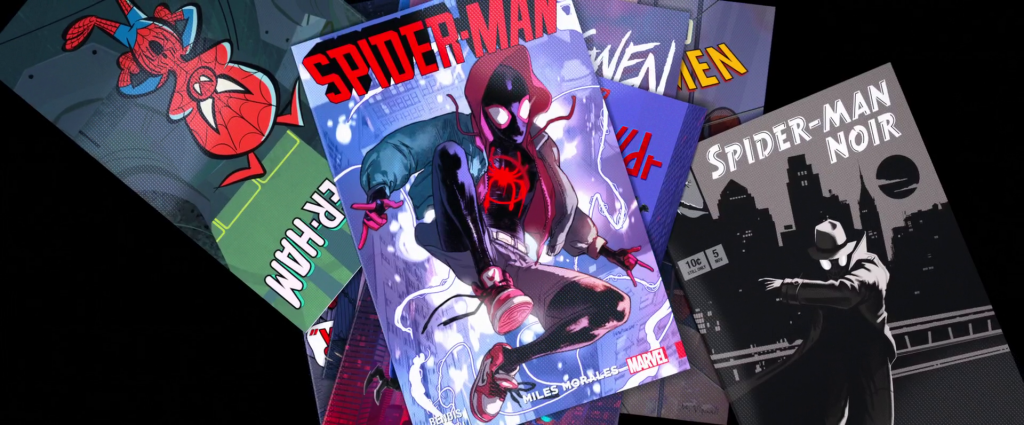
Okay, let’s do this one last time, yeah? For real this time. This is it. My name is Miles Morales. I was bitten by a radioactive spider. And for like two days, I’ve been the one and only Spider-Man. I think you know the rest.
—Miles Morales, Spider-Man: Into the Spider-Verse
Ovid’s The Metamorphoses is a narrative poem from ancient Rome, which weaves Greco-Roman myths into a tale of endless transformations. Those myths do have many transformations of various sorts—people becoming animals, nymphs becoming fountains, gods taking other forms on a whim—but Ovid made the creation of the world itself part of his chronicle of metamorphoses. Existence itself is a constant state of change, and life is a process. When I say that today’s superhero movies are “an origin story that never ends,” I’m being poetic rather than literal, but there’s something there.
In the 2000s, a friend of mine had one main complaint about superhero movies: they almost always started with an origin story. It’s not wrong to tell a superhero story that way, but it was and still is common enough to be predictable. Not only that, but some characters get rebooted often enough that it feels silly to rehash their origin stories yet again. When Marvel brought Spider-Man into the MCU in 2016, it was the character’s second reboot since the 2002 film,[1] so it made sense to gloss over his origin story and just get into the action. When the audience already knows damn well that Peter Parker got a radioactive spider bite, it’s something you can skip. Of course, Tom Holland’s Spider-Man had a three-movie arc on the way to becoming more like the classic Spider-Man at the very end of Spider-Man: No Way Home. In a way, it’s origin stories all the way down.
There are a lot of reasons why origin stories are such a preoccupation. While there are other ways to do it, the audience does genuinely need to come to understand the character, their abilities, and the world they live in, and origin stories are a well-established trope of the superhero genre. In the comics, if a sufficiently popular character doesn’t have an origin story, chances are someone will create one before long. Marvel initially let Wolverine’s origin story be a mystery, but Weapon X (1991) and Origin (2001) filled in the missing pieces, for better or for worse.[2] In the case of live-action superhero stories, bringing back established characters generally requires re-hiring specific actors. Hollywood is willing to do that, maybe too much so, but the services of someone like Samuel L. Jackson or Robert Downey Jr. don’t come cheap. Given the sheer volume of source material available for Marvel and DC productions, it’s very easy for them to find yet another heretofore unused character to adapt from the comics. Origin stories can also be fun. Spider-Man’s origins in the Sam Raimi movie let us see the process from Peter’s teenage POV, the joy and terror of his transformation and the raucous fun he has once he figures out how to swing around New York.
When superheroes make their way to television, origin stories can become even more glaring, to the point where there are entire multi-season shows about things that happened before. Smallville (2001-2011) is about Clark Kent before he became Superman, resulting in a sort of midpoint between the Justice League and Buffy the Vampire Slayer. Gotham (2014-2019) has Bruce Wayne as a rich orphan boy who’s generally around as organized crime swirls around Gotham City and the Penguin turns out to be surprisingly hot. Krypton (2018-2019) is about Superman’s grandfather back on Krypton and I've never heard anyone talk about it other than to wonder why it exists. The Netflix Daredevil series didn’t hesitate to give us Matt Murdock punching guys in hallways, but it waited until the end of the first season to show him in his iconic red suit.
At some point, the audience has signed up to see a cool superhero doing cool superhero things, and it’s just kind of lame when the story is pretty much all origin and we only get a few shots of the hero in a full-on costume. That’s usually the domain of truly bad movies, the kind that are too boring to even watch ironically. Madame Web (2024) had three spider-heroines, but apart from a handful of shots of future visions, the movie had them as random young women for its entire duration. There are much better ways to subvert audience expectations.
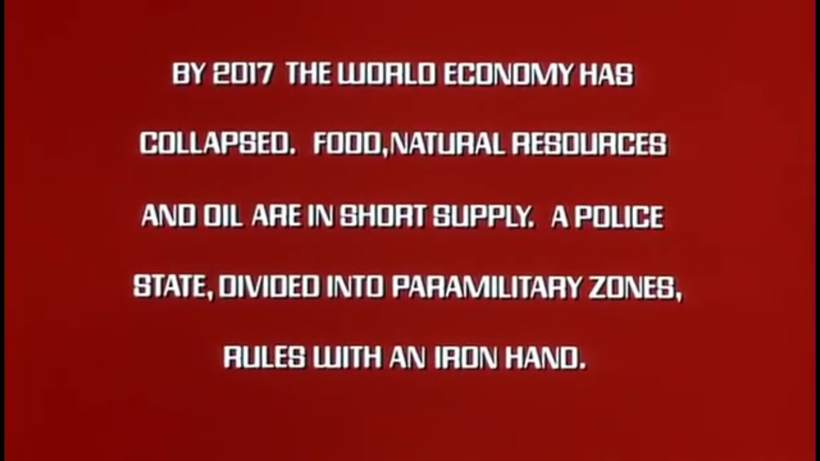
Part of the issue is that films don’t lend themselves to serialization as well as some other media, so an origin story will inherently take up more of the available time simply because there’s less available time in the first place. If you need half an hour to get to Peter Parker putting on a Spider-Man costume for the first time, that’s a quarter of a typical movie, but a lot less of a typical TV series. The idea that a character needs an up-front origin story in the first place isn’t totally unique to the superhero genre, but definitely more prevalent with capes than anywhere else. In western narratives in general, the trend is to start off in media res and introduce “origin story” elements when they’re salient. The Boys (2019) begins with Maeve and Homelander killing some robbers and meeting some fans, showing rather than telling us that this is a superhero story that’s both gory and has superheroes as celebrities. It doesn’t start with, e.g. news footage about the rise of Vought and how superheroes fought in WW2. The John Wick movies eventually got into the character’s origins, but there was no need to weigh the first movie down with opening exposition. While Star Wars has made the opening text crawl into something iconic, usually when a film starts with introductory text, it means someone thought the film wasn’t doing a good enough job of conveying the situation to audiences. Dark City (1998) got opening text that spoiled elements the director intended to reveal slowly and elegantly, whereas with The Running Man (1987) it wasn’t particularly necessary, and in Battlefield Earth (2000) the whole thing was incoherent regardless.
Obviously not every superhero movie kicks off with the hero’s origin story, but they never quite seem to get away from origin stories in general. We’re always witnessing origin stories for villains and other things, and superhero films are rarely just about events involving elements already established. Sequels to Sam Raimi’s Spider-Man and Tim Burton’s Batman already had their heroes’ origins fully played out, but they spent a lot of time on their villains’ origins. Iron Man 2 didn’t have to worry about conveying how Tony Stark became Iron Man, but it had Ivan Vanko’s origin story instead.
Screenwriters sometimes get so caught up in origin stories that they give audiences origins for things they couldn’t possibly care about. X-Men Origins: Wolverine shows how Wolverine got his leather jacket and dog tags, while Solo: A Star Wars Story delved into the origins of Han Solo’s dice, blaster, surname, and other things that weren’t entertaining even to the most die-hard Star Wars fans. It’s part of the general trend of fetishizing random details that fans have latched onto, the same tendency that put references to Twinkies and Stay-Puft Marshmallows in Ghostbusters: Afterlife, and it’s missing the point pretty badly. The Star Wars prequel trilogy had all sorts of problems, but one of them was that it wound up being so much about where the stuff in the original trilogy came from, to the point where it became contrived in places. Anakin Skywalker built C3PO as a child, R2D2 watched Luke and Leia’s mother die (and used to be able to fly), and Darth Vader is more machine than man mainly because Obi-Wan had the high ground that one time. There are good prequels—The Godfather Part II (1974), Better Call Saul (2015), Furiosa: A Max Mad Saga (2024), etc.—and they’re inevitably the ones that don’t shallowly fetishize the original.
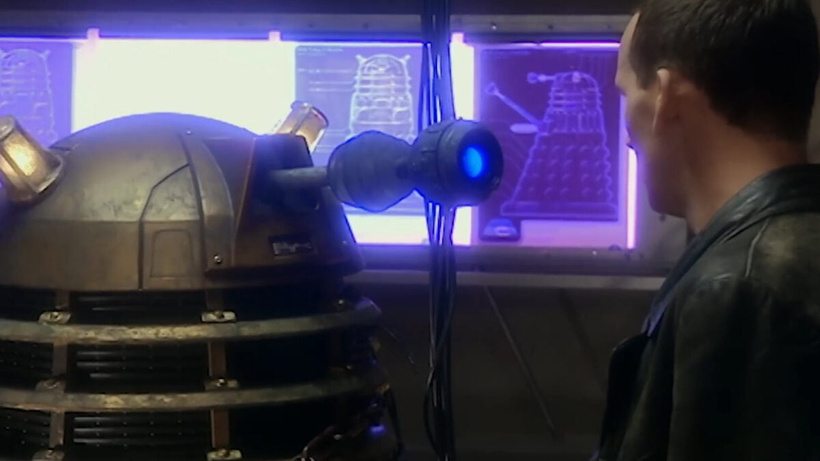
At some point I want a story to start using the elements it already has in interesting ways. I enjoy good worldbuilding and I love taut plotting that makes good use of the story elements introduced. While there are a lot of things I’ve enjoyed about Doctor Who, it has extremely loose continuity, up to and including resetting the entire universe on occasion. Sometimes the Doctor returns somewhere or has characters return from years past, but for the most part, each episode (or each serial in the old days) is a separate setting he and his companion(s) are seeing for the first time. The Daleks pop up over and over, but there’s no sense of an ongoing conflict that the Doctor might help resolve. Under the revival’s showrunners, appearances by Daleks and other classics often felt like they were banging their favorite action figures together, and not just because the BBC merchandises the hell out of the show. It’s the same resistance to worldbuilding in the name of accessibility that we see in superhero movies, but in a medium that doesn’t have the same pressure to do so. Doctor Who is an all-ages show popular with kids, but there are some amazing kids’ shows with interesting and detailed settings, particularly from creators who draw inspiration from anime. Steven Universe, Amphibia, and The Owl House all have immersive worlds that viewers can learn about and enjoy. All of them eventually addressed the “How did we get here?” question, but none needed a front-loaded origin story.
Starting a story is easy, hence most writers have a big stack of unfinished drafts. The middle and end parts are harder, and sometimes it feels like Marvel and DC have all but abandoned actual endings in favor of every movie concluding with a tease for the next thing. The fanboy in me doesn’t like when endings limit the possibilities for sequels, but titles like Groundhog Day or The Truman Show work so well in part because they have satisfyingly final endings. I have a really hard time imagining a Groundhog Day sequel that actually works. Sending Bill Murray’s character into another time loop on Arbor Day or whatever would require coming up with a new character arc that doesn’t undercut the original, and without him, it’s just another entry in the “trapped in a time loop” microgenre. An overall cinematic universe isn’t going to end any time soon—having an ongoing mega-franchise is kind of the point—but individual titles within it ought to at least sometimes.
At the end of the day, superhero movies don’t need to abandon origin stories entirely; they’re not one of the tropes that really drags the genre down like faceless CGI hordes or fake deaths. However, these films do need the ability to move past origins to tell the kinds of stories you can tell once all that’s out of the way.
[1] There were also three separate Spider-Man cartoons in the same timeframe: Spider-Man: The New Animated Series (2003), The Spectacular Spider-Man (2008), and Ultimate Spider-Man (2012).
[2] One of the many problems with X-Men Origins: Wolverine was that it tried to cram elements of both of those comics and more besides into a single movie.