Content Warning


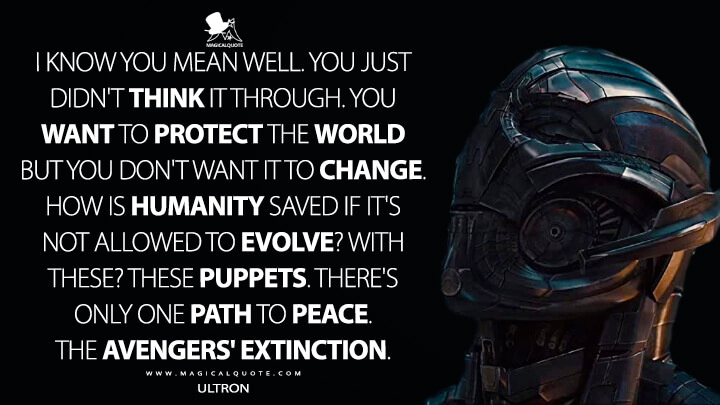
“You want to protect the world, but you don’t want it to change.”
—Ultron, Avengers: Age of Ultron
Thanks to the Comics Code, superhero media has a long history of sanitized stories. While American comics could be salacious enough that some clearly weren’t for children, their popularity among kids was a driving force for the moral panic around them. The 1954 book that embodied and informed the panic was called Seduction of the Innocent, the work of psychiatrist Fredric Wertham. He asserted that comic books caused juvenile delinquency, derided the entire medium as “crime comics,” and claimed Batman and Robin were a fantasy for gay men.[1] This new scrutiny on the industry led to it focus more on stories suitable for children, but that was destined to change as its fans grew up.
Superhero violence is usually heroic and bloodless, and despite the characters’ perfect physiques in form-fitting costumes (which got really form-fitting in the 1990s), they’re oddly sexless. The mainstream of superhero comics loosened things up a bit, but core DC and Marvel titles are still PG or PG-13 to this day. They also established imprints like Vertigo and MAX that served as a vehicle for more mature (or at least more explicit) comics. Some of that was just letting Neil Gaiman do his thing (long before the allegations of terrible abuse came out), but there were also titles that reveled in violence.
The epitome of that is the work of Garth Ennis. He grew up in Northern Ireland during the Troubles, which influenced the bloody, cynical content of his writing. His work can be too intense for many people, but he helped DC and Marvel boldly expand into this more extreme content. Ennis notably isn’t a fan of superhero stories. As he put it, “I find most superhero stories completely meaningless.” He admires some works by the likes of Mark Miller and Alan Moore, but by and large he sees superhero comics as a genre of sanitized, repetitive stories of people in colorful costumes. I don’t share his overwhelming contempt for the genre, but I can’t argue with his criticisms.
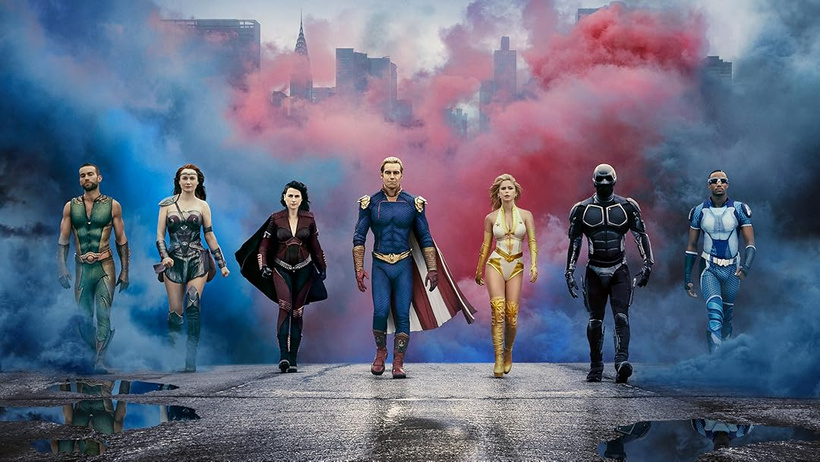
The combination of his edgy sensibilities and dislike of superhero comics led to The Boys. I like the TV adaptation, but I have it on good authority that it’s better to steer clear of the original comics. It presents a team of heroes who are a clear parody of the Justice League, but who turn out to be vicious, amoral people whose power lets them tear through normal people like paper. The titular Boys are a ragtag team of non-powered vigilantes out to eliminate superheroes because they’ve seen the supes’ hypocrisy and brutality. The TV series opens with Hughie seeing speedster hero A-Train just annihilate his girlfriend by accident, leaving Hughie holding the bloody stumps of her arms. Ennis combines his deeply cynical view of human nature with powers that render most supes able to easily reduce normal humans to bloody chunks. The few supes who sincerely try to do good quickly become disillusioned as they discover the callous, corporate reality of superheroes.
People in the know divide the history of American superhero comics into a series of distinct “ages,” from the Golden Age of the early years to the Silver and Bronze Ages, and finally the “Modern Age,” also known as the “Dark Age.” The Dark Age of comics isn’t about a decline or artists drawing cats despite having clearly never seen one, but rather the rise of grim and gritty comics. Titles like Watchmen and The Dark Knight Returns set the stage for this era of grimdark comics, and Alan Moore lamented that he’d inadvertently fostered an era of nasty, violent tales, rather than the deeper stories he was aiming for.
Actors who play superheroes go through difficult and unhealthy measures to achieve superhuman-looking physiques. The push for rippling, well-defined muscles is to the point where it may be harder on the men than the women. They have to do intense training and dehydrate themselves to keep that level of definition, and it’s not a sustainable look. One tabloid was talking about Jason Momoa’s “dad bod,” when he was still an exceptional specimen, just without the dehydrated superhero look. Despite having such conventionally attractive performers, these movies share sexless approach of the comics. There’s certainly no nudity in these PG-13 movies, but they find very little time to show us the characters having sex lives or even romance either.
Part of why superheroes have traditionally had very little to do with sex is their serialized nature. Mel Brooks routinely ended his movies with the hero getting married, which is a long-running tradition in American storytelling. It sounds like a hack standup routine, but marriage was traditionally part of how a hero retired from heroics, a just reward for his good deeds and a delayed gratification after virtuously resisting temptation. Even media fully dedicated to celebrating and justifying heroes treated heroism as a temporary condition, to be put away as the hero joins the regular society and enters a happy married life that happens off-screen. If the hero isn’t going to retire, the reasoning goes, he must continue on in that pre-marriage state. There are now plenty of exceptions of course, Reed Richards and Sue Storm being the most obvious, but those characters were initially innovations away from the norm for American hero characters. Heroism has become an extended adolescence.
Stan Lee had an editorial policy he called the “illusion of change.” The major characters undergo all sorts of changes, but they inevitably return to the same overall status quo. Spider-Man lost one girlfriend, found another, started college, had his identity exposed to the world, went to outer space, and so on, but he ultimately comes back to being a down on his luck guy in a red suit slinging webs in New York. The Fantastic Four would periodically lose members, gain temporary replacements (notably She-Hulk and Spider-Man), lose powers, and even disband entirely, but they’d eventually come back to the original four with their original powers. If you read a wiki article about a long-running character, they usually have a very long list of major changes and events that don’t really last per se. The MCU tends to give characters some growth to form their origin stories, but not much after that. Character arcs aren’t an ironclad requirement for a good story—Ghostbusters was a phenomenal film while lacking them—but without them, it’s a lot harder for a story to really be about something.
She-Hulk: Attorney at Law has Jennifer Walters going on dates and hooking up with guys, but that series was specifically trying to be an Ally McBeal style legal comedy drama mixed with superhero stuff. That was the title where, 11 years after his MCU debut, we learned that Captain America did not in fact die a virgin. She-Hulk broke the fourth wall a lot, hence it self-consciously addressed the franchise’s overall sexlessness. Tony Stark bragged about hooking up with supermodels before settling down with Pepper Potts, but overall, the characters’ sex lives are something the audience would have to infer. Zack Snyder found time to depict Clark Kent and Lois Lane being intimate in Batman v. Superman, but even on-screen kissing is rare in the genre. Against that backdrop I can see why Garth Ennis depicted his supes having an orgy and using their powers to get freaky.
One of David Lynch’s most formative moments was when, as a boy growing up in the suburbs, he saw a naked woman wandering down the street who’d clearly been through something horrible. He never said what exactly had happened to her—he probably never knew—but it’s an image that contains female beauty while inspiring horror and sympathy rather than lust. He put a lot of sex and violence into his stories, but he did it because they’re parts of reality that he refused to ignore. His works show us the darkness that lurks beneath the American dream. That’s a bit blatant in the opening of Blue Velvet, where the camera pans down from a white picket fence and well-manicured lawn to reveal writhing insects below the surface. There is sex and for that matter sexual violence in his work, but it’s not gratuitous like in Garth Ennis’ comics. Sex is part of the human experience, and whether it’s Laura Palmer just trying to feel something or Fred Madison (Bill Pullman’s character in Lost Highway) feeling emasculated when he can’t perform for his wife, there’s a point to it, something that develops the characters, embodies themes, and drives the story.
Marshal Law has a lot of sexual content, and there’s a point to it. Even more so than Watchmen, it presents a world that’s downright obsessed. San Futuro is rife with strip clubs and brothels, and ads for Rubber Johnny brand condoms are everywhere. Female superheroes have absurd proportions and skimpy costumes, and a lot of them are sex workers presumably because it’s their only real option. This portrayal is far more explicit than in mainstream superhero media of course, but it comments on the genre by taking the underlying psychosexual melodrama of superheroes and bringing it to the fore. Wearing skintight costumes and beating people up is a weird thing to do, and it’s hard to escape the sexual, fetishistic undercurrent of it, even in the sanitized world of superhero blockbusters.
Part of the issue with superhero films is something they inherited from today’s blockbusters in general: the need to play well in international markets. While the U.S. is still one of the most important markets for films, international audiences represent a massive pool of potential revenue. While they can and do create alternate cuts of movies for other countries, the push to earn overseas box office as widely as possible inevitably affects the content of the films. The writers are generally Americans writing from an American perspective, but they know that sanding down the edges in terms of violence, sexuality, and politics makes it less likely their work will need edits, alienate audiences, or receive an outright ban in other countries. It’s good for the bottom line (and the all-important shareholder value), but a severe limitation on artistic expression.
The focus on universal appeal is also why a lot of what culture war grifters deride as “wokeness” ultimately comes down to capitalism. Left-leaning people generally want more representation in media, and they have enough spending power that corporations are willing to try to give it to them, albeit in forms that won’t cause a fuss. While conventionally attractive women and POC can get good roles, LGBT representation mostly takes the form of bit parts that are easy to cut out. Valkyrie is bisexual, but you wouldn’t know that from her roles in the films. Phastos is gay and has a husband who appears on-screen, but if you don’t know who he is (he’s one of the Eternals) you’re nowhere near alone. Joe Russo is credited as a “Grieving Man” in Avengers: Endgame, a gay character who doesn’t even get a name.
Politics are another area where The Boys goes to the opposite extreme. Its superheroes use political power to get their way and adopt real-life political talking points. (The TV series has been overdoing it a bit honestly.) They have dealings with powerful politicians and occasionally murder them. When the public learns that Queen Maeve—their Wonder Woman expy—is bisexual, the corporate conglomerate behind the superheroes runs with it, pushing rainbow merchandise and adding a “Brave Maeve” area to its superhero theme park. It satirizes how real-life corporations have embraced Pride Month as a time to use rainbow versions of their logos and make vague statements in support of LGBT people.
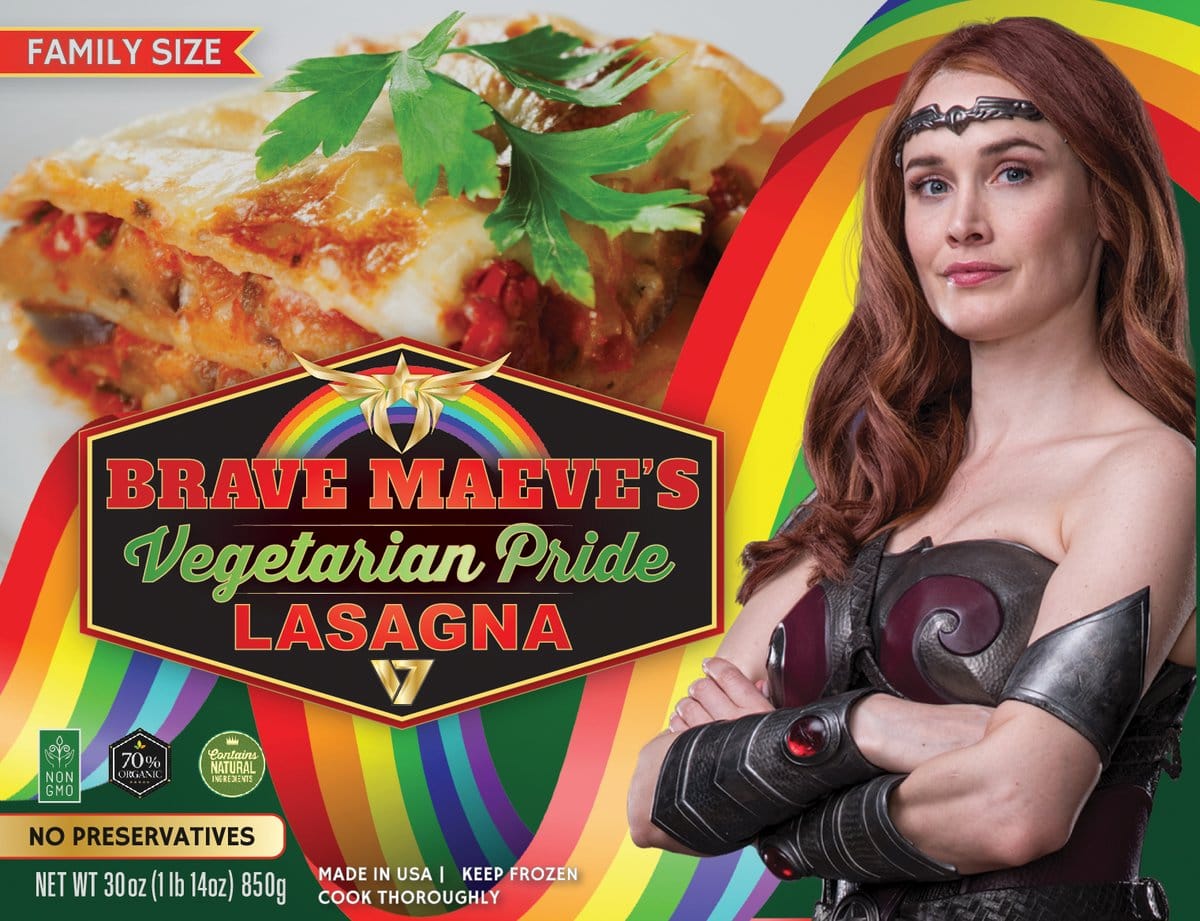
Conservative commentators cite the phenomenon as evidence that the left owns the establishment, but it’s really “rainbow capitalism,” a coat of rainbow paint over business as usual. While there’s broad if milquetoast mainstream support for LGBT rights, multinational corporations will fight tooth and nail against leftist policies that impact the bottom line, regardless of the impact on people. Raytheon is happy to sponsor a pride parade, but the company would actively oppose the parts of leftism where unions and regulations come into play. The Boys itself comes from Amazon, one of the biggest companies in the world, and well-known for mistreating workers and engaging in union-busting.
In Superheroes, Movies, and the State, the authors delve into how government influences superhero movies. There’s a long history of movies, especially big blockbusters, working with the Department of Defense. The U.S. military can provide productions with advice, extras, equipment, locations, etc., which makes life altogether easier for filmmakers who want to portray the military. The DoD doesn’t provide all of that without conditions of course. They review scripts and suggest changes, with a distinct agenda of promoting the interests of the U.S. military. The Department of Defense is by no means the only organization that consults on movie productions, but it’s by far the one that demands the most story changes. NASA’s consultations are mostly about promoting accurate science, even if the legit science gets mixed with sci-fi nonsense in the final product.
Iron Man was originally harsher in its critique of the military-industrial complex before the military consulted on the script, and it’s telling that the DoD not only insisted that the military be portrayed as competent and ethical, but that enemies be portrayed as a credible threat. Those are both things that are true in many cases, but tragically untrue in others. Captain America: The Winter Soldier meanwhile used a superhero story as a vehicle for critiquing the American security state, and it was one of the productions where Marvel decided to forego the military’s support. Captain Marvel on the other hand got considerable help from the Air Force. The feminist themes it has are fully compatible with the objectives of today’s Air Force, as it shows us women overcoming adversity to serve in an ethical and courageous military.
Even when the studio isn’t working with the military directly, there are definite limits to how much they’re willing to critique the military and its actions. Even The Winter Soldier’s critiques are filtered through the evil H.Y.D.R.A., and their evil is only American insofar as Americans are willing to sign on to the continuation of the masked super-Nazis. Even without the DoD’s strings-attached support, a studio owned by Disney or Warner Bros. Discovery isn’t going to rock the boat much, especially when they’re aiming for international blockbusters.
Aside from the morale boost of military personnel getting to be extras in blockbusters, the DoD benefits from increased recruiting and good PR. Recruiting has been a serious problem for the military in recent years, to the point where recruiters have a reputation for being pushy liars chasing their quotas. While I wouldn’t say the U.S. military is completely immoral top to bottom, it does give a lot of people around the world legitimate reasons for resentment. There are limits of course, but those positive portrayals undoubtedly do help the military’s image. Superhero movies haven’t gotten nearly as jingoistic as Michael Bay’s oeuvre, but the influence of military consultants becomes obvious if you know what to look for.
Like a lot of blockbusters, superhero movies promote a certain kind of American values. For the most part these are good things in themselves—freedom of speech, regard for human life, that kind of thing—but of course they routinely elide all the problems with how America maintains its empire. Their inability to address issues with the status quo is especially apparent in how they approach the military, and doubly so when it comes to the MCU’s portrayal of Sam Wilson as the new Captain America. The Falcon and the Winter Soldier and Captain America: Brave New World put the character into politically and racially charged situations, yet seem downright terrified of conveying a message that might alienate someone somewhere.[2]
The Falcon and the Winter Soldier introduces us to Isaiah Bradley. He was a Korean War veteran and one of the test subjects for attempts to recreate the super soldier serum. He was one of their few successes, but the U.S. government, fearing the fallout of having created a Black super soldier, put him in prison for 30 years. Sam Wilson confronts that reality, as well as the Flag Smashers’ bizarrely misguided attempts to use terrorism to stop the end of the era of cooperation that the Snap brought about. On paper it couldn’t be more politically charged, but ultimately Sam fights bad guys and delivers platitudes.
What political commentary makes it through the studio system and into a superhero blockbuster is largely toothless. There are appeals to racial equality, environmentalism, and peace activism, but the movies neither promote for nor portray any kind of systemic change, even in worlds where characters have superpowers and advanced technology that could make a huge difference. Unlike the heroes, supervillains are creative. They want to change the world, and a lot of them think they can change it for the better.[3] Marvel will happily call a character among the smartest in the world (Moon Girl, Amadeus Cho, etc.), but those super-geniuses don’t make more than token gestures towards fixing the world’s countless problems.
I suspect it’s partly just that doing good worldbuilding would be challenging and make the franchise less accessible to mass market audiences, but it further puts the narrative into a strange bubble. I found a lot to like about The Unbeatable Squirrel Girl, and one of Ryan North’s charming touches was to add some things that made it feel a bit more like superbeings are influencing the world. People have Stark brand smartphones, and the Latverian exchange students brought along a copy of Eat, Pray, Doom. Overall, superhero stories have tended to go to the opposite extreme, showing an aversion to change that would make Jordan Peterson proud. The entire plot of Avengers: Age of Ultron is based on Tony Stark’s attempt to change the world for the better being dangerous hubris.
While the option to deal with these topics is there and with it the opportunity to tell deeper, more meaningful stories, it can go awry. The 2000 X-Men movie opens with a flashback to Auschwitz in 1944. The stories of concentration camp victims deserve telling. I think there’s even room for stories that address that utter horror of history with fantastical elements, but I have my doubts about doing so in a mainstream superhero movie. When the guys at RiffTrax decided to do a riff of X-Men, their first big stumbling block was what they could do with the opening scene. Aside from abandoning the project entirely, the only option they saw was to have the riff for that portion essentially be variations on, “Oh no, oh no. You are not doing this in your dumb superhero movie.” Serious treatments of superheroes are possible, but they need to come with the awareness that you’re in a genre with guys in silly costumes punching each other.
[1] While today Wertham is mainly known as a villain to the comics industry, he did have good intentions. As is often the case, he had a reasonable idea—kids shouldn’t be reading the kind of violent and salacious content that was appearing in some comics—taken to an unreasonable extreme. I wouldn’t want kids to read e.g. any Garth Ennis comics, but I also don’t think reading those would inevitably send children to a life of crime.
[2] The subsequent MCU film was Thunderbolts*, which was vastly better in part because it had more personal themes that the corporate machine didn’t water down.
[3] Doc Seismic from Invincible feels like a parody of this tendency. His schemes will spread untold death and destruction, but his stated motives are a word salad of leftist grievances.