Building Worlds (for Superheroes)

“It was the 80s. No one was too worried about the future.”
—Janine, Ghostbusters: Frozen Empire
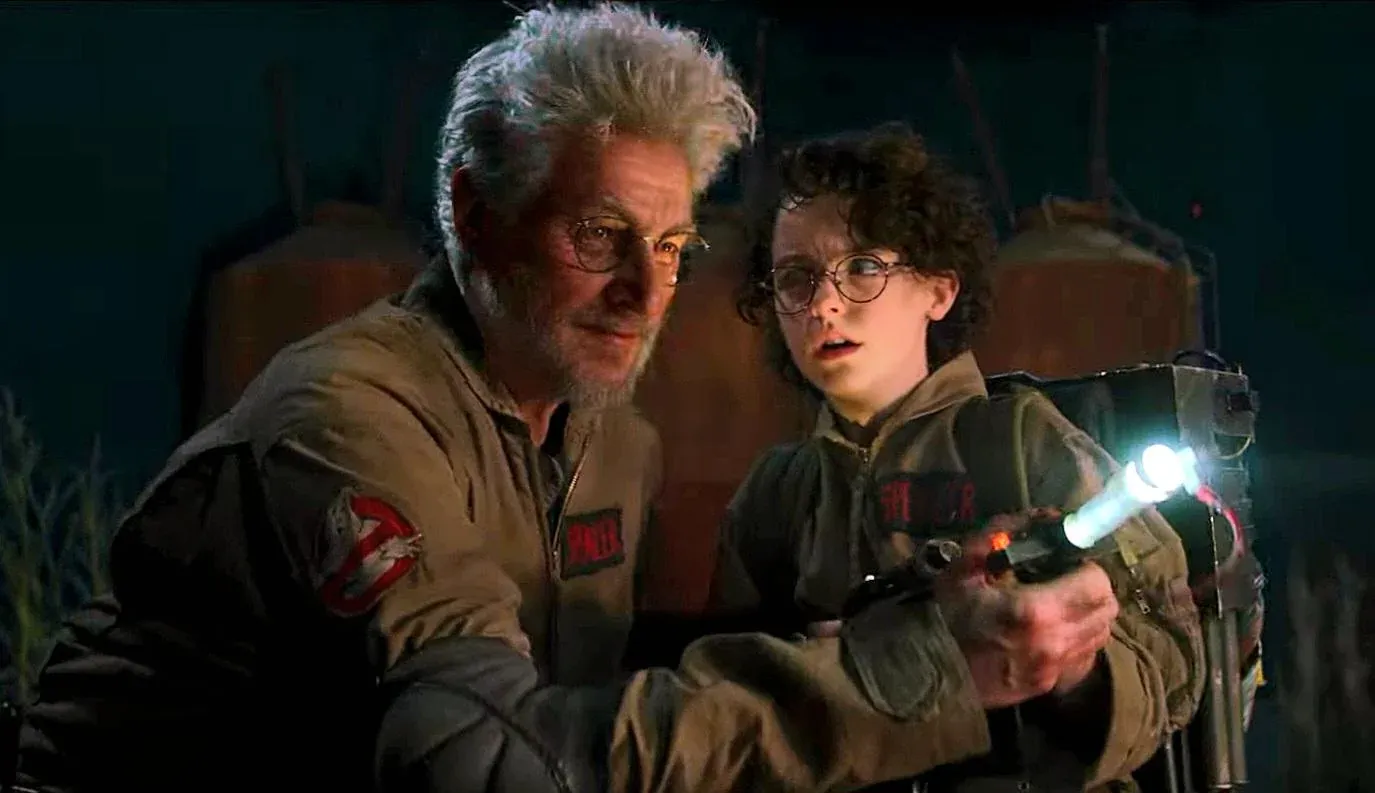
I’ve always been a fan of Ghostbusters, but it’s a franchise that’s struggled. The original movie takes place in a world where ghosts are real, something that the entire world shouldn’t be able to deny after the story’s climax with the giant marshmallow man striding through New York. Rather than addressing the glaring question of how the world would change if ghosts were objectively real and technology could trap them, Ghostbusters II essentially went for a soft reset to the status quo. Everyone just decided the Ghostbusters were full of it, and people went on with their lives, objectively real marshmallow kaiju remains be damned.
Attempts at a Ghostbusters III fizzled as Dan Aykroyd and co. failed to come up with a satisfactory script, and Harold Ramis passed away before they could figure it out. Versions in other media fared better, but the movies seem almost afraid of worldbuilding. The 2016 reboot had some interesting worldbuilding—among other things there’s a government agency covering up supernatural events—but as a reboot it didn’t have to worry about what happens after the Ghostbusters become established. Ghostbusters: Afterlife meanwhile posited that even after Ghostbusters II had the Statue of Liberty going for a stroll through New York, the Ghostbusters faded into obscurity. Again.
Both Marvel and DC’s settings have enormous amounts of lore. There are fictional cities, nations, corporations, government agencies, alien species, and living gods. Despite all of that, Earth remains in an increasingly implausible stasis, always resembling real life more than it should. Atlantis hasn’t joined the UN, there are no space colonies, and the military is still shooting bullets. People have iPhones and Audis and make Star Wars references. S.H.I.E.L.D. has flying aircraft carriers and Hammer Industries is working on humanoid combat drones, but the U.S. military doesn’t have much gear not seen in real life. If Tony Stark’s miraculous arc reactors have become part of how mankind meets its energy needs, it’s happening off-screen. Matt Murdock is still Catholic, and there’s no indication that the literal Norse gods running around New York have affected anyone’s religious inclinations.
Over on TVTropes, "Reed Richards is Useless" is a trope not so much about Mister Fantastic as a superhero, but how he's capable of incredible innovations that never seem to affect daily life, a phenomenon that shows up all over superhero stories. As the TVTropes page discusses, there are all sorts of rationalizations for this, ranging from characters' concerns about what a given super-technology could do to the world to maintaining a more accessible setting for audiences. Ultimately, it makes the superhero genre (among many others) want to have their cake and eat it too by showing these wonders without having to think through their implications. It's not unlike how J.J. Abrams' Star Trek and Star Wars movies throw in all sorts of things (trans-warp beaming, Khan's miracle blood, Force teleportation of objects across astronomical distances, etc.) with zero thought as to their wider implications for the setting.
These days, many superhero movies are the equivalents of big crossover events from the comics, sometimes even taking their names. In the comics, these events significantly (if temporarily) change the status quo. In theory they do in the movies too, but since the movies are relatively few and far between, we don’t really get to see it. The Sokovia Accords that were such a big deal in Captain America: Civil War got a mention in Ant-Man and the Wasp but otherwise had minimal on-screen impact. In the comics, readers got to see practically every active Marvel superhero deal with the Civil War event in one way or another. We even saw its effects on the Great Lakes Avengers, an obscure joke team most notable for Squirrel Girl having been a member. Deadpool had picked up mercenary work finding superhumans who hadn’t registered, so he attacked the GLA, only to learn that they’d voluntarily registered right away. While the movie format necessarily makes it harder to convey such things than comics, Marvel and DC alike have largely dropped the ball on that front. The Blip—where half of the universe’s population disappeared and then came back five years later—is one of the few things in the MCU that’s had lasting consequences, and even that could’ve been better.
When the Star Wars sequel trilogy was still coming out, I’d say things like, “Star Wars needs a Kevin Feige who’s watching the overall picture.” Now that I’ve read a book about what went on behind the scenes, it’s clear that Marvel Studios does a lot more flailing than I’d realized. In Phase One they essentially did the movies for specific superheroes separately and then figured out how to bring them all together in Avengers. If it felt like Marvel Studios was treating all the TV shows as second-class, it’s because they were. They were incredibly stingy with characters who appeared (or could appear) in movies, so that Agents of S.H.I.E.L.D. felt like it was happening in another, cheaper world. The Netflix series somewhat benefited from that neglect, in that they didn’t have to worry too much about the changing continuity of the films or whether they could sell toys. Agents of S.H.I.E.L.D. meanwhile had to figure out how to deal with S.H.I.E.L.D. collapsing after the revelation that it was infested with Hydra agents in Captain America: The Winter Soldier.
Despite the sheer scope and ambition of the MCU, there just doesn’t seem to be a lot of big picture planning. Thanos appearing in a post-credits scene in Avengers was just something Joss Whedon threw in, and at the time there weren’t any plans to do more with the character. To the extent that Feige & co. did have a plan, outside forces made it that much harder to maintain a consistent shared universe. Concerns about fan expectations, film rights, toy sales, the Chinese market, personality clashes, etc. would thwart their plans at times. More than one female character got changed because Ike Perlmutter wanted to sell more toys, and they were walking on eggshells when it came to China, despite the government blacklisting most Marvel movies. The most notable MCU movie to get through to the Chinese market was Iron Man 3. It got an alternate cut that opened with a milk commercial (which helped the industry overcome a PR disaster over mercury contamination) and featured a cameo by Fan Bingbing, a popular Chinese actress. It would be like if a big Chinese movie had an ad for spinach and a Jennifer Lawrence cameo for the American market.
The behind-the-scenes chaos explains a few things. WandaVision was one of the better MCU titles in recent years, and it showed Scarlet Witch having important character growth, coming to terms with the loss she’s suffered and the harm she’s done to others. The character’s next appearance was in Doctor Strange in the Multiverse of Madness, where she becomes a villain, utterly consumed with a wrongheaded goal so she never has to face that kind of loss again, even as she inflicts much worse on others. Her desire to gain unlimited access to the multiverse so she can always be with her sons no matter what is a wonderfully twisted use of the multiverse concept, and I wish it hadn’t come in the context of wrecking WandaVision’s character development. The movie completely undercut the character’s growth and then killed her off entirely. The Wanda who realized what she’d done to the residents of Westview was wrong happily murdered scores of wizards and anyone else who got in her way. It also ignored how MCU wizards have those sling rings that can in fact go between universes and even provide passage out of the Void (as shown in Deadpool & Wolverine). All that shows a profound lack of communication and planning, and a studio that has that kind of problem isn’t going to be able to handle worldbuilding that spans dozens of titles.
The DC reboot under James Gunn is unlikely to address all the issues I’ve raised with superhero movies, but the 2025 Superman film was a breath of fresh air in a lot of ways. It starts with Superman getting his ass beat and then shows him as a hero of exceptional compassion. That alone is a stark contrast to the Zack Snyder version, who is absurdly powerful even among superhumans—Steppenwolf gave him no trouble to speak of once he finally arrived—and a little iffy on whether he should help people. The new movie also shows the hero in a believable relationship with Lois Lane, shows us a wide world with many metahumans, touches on political issues, and presents Superman as a heroic immigrant.
As I write this it remains to be seen how well they can handle the franchise going forward. It does at least look like Gunn has an overall plan that could make his shared universe run more smoothly. One thing Gunn has going for him that Feige didn’t is a parent company with deep coffers that specifically wants this to be a big overall franchise. Where Marvel started out as plucky underdogs who were betting a lot on Iron Man, DC Studios kicked off more than a decade after superhero movies had become well and truly mainstream. Freed from questions of whether a DC film universe can happen at all, he and his team can concentrate more on the actual films and shows.
In the early comics, Superman was more proactive about bettering the world, and supervillains hadn’t quite become a thing yet. In his debut in Action Comics #1, the Man of Steel confronts the governor to stop the execution of an innocent woman, deals with a domestic abuser, rescues Lois Lane from misogynistic gangsters, and discovers a man who’s bribing a congressman. (What happens with the congressman is left to discover in Action Comics #2.) Superman wasn’t fighting Darkseid or General Zod, and he wasn’t dealing with the machinations of Brainiac or Lex Luthor. His opponents were not only crooks, but corrupt business owners and landlords. The comics started in 1938, so the storytelling wasn’t so sophisticated as to show a world changing under Superman’s influence, but I think it’s notable that one of the most enduring and iconic superheroes of all time, the one widely credited as marking the dawn of the Golden Age of comics, was so much about social justice from the beginning.
While the comics don’t have quite as much of an imperative to remain maximally accessible, Marvel and DC put out dozens of different titles per month, each with its own creative team. Playing out all the worldbuilding implications of all of those stories—Marvel alone has published half a million pages of comics across its history—would be a nightmare. That’s probably why superhero stories only really get into serious worldbuilding when they’re a bit more self-contained. Super-beings have a profound effect on the settings of Astro City and Invincible, and that’s one of the ways those titles distinguish themselves from the mainstream of superhero comics. There's definitely room for Marvel and DC to up their games at least somewhat even given the constraints they face, but for those of us trying to create fictional worlds without a massive franchise involving thousands of people, they provide a lesson in what not to do.