
The End of the World

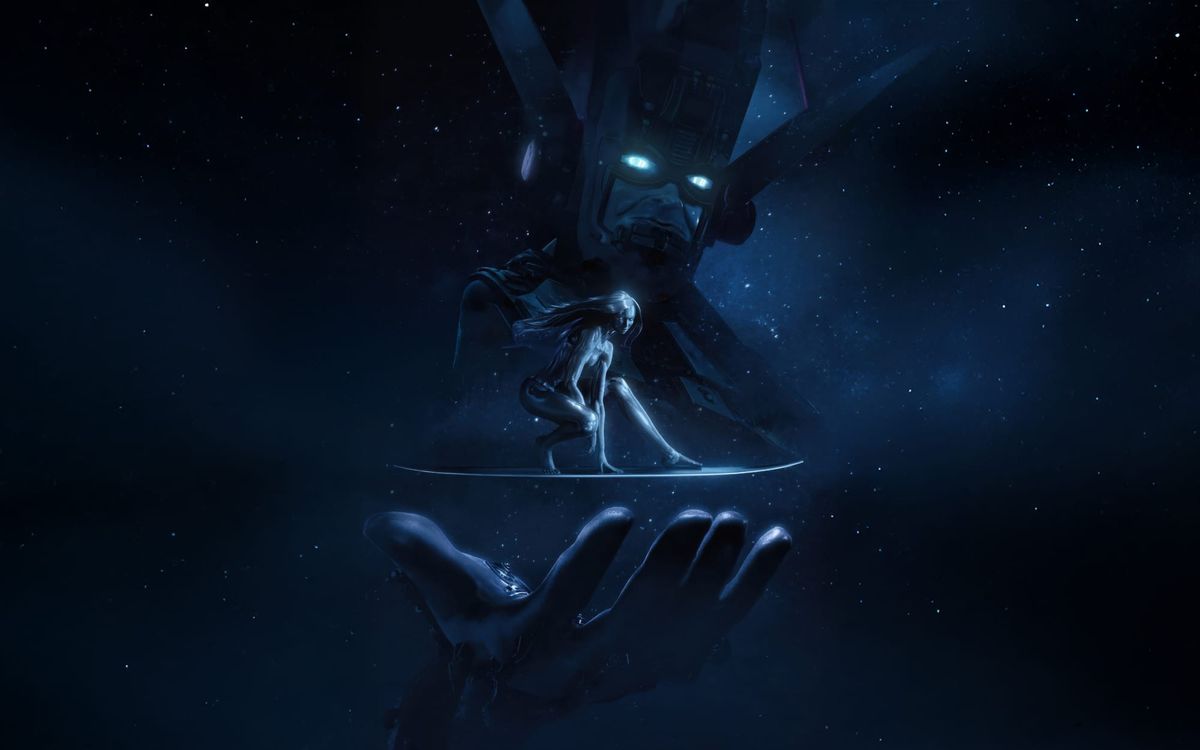
The fourth Xeroverse book, Hero League: The Hunger, has my Galactus parody (the Maw) presenting Earth’s heroes with yet another End of the World scenario. I initially made it part of the series basically because it’s such a standard trope in the genre, but once I got started on the actual novel, I had to look a bit deeper. That led me to think about and read up on apocalypticism, which naturally was a combination of inspiring, interesting, and terrifying. The two books I read for the purpose were American Apocalypse: A History of Modern Evangelicalism by Mattew Avery Sutton and End Times Fascism by Naomi Klein and Astra Taylor. The former traces the history of evangelicalism’s political involvement from its origins in the late 19th Century to the present day, while the latter is about the odd confluence of the two streams of apocalypticism from evangelicals and tech oligarchs.
Join my Patreon to get early access to posts, plus bonus material and a backlog of essays, fiction, and games!
American Evangelicalism is an influential subset of Protestantism, and a form of Christianity deeply intertwined with American conservatism. There are a few exceptions (like how they didn’t support the Axis Powers during WW2), but for the most part, (from my perspective) evangelicals have been on the wrong side of basically every issue that’s come up during their history. They had mixed feelings about the KKK, but they were fully on board with racism, including a heavy involvement in promoting racial segregation. There were and still are Black evangelicals, but the white ones largely ignored and marginalized them. (In some cases, Black evangelicals’ apocalypticism includes the view that Jesus will put all the racists in their place.)
Evangelicalism has been with us for over a century now, and they’ve learned the hard way to avoid making specific predictions that can easily turn out to be wrong. In the past they’ve declared that WW1 or WW2 would herald the End Times, and called countless political figures the Antichrist. The New Testament actually says that Jesus will return “like a thief in the night,” though it also arguably claims that the End Times would happen while his original Apostles were still alive. Either way, claiming to have worked out a specific date mathematically from scripture is destined for failure both in pragmatic terms and on the basis of what the book actually says.
While apocalypticism is baked into Christianity as a whole (and to a lesser extent Judaism), evangelicals generally treat Armageddon as something that is definitely coming soon. In particular, they favor premillennialism, the idea that the Tribulation—a period of worldwide strife and destruction—will come before Jesus’ millennium-long peaceful reign rather than after. There’s a definitely air of righteous vengeance in the way they fantasize about Jesus coming back as a warrior to smite the unrighteous, who conveniently are everyone they hate. While it’s dressed up as a reassertion of divine power, apocalypse is also a fantasy of cosmic justice. The Book of Daniel is one of the major works of Jewish apocalyptic literature, and Daniel’s story is one of divine visions of the end of the Babylonian Captivity and beyond. The New Testament’s major work of apocalyptic literature is the Book of Revelation. People have interpreted it in countless ways of course, but one of the major ones is as a screed against the Roman Empire, making it in a sense a Book of Daniel for a First-Century audience. While many other religions and cultures have some semblance of an apocalyptic belief, they tend to be cyclical rather than linear. Norse paganism’s Ragnarok is to be followed by a rebirth, and Hinduism presents a universe that inherently runs in cycles. Even if we are in the debased state of Kali Yuga, a new cycle will follow.
The big problem with evangelical apocalypticism is how it influences the way they view the world and shape policy. There’s a long history of evangelicals reacting to the world’s horrors with gleeful religious fervor, because in their eyes, real people suffering and dying is a sign that Jesus’ return is imminent. They’ve assigned antichrist and other unholy roles to a host of figures, and while there are of course very legitimate problems with some of their targets, that doesn’t mean the application of brutal military force is always justified. The Iranian government has done some atrocious things over the years (which probably could’ve been avoided if the US government hadn’t overthrown their government and installed a dictator), but like all countries, it has a large population of innocents who don’t support the ruling regime.
The documentary Praying for Armageddon features a pastor giving a chilling speech where he proclaims that it’s pointless for us to pursue peace because God wants us to have war. All of that is a problem because evangelicalism has gone from a fringe form of Protestantism to a movement with serious political power. From Reagan on, every Republican administration has been heavily in bed with evangelicalism, giving them an ever-increasing influence on how major political decisions are made. They have an especially strong influence in the military, to the point where the Military Religious Freedom Foundation often works on behalf of Christians who face bullying and discrimination for not following a particular kind of evangelicalism.
The idea that people who would celebrate the end of the world, who think pursuing peace is pointless, are in positions of power in both the government and the military is chilling, but the bad news doesn’t end there.
End Times Fascism is about the alliance of evangelical politics and tech oligarchs that threatens us all. Men like Peter Thiel and Elon Musk seem to think they’re above the rest of us, and they’re happy to risk climate catastrophe and other apocalyptic developments as long as they get to do whatever they want. When Musk decided that ChatGPT was too “woke,” he rushed the launch of his own LLM endeavor. His Colossus data center ran roughshod over communities in Memphis. While bypassing normal approvals processes, he bought out an old factory and set up gas turbine generators to power his GPUs. Gas turbine generators are great when a hospital needs power during an outage, but they produce an enormous amount of air pollution, and Colossus ran a massive number of them 24/7. Getting Grok up and running was much more important to Musk than the lives of people with the misfortune to live nearby. The Boxtown neighborhood of Memphis started with poor emancipated slaves improvising homes out of abandoned railroad cars and other scrap materials, and was already subjected to pollution due to its unincorporated status before Musk's people rolled into town.
Galactus came from Jack Kirby and Stan Lee having the idea to try doing an antagonist who was a godlike force of nature, someone who the Fantastic Four couldn’t beat with force or even super-science. (Kirby also said they were just trying to come up with something so they could get their next paycheck.) The original “Galactus trilogy” of FF comics don’t have room for backstory, but they did present Galactus as an unknowable cosmic force rather than something malevolent per se. The notion of Galactus as a force of cosmic balance came in later, as he was a popular enough character to merit countless appearances over the ensuing decades. He changed heralds several times, got transformed into a star, and merged with the Ultimate Universe’s Gah Lak Tus (a massive fleet of city-sized drones that consume worlds). Between his popularity, his usefulness, and his place in the Marvel mythos, Galactus is unlikely to ever meet a permanent end. In a way, tech oligarchs want us to think of them as being less like fellow flesh and blood primates and more like Galactus. Since Elon Musk is ultimately just another Homo sapiens, we can and should ask why he should have the right to override the will of thousands, millions, even billions of people.
Superheroes have an unusual relationship with apocalypse in that they regularly prevent the world from ending. That’s partly because the genre favors maintaining a status quo so that serial publication can continue, but protecting life is also a fundamental part of the superhero ethos. It’s hard to say just how much influence the prevalence of geeky Jewish men in the Golden Age of comics had, but Judaism has a concept of tikkun olam, or “repairing the world.” It has a long and complex history of course, but contemporary Judaism often treats it as an emphasis on making the world we live in a better place rather than obsessing over the afterlife. While Judaism does have its own kind of eschatology—where God will restore Israel and create heaven on earth—for Jews it isn’t a preoccupation in the manner of evangelicals, much less something they believe mortals can hasten. Where superheroes fall short of tikkun olam is in their reactive approach, where they mostly just spring into action when a supervillain is causing trouble. Where the genre does show superheroes trying to actually change the world for the better, it normally has unintended consequences.
I’m still feeling out where Hero League: The Hunger is going, but the Maw’s claims of being necessary to the cosmic balance are looking more and more like a self-serving lie. I don’t want to hit the reader over the head with polemics and a Big Message, but when Xero says, “Apocalypse is a copout,” he has my full endorsement. The world has plenty of horrors, but a lot of human history is a chronicle of how we fought to make it better, even if our opponents were too often other people. Utopia isn’t possible—it’s in the name after all—but if the world doesn’t end, we can make it better.
I recently watched the documentary Welcome Space Brothers, which is about the Unarius Academy of Science. Although they don’t like to be called a religion, people generally consider them a “new religious movement.” They have elaborate lore about how we’re all reincarnated beings with deep connections to a wider galactic civilization, among which we’re currently the outliers, as we don’t exist in a state of spiritual enlightenment and love. They claim that they’re presenting fourth-dimensional science, but their beliefs include a lot of the tropes of New Age spirituality. In the 1980s, they predicted that our “space brothers” from the other 32 worlds would at last land on Earth and herald a new era for our planet in 2001. Needless to say, that didn’t happen, and they took 9/11 as proof that we weren’t ready. Having read up on evangelical apocalypticism, it was striking how much more positive the Unarius vision for a new era is. Evangelicals expect mass war and suffering, followed by Jesus smiting their enemies and establishing God’s kingdom, whereas these smiling UFO weirdos think that 33 ships will land and bring about galactic brotherhood. I don't find the Unarians any more convincing, but I know which one I'd prefer to have happen IRL.