The Pervert’s Guide to Deutschland (and Faerûn)


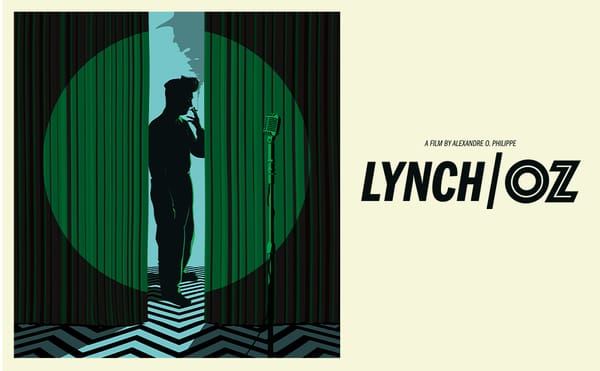
I first discovered the German heavy metal band Rammstein because I bought the soundtrack to David Lynch’s Lost Highway. This was long before I became a huge David Lynch fan, and at the time I picked it up solely because it had the Nine Inch Nails song “The Perfect Drug” on it. (The US version of the song's EP notably lacked the actual original version, instead containing five mediocre remixes.) Trent Reznor chose Rammstein’s songs “Rammstein” and “Heirate Mich” for the soundtrack, and that was the band’s first real introduction to non-German audiences. If you look up translations of the lyrics, “Rammstein” presents imagery of mass death, while “Heirate Mich” (“Marry Me”) is a tale of necrophilia, like a particularly lurid Edgar Allan Poe story. That was in 1997, and they’re now up to eight studio albums, plus several singles, live albums, compilations, and some truly memorable music videos. Along the way they’ve courted a lot of controversy.
Germans are justifiably leery of anything that smells of Nazism, and Rammstein delves into taboo topics while using the kind of hyper-masculine aesthetics that fascists tend to love. Lead singer Till Lindemann’s vocals, which are unusually well-enunciated and have rolling Rs, have even been compared to how Hitler spoke in his speeches. The members of Rammstein aren’t Nazis though, and some of their songs are decidedly anti-authoritarian. They grew up in East Germany, before the fall of the Berlin Wall, and hold the Nazis and authoritarians in general in utter contempt even by German standards.
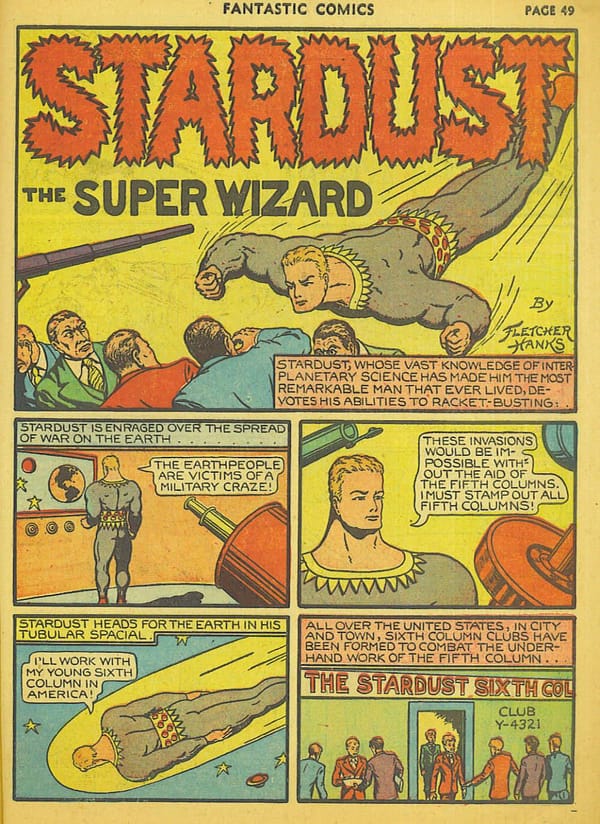
Slavoj Žižek is a is a Slovenian Marxist philosopher and psychoanalyst. Many people first heard about him when he attempted to debate Jordan Peterson, which wound up being a strange exercise because Peterson came to debate a major Marxist philosopher having only read The Communist Manifesto. Whether you agree or disagree with Marxism, it’s not exactly a simple philosophy. Das Kapital alone weighs in at about 288,000 words, and the consensus among Marxists is that reading it is pure torture. The manifesto is also from 1848, and Marxist thought has evolved in the 178 years since.
Žižek is a fascinating, manic eccentric with a habit of punctuating his speech with what sounds like a cocaine sniff. In 2012 he and Sophie Fiennes put out a documentary called The Pervert’s Guide to Ideology, which delves into the ways that different ideologies embrace perversion to entice members and give them a release that they crave. Army marching songs can be vulgar affairs, and that taste of perversion draws recruits together as part of the military. The hazing rituals of fraternities and boarding schools similarly draw students together through a shared perversion. The documentary mainly focuses on these things as they come to us through cinema, but Žižek also takes some detours to talk about the psychology of Coca-Cola, Kinder Eggs, and Rammstein.
Citing their song “Reise, Reise” in particular, Žižek posits that Rammstein offers the enjoyable perversity of groups like the Nazis while separating it from those poisonous ideologies. “Reise, Reise” is a blatantly homerotic song about fishermen:
Arise, arise seaman arise
Each does it in his own way
One thrusts the spear into a man
Another then into the fish
The result is something that plays with fascist-adjacent emotions and aesthetics yet veers into territory that the Nazis would call “degenerate.” Fascists aren’t known for their media literacy though, so they may not be fully aware of how Rammstein can rob their perversity of its power.
The band’s seventh, untitled album begins with a song called “Deutschland” (Germany). It has a video by the prolific music video director Specter Berlin (who also did the film ANTIMARTERIA with the German rapper Marteria), and a teaser video stirred up controversy for featuring footage of the band portrayed as prisoners in a WW2 concentration camp. The Nazis accusations started up yet again—quite possibly playing into a deliberate ploy to garner media attention—but the video and the song were again something that would enrage the Nazis.
This is readily apparent from how throughout the video a Black actress named Ruby Commey (the video being her only foray outside of live theater so far) portrays Germania, the personification of Germany. Germany has grown more diverse, and not everyone is quite able to handle that. With the central image of a beautiful, dark-skinned Germania running throughout, the video portrays numerous moments in German history, from an invasion by Rome up to the dramatic upheavals of the 20th Century. (And there was a lot going on in Germany after WW2 that Americans know next to nothing about.) The imagery is often violent and authoritarian, showing how the various governments of Germany have harmed its own people and others. Some are worse than others, but none are innocent. The lyrics express a deep ambivalence about the fatherland:
Germany! My heart in flame
Want to love you and to damn you
Germany! Your breath is cold
So young, and yet so old
We have the misfortune to be living in a time of rising nationalism, and people like Alex Jones conflate nationalism with patriotism. Loving your country as a patriot is arguably a good thing, but the destructive pursuit of a unified national identity and absolute sovereignty is not. It’s one of the elements that fueled all the bad guys in WW2, and for that matter a lot of the negative aspects of the “good” guys. Every nation has past sins, and it’s important to grapple with them. This isn’t because we should wallow in guilt or surrender to outside forces, but because it’s far too easy to reinforce and repeat past misdeeds. Germany has plenty of shameful history, and Rammstein repeatedly says to their country, “I want to love you, but I can’t.”
Now comes the part where I relate this to Dungeons & Dragons. There aren’t all that many scholarly works on D&D or role-playing games, and sociologist Gary Alan Fine’s Shared Fantasy was one of the earliest of these. In it he presents the results of his study of the TTRPG subculture (or “subsociety,” to use his technical term) in the Twin Cities at the time. The thing I find the most striking about it, many years after I first checked it out from my local library, is how some of the gamers he interviewed had a penchant for having their characters act out depraved violence. Needless to say, not everyone plays their D&D characters as violent rapists, but acting out taboos is a definite thread running through the hobby. Some nerds like to think they’re better than jocks, but there’s an ugly underbelly to nerd culture that can result in something like “locker room talk” playing out at the game table. Like boot camps, boarding schools, and Rammstein concerts, that element of bonding through perversity can make itself known through D&D and other RPGs.
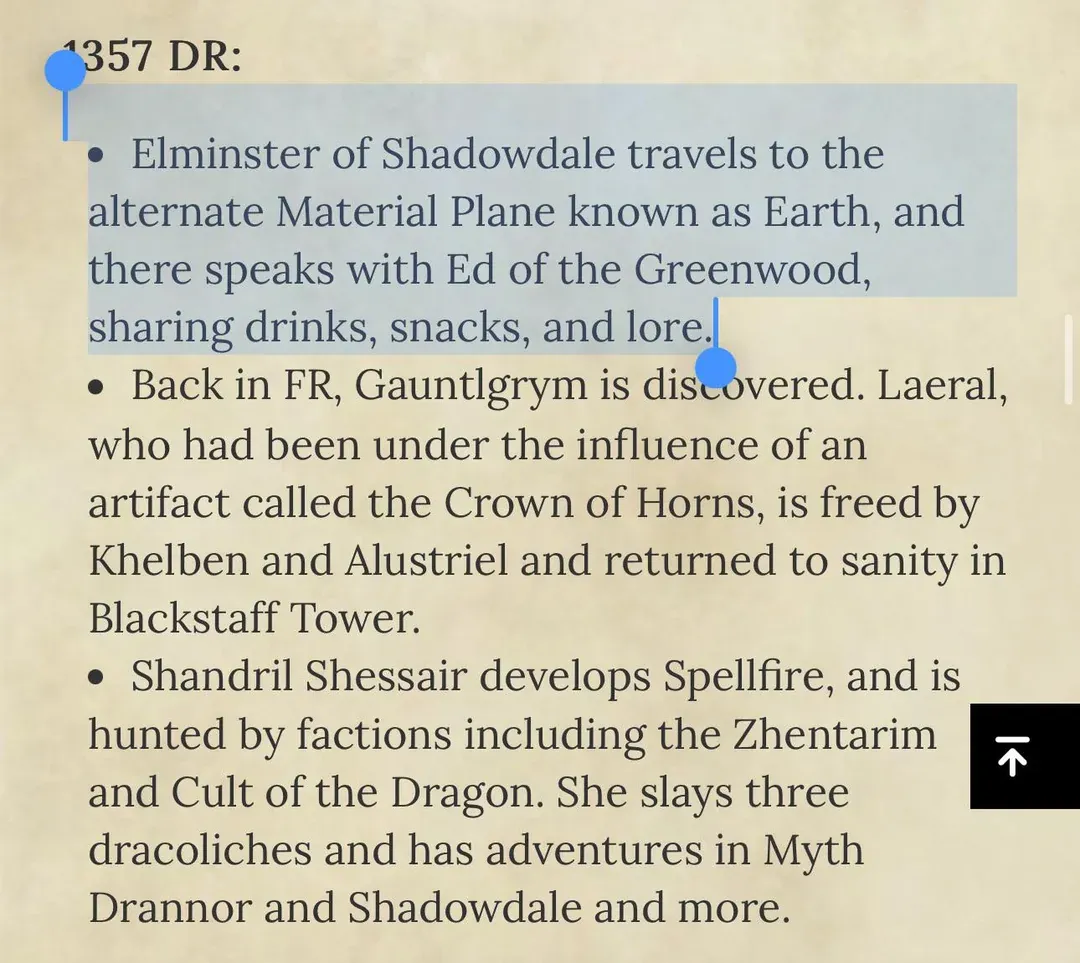
Forgotten Realms is by far the most popular D&D setting, and I still struggle to see the appeal personally. At times it seems like Generic D&D with the map already filled in, but that’s partly because the publishers have watered down the strangeness of Ed Greenwood’s original vision. From what I’ve read about him online he’s a weird old hippie with a huge white beard, and his Forgotten Realms was a strange place with weird (but consensual) sex stuff going on, including things happening when Elminster visited Greenwood on earth. While that sensibility is different from (and easier to stomach than) the brutality of “fantasy GTA” style D&D, it still has a transgressive streak that may explain the setting’s popularity.
Role-playing games are inherently personal to the people at the table, and while the contents of the rulebooks do matter, they don’t overwhelm the same way the published material can in other media. That makes it hard to draw a directly line from Gary Gygax’s words to transgressive D&D play, but I don’t think it’s a coincidence that the only TTRPG line to seriously challenge D&D’s dominance (without being a clone of D&D a la Pathfinder) is the World of Darkness, which offers equal or greater opportunities for transgression in play. White Wolf offered games with not only violence but sex and body horror, while tapping into real-life issues and themes, even if it was in a ham-fisted, “fuck you dad” kind of way.
There have been exceptions here and there, but for the most part my friends and I have always played TTRPGs without getting especially violent, sexual, or transgressive. I have two different friends who do pornographic artwork, but even when playing something like Maid RPG or that time I tried to do a one-shot with White Wolf’s Freak Legion, we kept things pretty chaste. I don’t know how normal we are in that respect, but I’ve certainly heard a few stories, ranging from groups that enjoy playing out in-character relationships and hookups to in-game sexual assault as bullying directed against new players. One time a member of my gaming group brought along a friend visiting from out of town, who after going on a weird rant about the evils of D&D 4th Edition, tried to bring vicious, fingernail-pulling torture into our pulpy, optimistic sci-if game. It was jarring, and a reminded that whatever the books say, each game table has a microcosm of its own gaming culture.
Carlton Mellick III is a “bizarro fiction” author who specializes in blatantly transgressive short stories and novellas with eye catching titles. One of these was The Kobold Wizard’s Dildo of Enlightenment +2, where the PCs in a stupid, horny D&D game become self-aware thanks to the titular magical sex toy. I won’t try to vouch for the story as something you should rush out and read—the title does match the tone and content of the story—but it captures the essence of a particularly immature kind of D&D as played by teenage boys. One of the PCs is statted up as an elf, but played as a poor imitation of Spock, while the DM brings in hyper competent, scantily clad female NPCs to help the PCs as they take on the Tardis Keep. The book ends about how you’d expect, with the PCs encountering and killing the gaming group, taking bloody vengeance on the boys who subjected them to stupid adventures in a nonsensical world.
Ultimately I’m not sure what to do with this information. The uniqueness of some indie TTRPGs comes from formalizing things that some people do at the table, and that occasionally includes transgressive elements. D. Vincent Baker’s Poison’d is a game of vicious pirates, and a pointed reaction to the sanitized, rape-free portrayal of piracy in the Pirates of the Caribbean movies. While Baker is a very talented game designer and Poison’d is genuinely interesting from a mechanical standpoint, it certainly didn’t catch on the way Apocalypse World did. While there’s definitely a crowd that likes transgressive TTRPG play, they may be relatively niche, have a preference for more plausible deniability than a game like Poison’d allows, or some combination thereof. This kind of play is very human, but like a lot of human things it needs to be tempered with a basic consideration for others.