Matrices & Messiahs

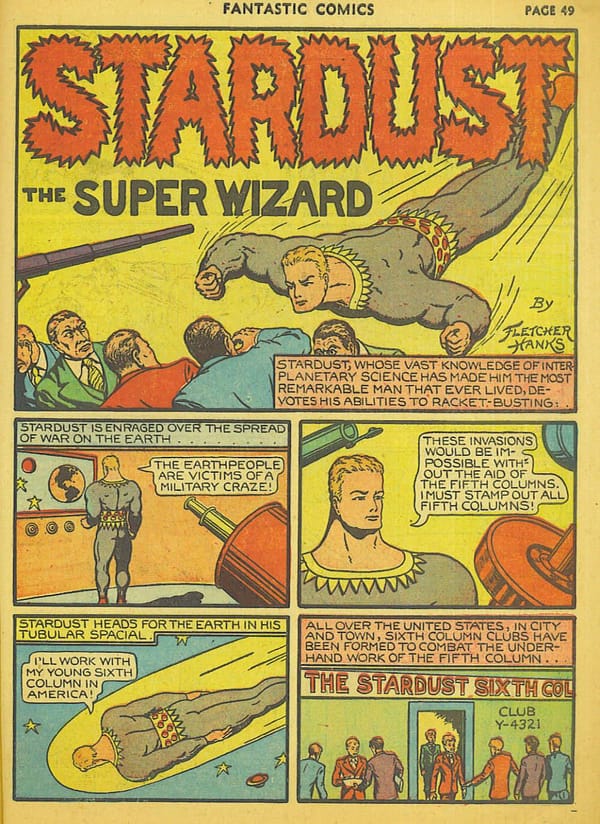
Working on the Xeroverse novels led me to The Myth of the American Superhero and its “American monomyth” becoming a significant influence on the story and my understanding of the world. I’ve covered it previously, but in short, the American frontier fostered a heroic archetype of a loner who uses redemptive violence to kill bad guys to rescue a settlement that is virtuous but unable to defend itself. It makes violence into a necessity, it denigrates institutions and collective action, and it valorizes men who ignore the rules to brutally eliminate what they deem to be threats. It leaks into real life in the strange complex Americans have about the President, and things like the lionization of Oliver North for the Iran-Contra scandal, on the principle that he was enabling those atrocities in the name of fighting godless communism. A philosophy that enables those things is one we need to understand and criticize, especially since it manages to be both pervasive and little-known. A lot of people know that they want bold, masculine leadership, and a lot of people are aware of that tendency in the first group, but very few know about the American monomyth and its myriad tentacles.
The authors cite John Wayne’s westerns as quintessential examples of the American monomyth, but because it’s so pervasive, it shows up in unexpected places. Star Trek has a definite progressive bent, but Roddenberry pitched the original series as “Wagon Train to the stars,” (citing a popular 1957 Western TV series). It seems odd that the franchise has a lot of conservative fans, but they tend to enjoy Kirk as a classic hero who is willing to flout the rules and apply heroic violence when he feels it necessary. Newer Trek media does have plenty of room for legitimate critiques (in my opinion, primarily in terms of plotting), but I think what really bothers them is how the franchise has abandoned black and white morality in favor of postmodern ambiguities. Certainly I’ve seen some people in that crowd declare J.R.R. Tolkien superior to George R.R. Martin specifically because of the former’s clear-cut good and evil.
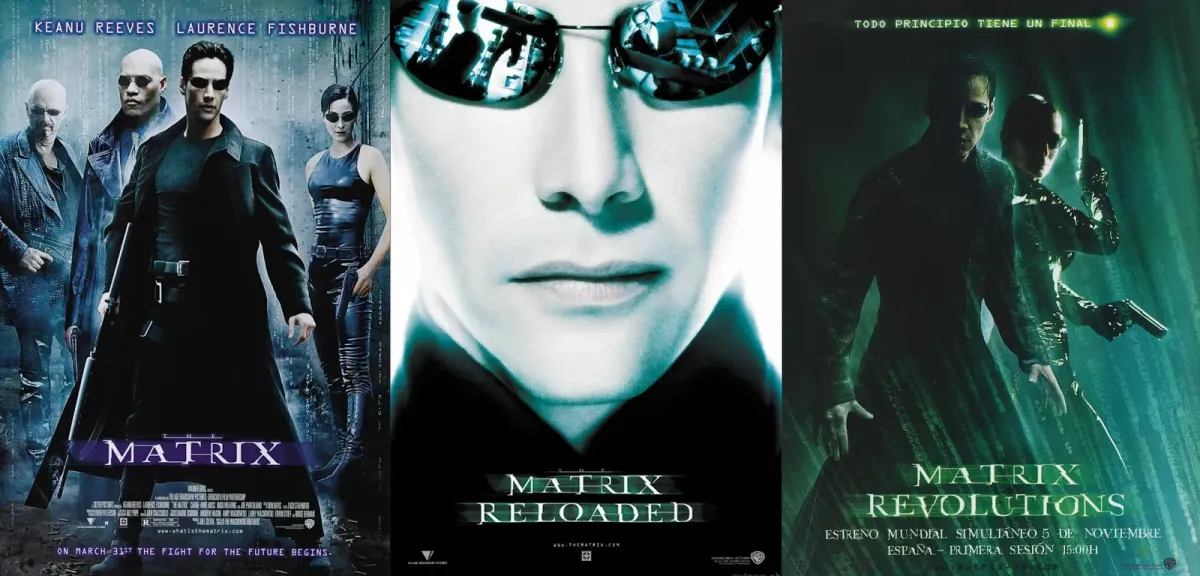
The Matrix and the wider franchise around it are a very interesting case, because the Wachowskis were attempting a deconstruction of messiah/savior type characters, but for a variety of reasons their intended message didn’t quite get through. We know that there was some studio interference, in that they meant for the second movie to be a prequel—the story of how the Matrix came to be, later adapted as an animated short—but the studio wouldn’t let them make a sequel without the established stars. Thus, part of the issue with the trilogy is that they stretched the plot of one film into two, and while action was always a key element of the series, the stretch marks show in how numerous and long those action scenes are.
The first movie presents the audience with the story of John Anderson, a hacker who always knew there was something wrong, but never quite understood what. Morpheus and his crew rescue him from the Matrix, the virtual world where humanity is imprisoned to serve as a power source for the “Machines,” artificial intelligence that mankind created and which in turn got out of control. He goes by his hacker alias, “Neo,” and Morpheus firmly believes that Neo is “the One,” the chosen one who will liberate humanity. The movie ends with Neo awakening as the One, defeating Agent Smith, and saving his new comrades. The terminology of this world is unusually iconic and simple; Neo’s title isn’t “Messiah” or anything elaborate, just “the One,” like the complication and specificity of the past has been sheared away.
In the first movie, Morpheus said that the One could alter the reality of the Matrix however he wanted. If that’s true, then Neo doesn’t seem to do a great job of exploring those possibilities. He flies, fights exceptionally well, moves with unnatural speed, can stop bullets with his mind, and occasionally pulls out some other stuff when the plot demands it, but that’s a far cry from the wonders that Morpheus’ description promised. Even in the final battle of the trilogy, he just flies and uses superhuman martial arts. The simplest explanation is that Morpheus is relating his fervent religious beliefs rather than anything he rationally knows to be true. That makes the most sense, but could’ve been communicated better. The way his fanaticism and how it both gives him strength and sometimes leads him astray is another important theme.
Another piece often missed in Morpheus’ monologues is the detail that the Machines are combining human body heat with “a form of fusion” to generate their power. The rules of the world of The Matrix are still grounded enough that it makes sense to question that, since there’s nothing about “a form of fusion” that suggests that the Machines couldn’t run this biological power generation scheme with animals, perhaps even ones genetically engineered for that purpose. This seems like another thing that got muddled, because the Wachowskis were originally planning to say that the Machines were using human brains as processors. That’s a very different and I think more plausible explanation, and one that would handily answer the question of why they can’t just use cows. Human brains are staggeringly complex and operate in ways alien to our comparatively simple computers. Harnessing them could potentially be vastly more efficient than running the equivalent processing power via conventional computers. Given that for the Machines computing power doubles as their capacity to maintain a population, that would be an ever-growing need. The possible end of the Matrix isn’t quite an existential threat to the Machines, but the level of survival that the Architect is willing to countenance probably isn’t going to be great for the Machine population at large.
I have to read between the lines a bit, but it seems like one vitally important aspect of the Machines is that they have a deep and strange relationship with humanity. Humans created them for humanity’s benefit, with forms, functions, and ways of thinking that make sense to humans. They’ve abandoned humanoid physical forms, but humanity’s fingerprints are still all over them. Deliberately causing the extinction of humans could simply be something their programming disallows at the very deepest level. A short in the Animatrix explains how the Machines came about and how things reached a point where they couldn’t coexist with humanity. The Matrix then becomes an audacious but effective way to contain humanity without wiping us out. Like a lot of fiction, they echo Frankenstein’s monster turning on his arrogant creator, and like the Creature, they can’t seem to separate themselves from their makers. We humans aren’t entirely sure we even have a creator, but it’s still a profound obsession. Imagine knowing with absolute certainty that your creators exist, are your enemy, and are weaker than you.
Wetware not only gives the Machines massive processing power, but the ability to run processes that are impossible for computers per se. With these two types of computing in the world of the Machines, the duality of the Architect and the Oracle comes into sharp focus. One is pure hardware, the other pure wetware (“an intuitive program”), hence their drastically different methods and ways of thinking. I have to wonder what “leakage” there might be from squishy human minds into the reality of the Matrix, and everything else the Machines are running on mankind’s wetware. Earlier versions of the Matrix had room for mythical creatures like ghosts and werewolves, and while it may have just been an experiment on the Architect’s part, it could also be a result of the source of their computing power.
That could also explain the nature of the Matrix’s simulated reality, and the relative pliability thereof. The things the Matrix-diving resistance members can do, the superhuman jumps and so on, require a firm belief that they’re possible, suggesting that a person’s internal perceptions can shape the simulation up to a point. Really, it would account for a lot of the things about the Matrix that don’t feel like a computer simulation. Sentient programs are far more similar to humans than the resistance ever suspected, and within the Matrix, the simple rules applied to software don’t quite apply. The Keymaker for example is a sentient program, but despite being a piece of software, getting shot brings about his end. The way the Machines eventually make peace with humanity too feels like it could be a result of changes bubbling up among them, in part due to the human influence.
When Neo meets sentient programs other than the Agents, he finds they can be strikingly human. The Merovingian enjoys carnal pleasures and is an all-around asshole (a very human thing to be), while Rama Kandra, despite being a piece of software running a power plant, shows sincere love for his wife and daughter. Rama Kandra is especially interesting because he shows that the division between human and Machine isn’t as clear-cut as everyone believes. He loves his wife, and together they created a new program/daughter who they love, one that has no assigned purpose. Neo asks questions, but he accepts fully that he’s meeting Machines capable of love. The existing order is brutal even towards Machines who defy it, and Rama Kandra is only a rebel insofar as he must be to send his daughter to safety. Perhaps it could’ve been communicated more clearly, but that moment seems to set Neo on the path to reconciliation.
It’s in the sequels that the Wachowskis begin attacking their messiah’s status. Over the course of The Matrix Reloaded, Neo fights his way to the Source, the very heart of the Matrix and the core of the Machines’ intelligence. Notably, programs intended for deletion are sent to the Source, where the system reabsorbs them, making it somewhat of an analogue for heaven or reincarnation. There he meets the Architect, the sentient program who designed the Matrix. Their conversation decimates the image of the One as savior, revealing that Neo is the sixth iteration of the One, and it’s really a control mechanism, a way to do a necessary reboot that keeps the Matrix from collapsing and killing everyone plugged into it. Neo has the impossible choice of preserving only 23 people from Zion or saving Trinity from certain death and risking the extinction of humanity. We can debate how convincing the on-screen romance between them was, but Neo was quick to choose Trinity, and saves her life despite the Architect’s prediction that he would fail. The Architect is fully a utilitarian, and he has trouble anticipating emotional, non-utilitarian behavior. Neo is acting out of love, and love is one of the most unpredictable and intense of emotions.
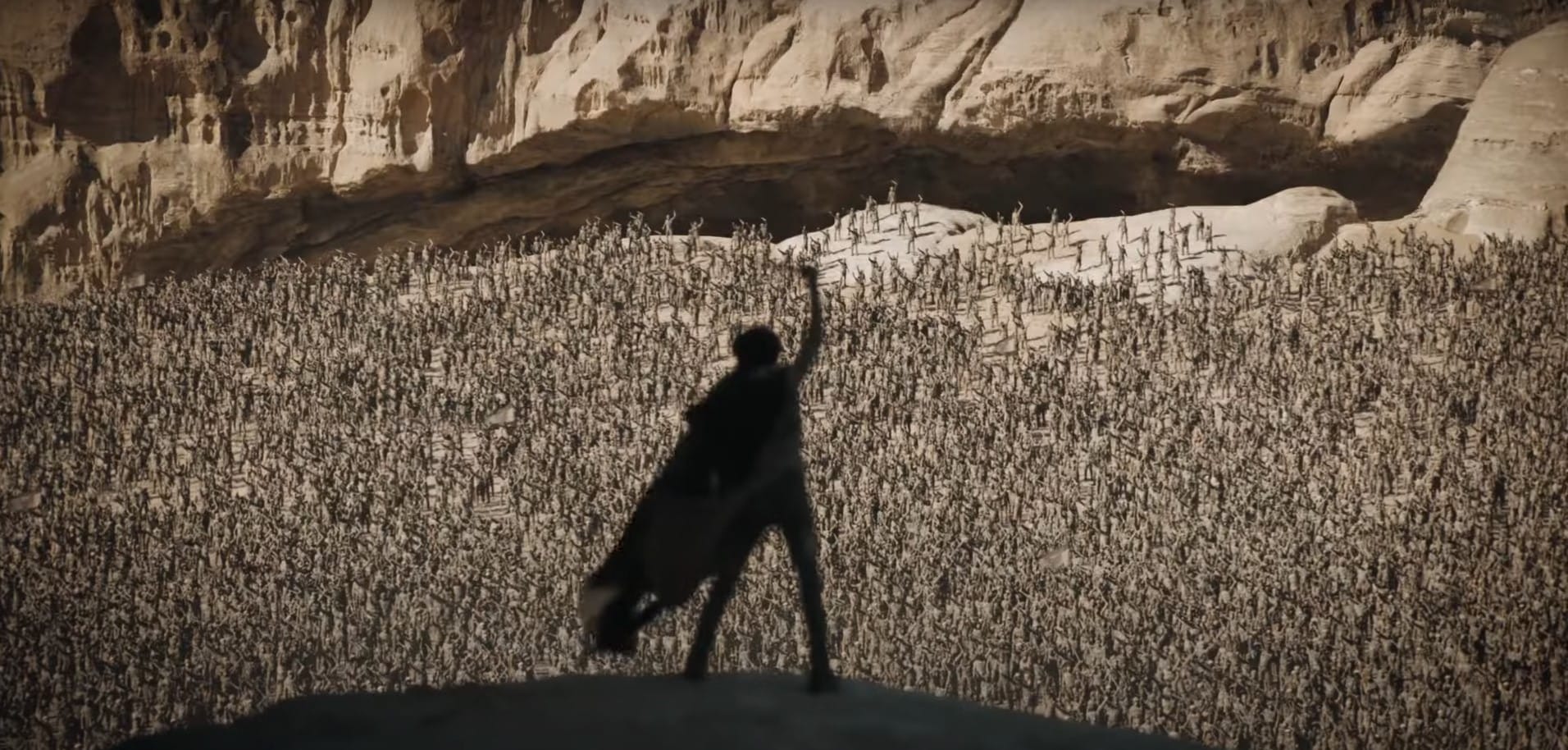
Putting the revelation of the true nature of the One in a long, deadpan monologue at the end of the second movie may not be the optimum way to reveal this particular bit of worldbuilding, but regardless of how it’s delivered, it’s absolutely critical to the intended message of the films. Like Paul Atreides as Lisan al-Gaib, the One is something the system created in order to exert control, and there isn’t any divine force decreeing that this young man will be the new messiah. In Dune, Paul is desperate to find a path towards liberation that won’t set the galaxy on fire, while Neo must deviate from the destiny laid out for him as the One to find a path forward.
Where in the original movie Agent Smith is simply another Agent of the Matrix—albeit one who has become particularly disgusted with humans—in the sequels we learn that rather than destroying him, Neo somehow imprinted Smith with some of the One’s power, freeing him from his prior constraints. When Smith returns in The Matrix Reloaded, he has the power to overwrite others with copies of himself, and he begins taking over the entire Matrix that way. If Neo is the Christ of the Matrix, Smith is the Antichrist. Neither figure fits those mythic counterparts exactly, but the resemblance is definitely there. I wonder if Smith’s role might have been stronger if he’d said more about his motives, but where Neo struggles with the implications of choice, Smith removes it from the equation entirely. He robs everyone of their individuality, replacing them with more of himself. Choice leaves the equation in favor of Smith’s drive towards apocalypse. As far as I know the Bible doesn’t say anything about Jesus inadvertently unleashing the Antichrist on the world, but this is a world where the only messiah available is one that the system manufactured, so it only makes sense that he would face off with an artificial antichrist.
At the very end of The Matrix Reloaded, Neo finds he can use the powers of the One to disable enemy Sentinels even when he’s outside of the Matrix, a development that has fascinating implications that the movies don’t satisfactorily follow up on. One possible explanation is that what they thought was the “real world” is actually another simulation, and there’s another level of reality Neo has yet to experience. There are other possibilities that don’t thoroughly upend the franchise’s established reality, but all we really get is the Oracle saying that the powers of the One can reach beyond the Matrix. Since these stories are situated in relatively realistic science fiction, you can’t really handwave stuff as being mystical without shifting the genre.
However, the Oracle’s words do make a kind of sense if they mean that the One’s powers can reach into every part of the Machines’ digital world, not just the Matrix. Every pod-born human is stuffed full of interface hardware, and while they never explicitly say these implants have any wireless functionality (something that would be sensible but with implications you’d need to think through), it’s certainly plausible. The Machines totally remade the planet as well, and there may be precious few places without at least traces of their digital infrastructure. Between those things, it starts to make some sense that Neo might be able to send signals into the system that shut down those Sentinels. That he connected to the system that way would also explain how his consciousness ended up wirelessly plugged into that virtual subway station. Mobil Ave. (an anagram of “limbo”) is a place in-between the Matrix and the wider digital world of the Machines, exactly where you’d expect someone who connected to the wrong system to end up.
The big pattern that’s emerging trying to analyze the franchise is that there’s some really fascinating ideas that weren’t conveyed very well.
The Matrix Revolutions brings the story to a close. The crew rescues Neo from the digital limbo he’d become trapped in, and the final battle commences. There are exhaustingly long scenes of the intense fighting to protect Zion from Machine invaders, but Neo and Trinity make a beeline for the Machines’ city, the physical location of the Source. Along the way Trinity dies and Neo is blinded, but he nonetheless arrives and convinces the Machines to let him deal with Smith in exchange for peace. Their battle is long and feels like a green-tinted, rain-soaked version of a Dragon Ball Z fight. In one of the Matrix video games, there’s even an aside where the Wachowskis, though pixelated avatars, tell the player that the story is really about deep philosophical stuff, but hey, this is a video game, so we have an Agent Smith kaiju for you to fight.
Regardless, Neo’s ultimate victory is in the form of a sacrifice, where he lets himself be assimilated by Smith, setting off a chain reaction that eliminates the villain and begins restoring the Matrix. (The reboot was always supposed to happen, so the Matrix’s restoration at the end actually isn’t just deus ex machina.) On a purely mechanical level, without taking the story’s themes into consideration, Neo is infecting Smith with the power of the Source, thereby deleting him. Like the Antichrist, Smith can’t stand up to the real power of the heavens. In that light, their battle feels perfunctory, something that the Wachowskis put in because the story beats of a Hollywood movie demand it rather than for the needs of the tale they were telling. Neo simply walking up to Smith and letting himself be absorbed might be a little too anticlimactic, especially for a mainstream audience (plus in-universe Smith might get suspicious), but I think that ending somewhat undercuts the story’s deconstruction of messiahs. While the battle in Zion shows other characters fighting courageously, Neo ultimately wins by fighting a battle alone while wielding the powers of the One. Having the solution be many people joining together could be a significantly stronger critique of messianism and the American monomyth and perhaps made it clearer to audiences.
The concept of a messiah collides with the notion of free will in interesting ways. In the Christian view, Jesus is the literal Son of God, an aspect of the supreme being in the flesh (something that Judaism holds isn’t possible), so being anything else isn’t truly a possibility for him. Neo on the other hand is just a guy who a computer randomly picked to be the next The One, and while it changes how he interacts with the Matrix, in meatspace he’s still just a thirty-something white guy (until he isn’t). He initially has trouble accepting that the reality he knew is fake—and who wouldn’t?—but once he accepts it, he’ll fully committed to the mission. He has doubts, but they’re doubts about what he can accomplish—and later in the meaning of the One—not in the cause itself. As Cypher demonstrates, not everyone can handle the lifestyle of the Zion resistance, but even when living on protein slop, Neo is steadfast. He’s awkward about being a messiah to the people of Zion, which makes sense for a randomly selected shut-in hacker thrust into the role. Morpheus is the one who does soaring speeches; Neo’s value is in how he walks the walk.
Free will is one of the series’ central themes, and Neo’s choice of which door to take when he’s confronting the Architect at the Source is when that really comes to the fore. The movie comes out in favor of free will, but with the caveat that in order to practice it, you need to understand why you make the choices that you do. The Oracle is the most explicit advocate of this view, and it’s why she has the Latin for “Know Thyself” over a door. Neo operates on a set of principles, which the Machines struggle to understand. Moral courage and self-sacrifice let Neo break the system and create a new future.
The trilogy was a big deal at the time, and generated a lot of Discourse, particularly in terms of disappointment with the sequels. The trilogy does follow the pattern you get in Hollywood sometimes where a taut, self-contained film is successful enough to get two sequels, which wind up being a bloated duology tacked onto a franchise. People would question the logic of using human beings to generate electricity or lambast the pacing of Matrix Reloaded, but there was little to no talk about how the sequels were assaulting the entire concept of messiahs. Slavoj Zizek once spoke about how the communist censors in his home country of Slovenia were shockingly insightful and clever in what they chose to excise from The Sound of Music, and it makes me think that there are plenty of people who, if they were similarly insightful about The Matrix, would’ve made some very important cuts in order to shield the concept of messiahs from scorn.
The films are among those that I’ve seen a few times too many by way of putting the RiffTrax on as background noise, but having had this epiphany about the franchise, it’s hard to see it in the same light. The films also question the basic nature of reality and other deep philosophical questions drawing on Gnosticism (in a light, Hollywood kind of way with stylish action) and encompasses a subtle transgender allegory, but the “manufactured messiah” theme was never obvious to me until now. I don’t think I’m an outlier in that respect, but I could be wrong.
While countless cultures have a concept of a “chosen one” who will in some way bring liberation, Western culture took the word “messiah” and the overall concept from Judaism, albeit with Christianity substantially changing it. The Hebrew Messiah/mashiach is supposed to be a man from the line of David who will liberate Israel and bring about an age of worldwide peace in his lifetime. There have been many messiah claimants over the centuries, from the ancient world up to the present day, but world peace is a very tall order, hence none of the claimants have passed muster. I have a hard time putting myself in the shoes of someone who believes they’re God’s chosen messiah, but that’s partly just because I’m an atheist. The one living messiah claimant currently is Avraham Zagdun, who as a child became convinced that he has supernatural powers, eventually leading to a messianic Jewish cult forming around him. The Matrix does play with doubt over Neo’s messiah-hood, from Neo himself as well as others, and his realization of his status as the One is hard-won, despite his name being an anagram for the thing.
Most Christians believe that Jesus is the Jewish Messiah, though that belief depends on translations of the Hebrew Bible that Jews find suspect. The historical Jesus was an apocalyptic preacher who wound up crucified by the Romans because Pilate was a cruel bastard even by Roman standards who ordered crucifixions at the drop of a hat. What Jesus went through was horrific and undeserved, but it was routine for the Roman Empire. The Jesus figure of Christianity is an aspect of God in mortal form who sacrificed himself to offer salvation to humanity. Since in Judaism there isn’t really a hell that people need salvation from, it’s another area where they radically parted with the source material. That the two religions are so different despite drawing on the same text isn’t really a problem except when people make it a problem, but the differences are pretty glaring once you take a closer look.
Christianity is so ingrained in Western culture that many atheists are culturally Christian without even knowing it, so Jesus allegories are a constant in our media. Even RoboCop is an “American Jesus” (which says something about what Paul Verhoeven thinks of America), who comes back from the dead, appears to “walk on water,” and has a spear pierce his side. Part of why the Wachowskis’ attempt to subvert the messiah trope didn’t come through as clearly as they might’ve liked is that the audience is so primed to see saviors and messiahs that the Architect staring down the camera and saying (in a wordier way) “the One is actually a fake thing we made up” didn’t entirely penetrate.
A creator can’t control what the audience gets out of a piece of media. Having cut my teeth on TTRPGs, I fully expect the audience to do their own thing with whatever I give them, and the results can be amazing. Mainstream audiences’ deviations from creators’ intent tend to be a bit more depressing than the ones you get from TTRPG players though. Breaking Bad is a series about how actions have consequences and how Walter White’s masculine pride destroyed him, but it has a lot of fans who idolize the show’s villain protagonist. Walter’s wife Skylar is a particular target of many fans’ ire for how she opposes Walter’s incredibly dangerous criminal activities, but I think it’s safe to say that series creator Vince Gill was generally on Skylar’s side. Similarly, the alt-right has latched onto the “red pill,” using it to mean adopting their extreme views, including all the attendant bigotry. When Elon Musk tweeted “Take the red pill 🌹,” Ivanka Trump quote-tweeted saying “Taken!” Lilly Wachowski then replied, “Fuck both of you.”
Part of what makes The Matrix appealing to some is how—perhaps unintentionally—it presents revolution and knowledge of the truth of the world as belonging to an elite few, while the masses slumber in their pods. Influencers like Andrew Tate and Logan Paul have even taken to using “the Matrix” as a vague reference to the systems we live under, a more cyberpunk equivalent of lamenting “the Man” that they deploy for things like defending crypto scams. Tate especially likes to paint himself as having solved how to get ahead in life, and he’s willing to sell that “knowledge.” Since I have a penchant for podcasts and video essays about terrible people, I know that his grift is a pyramid scheme and his advice essentially amounts to being a sociopath and exploiting everything and everyone you can. They’re not the only ones who think they’ve discovered the hidden truth of the world, but they’re among the most vapid. Before conservative pundits turned it into a meaningless snarl word, “woke” was AAVE slang for being aware of racial injustice, hence the phrase “stay woke.” Race certainly isn’t the only lens through which to view America, but its explanatory power is depressingly immense.
In the first movie, the red pill isn’t something that makes you better than others, not the way its new purveyors think anyway. It’s a traumatic experience that leaves Neo incredibly vulnerable. I’d call his physical body atrophied, but that would imply it had ever had normal muscle mass. It’s a powerful moment when Neo asks why his eyes hurt and Morpheus replies, “Because you’ve never used them before.” The transgender allegory is definitely a part of it—some of the medications used in HRT come as red pills in fact—but not the entirety. Like coming to terms with one’s gender identity, the red pill is a leap into the unknown, into a circumstance that may get better, but is going to be very, very hard here and now. It is a rejection of the role the Matrix/society assigned you, and a one-way trip. (Hence Cypher saying “Kansas is going bye-bye.”) The world that Neo enters turns out to be morally gray, and while his allies have good intentions (Cypher notwithstanding), they also make mistakes and are willing to lie. The red pill isn’t an answer, it’s a way to ask the right questions.
From an atheistic perspective, there’s no mechanism by which a person could truly be a “messiah” in a literal sense, and from a religious perspective false messiahs are to be expected, for a variety of reasons. Of course, Neo does have exceptional abilities that genuinely do make him special, despite them coming from the Matrix randomly assigning him the role of The One. The Architect even calls the One an “integral anomaly” and the “Prime Program.” Without those powers he’d be just another resistance fighter in Zion, and thus unlikely to end the war. With them, the Machines have put him on a path that will lead to the destruction of Zion and a new cycle of war, and he must use the powers of the One in unintended ways to win the day. Paul finds danger in his abilities and his effect on the galaxy, because the Bene Geserit whose breeding program created him didn’t fully comprehend what they'd unleashed. Dune is more blatant in attacking the concept of messiahs, presenting a manufactured messiah who can’t stop himself from sparking a galactic jihad, while Neo began as an unknowing pawn of the status quo and rose to the occasion. The power of the One can be turned to new, more productive ends, whereas Herbert’s Kwizatz Haderach is inherently destructive.
The Matrix Resurrections is generally regarded as a flop and an unnecessary legacy sequel, but it’s nonetheless interesting for what Lana Wachowski was trying to do with it. The jabs at Warner Bros. are incredibly blatant, and reveal that Lana was essentially left with the choice of doing the sequel herself or letting WB do it without her. Early on we get a scene of Bugs (a young resistance member from this new era) offering the red and blue pills to a new digital Morpheus, but she tells him that the choice is an illusion, that he already knows what he has to do.
From there we go to Neo, who is living as John Anderson, the brilliant designer of the Matrix trilogy of games, now forced to help make a fourth entry in the series. It couldn’t be a more obvious attack on nostalgia for and shallow interpretations of the films. John feels like a zombie, going through the motions of life, taking (and then not taking) the blue pills his psychiatrist prescribed, all while iconic lines and images from the trilogy slide by. Although The Matrix Resurrections is a legacy sequel, it’s hostile to the concept of legacy sequels and ambivalent about the franchise’s legacy. The entire fight to free Neo follows the beats and motifs of how he got out the first time. It’s not repeating those things to be safe like Star Wars: The Force Awakens, but rather as a jab at the way people cling to a superficial understanding of the past. When they extract Neo from the Matrix, they set up a room just like the one where the original Morpheus gave him the pills. The new Morpheus justifies this by saying, “Nothing comforts anxiety like a little nostalgia.” Don’t worry your pretty little audience heads, we’re not doing anything new, that would be scary for you (wink).
The movie reveals that while Neo’s victory brought real change, it didn’t solve everything. More humans are free than ever, and many Machines also liberated themselves from their society’s controls, yet there are still bitter conflicts and even a new and improved Matrix. Cooperation between humans and Machines (now calling themselves “synthients”) has enriched the lives of both, but freeing humans made it harder for the synthients to meet their power needs. That scarcity led to not only the creation of the new Matrix, but open war between factions of synthients. Morpheus became the new leader of Zion, and his fanaticism, his certainty that Neo’s victory must be permanent, made him ignore a changing world with new threats. It takes a lot more than a messiah to see a nation through its inevitable challenges.
The rest of the movie deals with Neo and his new allies fighting to rescue Trinity and escape the Matrix together. They quickly run into the new Smith and a host of other exiled programs who want to kill Neo. The Merovingian, now looking like a mad prophet in rags, curses Neo and cries, “Art, films, books were all better! Originality mattered!” (In French he just cusses Neo out and insults his mother.) It feels like something a character in Twin Peaks might say, and it makes me wonder if the Merovingian isn’t brushing against the fourth wall.
One thing I noticed about Resurrections is that the new Matrix lacks the greenish color grading of the original trilogy. There are frequent flashbacks to moments from the original films, which further highlight the difference in colors. In Hollywood color grading is all but assumed, and even the brighter, more natural tones of the fourth movie are to some extent artifice. Thus, the lack of the green tint is a deliberate choice that Lana Wachowski made. It tells us that the Matrix has evolved. Its creator is the Analyst, who doubles as John Anderson’s psychiatrist. He understands human emotion in a way the Architect didn’t, and he’s created a more effective simulation by making it that much better suited to containing humans. It also tells the audience that they can’t rely on the same shorthand they got accustomed to, and once again, they need to stop clinging to the past.
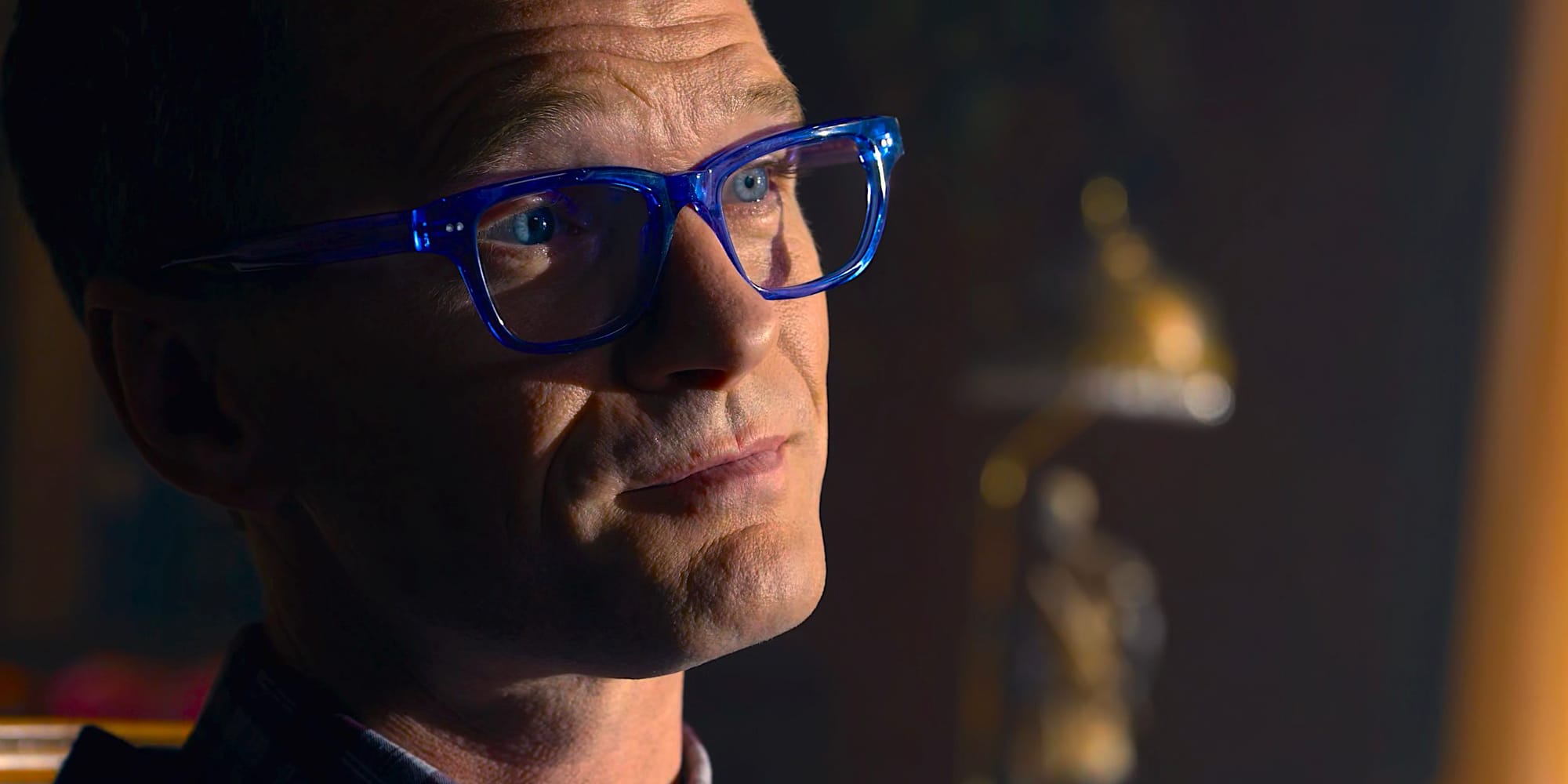
Once Neo re-learns how to use the power of the One—once he’s reminded that he’s doing this because he loves Trinity—he has no trouble defeating Smith. The Analyst on the other hand, has learned to wield bullet time, so that he can make Neo so comparatively slow that it’s trivially easy to avoid anything he might try. It becomes an updated version of the Architect scene in Matrix Reloaded, with the new creator of the new Matrix delivering a chilling monologue to a hapless Neo. As the Analyst puts it
All that pain and suffering, only to learn that the world doesn’t end when you do.
In the original trilogy, Neo’s love for Trinity and her faith in him are the core of what lets him overcome the limitations forced on him by the system. The Analyst found that he could maintain a highly stable Matrix as long has he had both of them in it but not too close to one another. Like Smith, he points out that humans need some amount of suffering to accept a simulated reality, but his superior understanding of human nature makes his system’s torments subtler and more endurable. He wants to put humans into just the right level of discomfort to allow just enough hope to keep people going, since that's optimal for power generation. When suffering appears to have meaning, people are better able to endure. That let the Analyst create a much more stable system, which avoided the failed paradisical Matrix and the Architect’s mechanistically flawed version in favor of one whose flaws are intimately tailored, like a social media algorithm. As Bugs puts it:
That’s what the Matrix does. It weaponizes every idea. Every dream. Everything that’s important to us.
I think the biggest theme that’s emerged here is the idea that the heroic narratives we’ve been fed, the media that shapes how we see the world more than we’d like to admit, don’t prepare us for the complexities, ambiguities, and dilemmas of the real world. Neo’s heroism, his victories against oppression, are important but not sufficient. He created a path beyond the Machines’ worldwide captivity of mankind, but that didn’t solve other, even more difficult problems. The Machines need resources to survive, and the Matrix is the most effective way to obtain those resources. While coexistence isn’t impossible, it's not easy either.
At the end of the movie, it turns out that Trinity too has a power like Neo’s. The movie isn’t explicit about the specific in-universe reason, but thematically it shows how the One alone was never sufficient. Even when Neo was saving humanity in the original trilogy, he needed support from many different people (including synthients), and this is a final deathblow to the One as a singular savior out of the American monomyth. When Neo and Trinity pay a final visit to the Analyst, they seem to be so strong that he’s powerless to defy them. He tries to talk them into surrendering and going back to the pod, saying of the plugged-in humans, “They don't want freedom or empowerment. They want to be controlled. They crave the comfort of certainty.” Instead, Neo and Trinity laugh and say they’re going to remake the Matrix. It seems they now have the power that Morpheus wrongly believed would be the purview of the One.
In the past I’ve thrown around ideas for writing a story that treads similar ground as The Matrix but fixes the issues I see with it. After this in-depth look, I’ve come to the conclusion that (1) despite its flaws, the trilogy is much more sophisticated than I realized and (2) improving on it while achieving the Wachowskis’ sky-high ambition would be incredibly difficult. They’ve fused cyberpunk, martial arts, a deconstruction of messiahs and hero narratives, and a quasi-Gnostic questioning of the nature of reality into a single narrative that resounded with the world at large. It’s one of those works that was just the right kind of weird to earn a place in the zeitgeist, to the point where, like Casablanca, there are probably a bunch of kids who know it more from references in other works. Resurrections tells us that that kind of fame is a mixed blessing, that reaching everyone really means reaching everyone, yes including those assholes.