Home Again

Maybe it’s because I’m getting older, and maybe it’s just the state of the world, but I’ve been thinking about the past a lot lately. Specifically, my own past, something I usually don’t dwell on too much. My mind wanders to a scenario where my present-day consciousness winds up in my body as of 2000, and I think of how different things are and what I’d try to do differently. I’d presumably try to find a way to stop 9/11 from happening, potentially saving the lives of 3,000 regular Americans, 4,500 American troops, and a million Iraqis. But also, I’d be back in a world before smartphones, before everyone had the internet in their pockets. My current internet-poisoned sense of humor would probably be baffling to a lot of people, and I’m not sure I could explain what I mean by "Weird flex but okay" or "Ken Bone milkshake ducked." There are certainly some things I’d do differently, but I can’t think of any colossal blunders I’d want to fix. The friendships that didn’t work out went that way for a reason, and if I’d known then what I know now, I wouldn’t have tried having a girlfriend, because I now understand that I’m aromantic. There are things I miss, especially with how my friends and I were able to get together to play TTRPGs regularly, and how some things—like anime, the internet, and PlayStation—were new and exciting. I also definitely wouldn’t have my first ever job be at Radio Shack.
During the pandemic my roommate and I got into the habit of regularly watching stuff together. It started because I was watching The Orville in the living room and he got sucked in, and we watched a succession of other shows (and the occasional movie), until we grew tired of the ritual. It was in that context that I finally got around to watching Twin Peaks all the way through, and I was seriously hooked. I went on to explore a lot of David Lynch’s other works, and while his films tended to be darker and more challenging (one review on YouTube called Inland Empire “the Dark Souls of David Lynch films”), there’s a lot there to dig into.
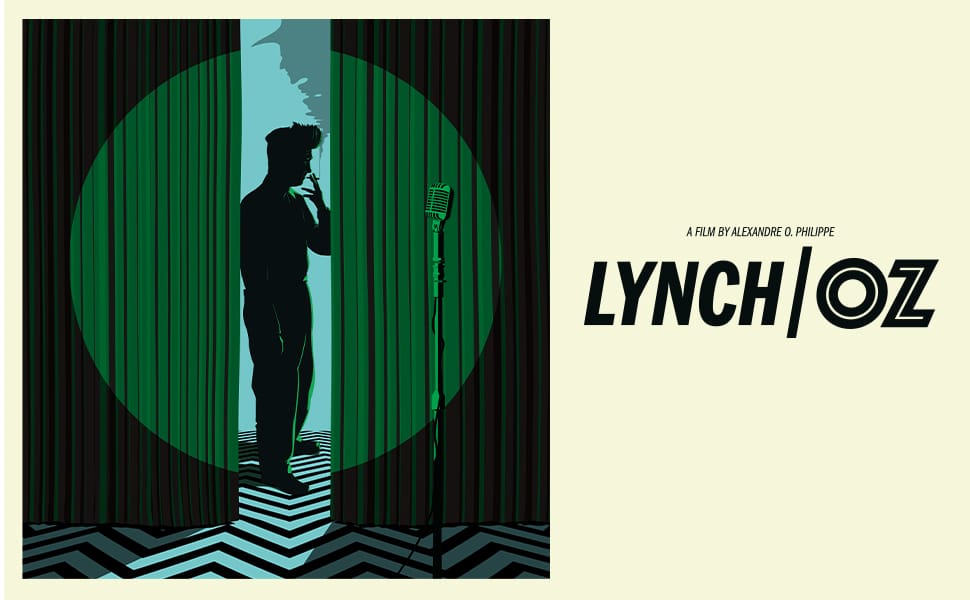
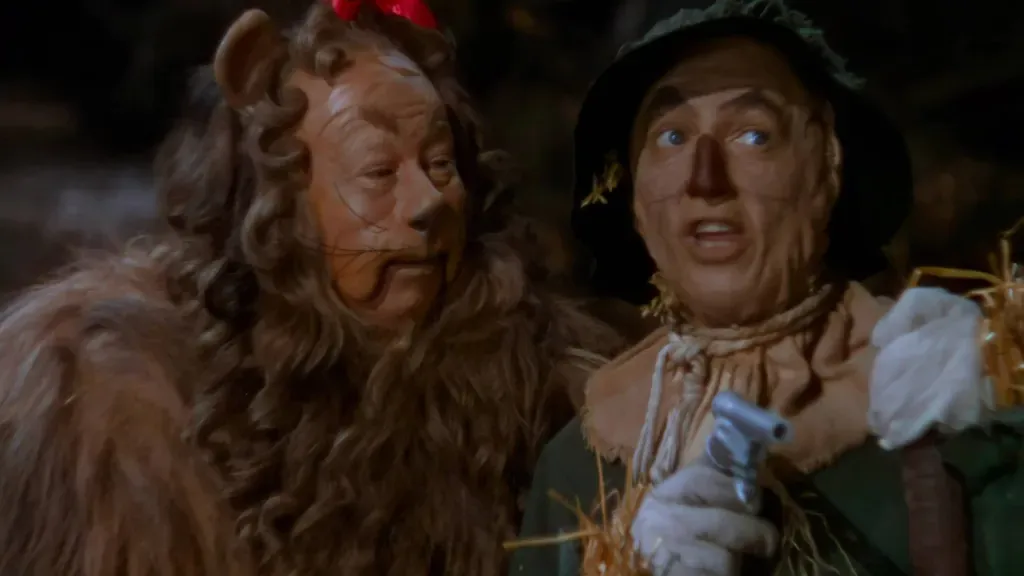
That helps explain why I was so interested in Lynch/Oz, a documentary where several filmmakers share their insights into Lynch’s works and The Wizard of Oz, how that film influenced him, and how his works in turn influenced them. The Wizard of Oz didn’t do all that well in theaters, but yearly showings on TV turned it into an institution, helping it burrow deep into the American psyche. I did watch it on TV as a kid, but it doesn’t have a place of honor in my heart the way it does for many people, including David Lynch. That's the way of things, and plenty of media that was special to me (Project A-ko, Galaxy Fraulein Yuna, etc.) isn't nearly as special to most people. The Wizard of Oz is one of those works that’s a victim of its own success, weighed down with its own context. I hadn’t watched it in ages when the RiffTrax got me to see it again with jokes added, and I realized that it’s one of those works with a deeply strange sensibility and exceptional craftsmanship that speaks to something deep within. Also, not many people remember that there’s a bit where the Scarecrow has a gun.
Today we have a whole genre of isekai (異世界) fiction in Japan, which has become downright dominant. Isekai is ultimately a Japanese take on portal fantasy, the fantasy subgenre about people from earth finding themselves in a fantastical world. Works like Alice in Wonderland and A Connecticut Yankee in King Arthur’s Court are early portal fantasy/isekai stories, and so is The Wizard of Oz. Western portal fantasy often presents narratives where returning home is something good, natural, and even inevitable. This even holds true in some newer entries in the genre like Amphibia.
Japanese isekai stories often fall at the opposite extreme, with protagonists who can’t get home, and might not want to if they could. While there are certainly worse places to be than Japan, I see a lot of Japanese media that conveys a powerful ennui, a feeling that life is pointless and the best people can hope for is an escape. There are Japanese people withdrawing from society entirely to become NEETs, a birthrate crisis that may render their country unrecognizable, and the less than encouraging state of the wider world. For a time, things like the sekai-kei genre (which is about human connection in a dying world) and stories about shinigami (death reapers) were fads, but isekai took hold at least as thoroughly as the moé trend of the 2000s, with no signs of slowing down. The cliché opening of an isekai story is that a guy who didn’t have anything better to look forward to than the next game release has a fateful encounter with Truck-kun and wakes up in a fantastical world where he’s OP and can do something that matters.

The TV broadcasts of The Wizard of Oz started in the 1950s, a time of great optimism about the future, at least for the people society wasn’t stomping on. That would change in the 1960s with Vietnam War and the assassination of JFK, when Americans started to have serious doubts about the nation’s supposed benevolence. Frank Baum’s Kansas is colorless, and threatening the leach the color out of Dorothy as it did her aunt and uncle. The film adapts this symbolism for the silver screen by showing all the scenes in Kansas in black and white, only revealing the film’s glorious color once Dorothy arrives in Muchkinland. (Though its TV broadcasts began in an era when a fair number of people would've been watching it on black and white TVs.) Despite that, at the end Dorothy misses her home—there’s no place like it after all—and gratefully clicks her heels together to awaken in Kansas. Frank Baum wrote 13 more Oz books, and other authors contributed more still. In the books Dorothy was hardly done with Oz, but the film was the first and last adventure for Judy Garland’s iconic portrayal of the character. As the film closes, she’s returned to life in Kansas, and Oz may have all been a dream.
(Fairuza Balk played Dorothy in the nightmare fuel unofficial continuation, 1985's Return to Oz. It was not anywhere near as successful as the original, either commercially or critically, but it did traumatize some kids so there's that.)
There are a few anime protagonists who end up going home, especially in titles that came before the current isekai craze like Magic Knight Rayearth, but more often than not the road to another world begins with dying in this one. Whether it ends up being heartwarming slice of life or fantasy Lord of the Flies, it’s a one-way trip. As with any dead person, Earth is no longer the isekai protagonist’s problem.
A few years ago my mother passed away. She’d been slipping deeper into dementia for several years, and then she had a serious stroke. She spent the remainder of her life in hospice care, slowly wasting away, until the end finally came. I’m still not sure how to process it, how to deal with the mom-shaped absence in my world. My family has its share of issues, but long ago I learned just how much worse it could be from friends and the world at large. I don’t know how to deal with an intelligent, creative, quirky, loving woman being gone. The minister at the Unitarian church called what we went through "the long goodbye," and our loss was simultaneously compounded and lessened by how protracted it was. More recently one of my closest friends lost his mother rather suddenly, and I have no idea whether that's better or worse.
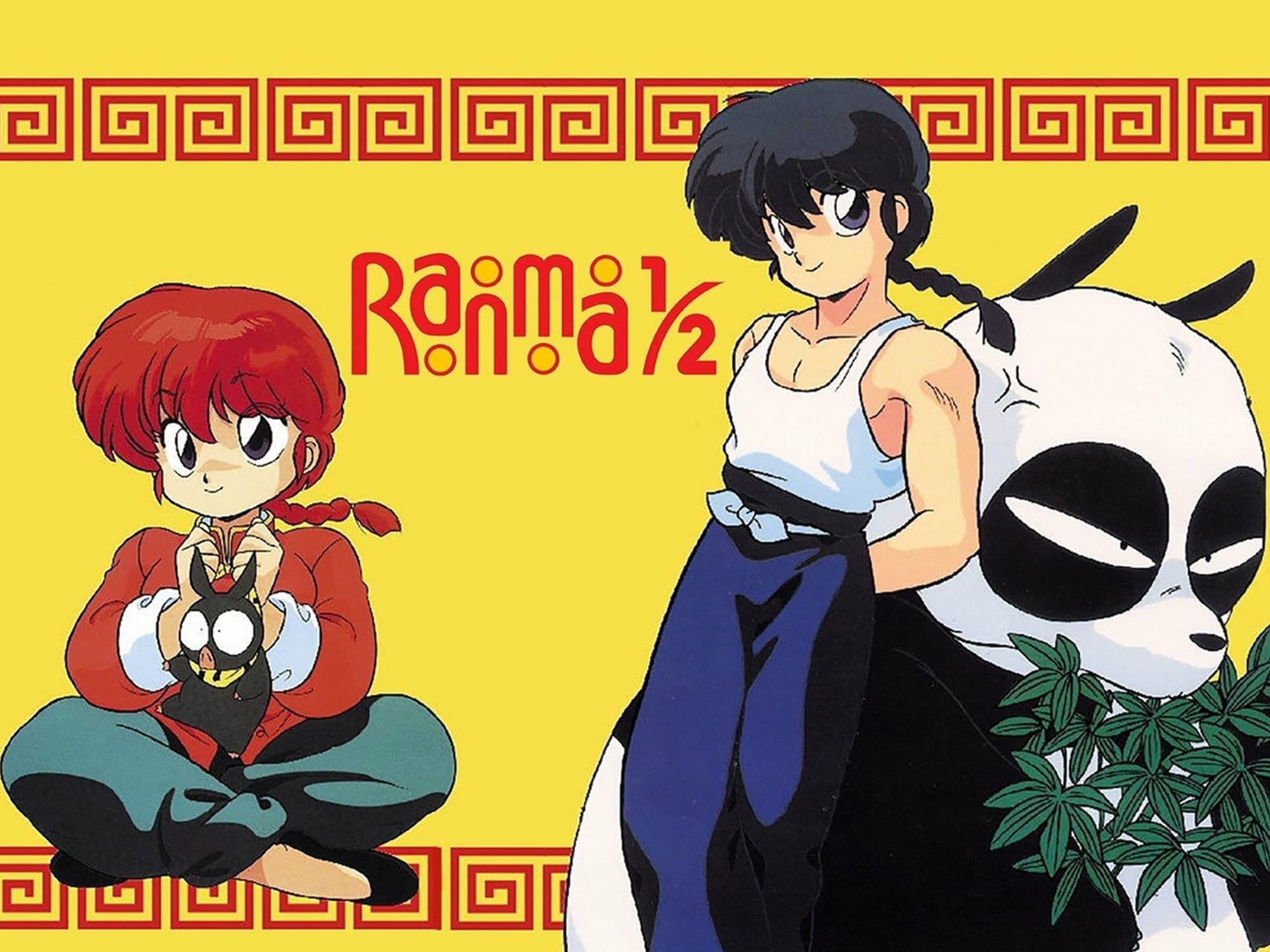
A while back I had a friend who posited that time travel is impossible because the universe is structured in such a way that the past doesn’t exist per se. Past events leave evidence and memories, but only the present moment is real. At the time I mostly just thought that cutting off the possibility of time travel was boring for storytelling, plus it’s something completely unfalsifiable in the real world. But whether or not his hypothesis is literally true, it is how the world works for us. The home where I lived with my mom, dad, and two sisters (plus my half-sister from Maine visiting every summer) lives on in memories and artifacts, but it isn’t something I can return to. I’ve sold off or discarded a lot of things from the past, but I still run into artifacts that remind me of what my life was like years ago. I still have my Street Fighter: The Storytelling Game books, Magical Project S DVDs, and Galaxy Fraulein Yuna 3: Final Edition for the original PlayStation. I remember when my website was called Ryoga’s Mementos (or Ryoga's Momentos for a while because I didn't know how it was spelled), and then Blackbird’s Domain. Maybe that’s why the isekai view feels more compelling to me. I still have things that make life worth living, but it’s easy to imagine a fantastical world being a significant improvement.
From the third season of Twin Peaks released in 2017, we learn that most of our favorites from the titular town went on to live their lives and find some kind of happiness despite the scars of Laura Palmer’s murder and what followed, but some decidedly did not. Audrey Horne is feeling her age and in a loveless marriage, while Sarah Palmer seems to be spending her days drinking, smoking, and waiting to die while something unnatural infects her home. Dale Cooper meanwhile is trapped in the red room while his doppelganger is wreaking having in the world. There are no happy returns for the protagonists of Mulholland Drive or Lost Highway, but rather reality bringing their delusions crashing down. David Lynch doesn’t generally give his characters a Dorothy-like return to a happy home (though he kind of does in Blue Velvet), but his stories are often about things not being how they should be. We want to see the cheerful, competent Dale Cooper in his element, but it’s not 1991 anymore. The Twin Peaks we knew, the ABC primetime series, ended a long time ago. The series ends with a disquieted Cooper standing on the street outside the Palmer home, saying, “What year is this?” The woman who is and isn’t Laura Palmer screams. The lights go out, and the series is over.
David Lynch passed away in January of 2025. He'd been in bad health due to having smoked regularly since he was eight years old. I never got to meet him, only knew him in the way a fan can know someone from a distance. I wish there was more of his work, but his existing body of work is nonetheless a towering achievement that gives him an unshakable place in history. I don't want to believe that death is truly the end (Lynch didn't think so), but we all have to live with not truly knowing. I can (and regularly do) revisit Twin Peaks, but I no longer live in the world where David Lynch is able to make new films.