Catch You with My Life Bag

“Heroes are powerful. Before you know it, the men and women in the wild-oat patch and their kids and the skills of the makers and the thoughts of the thoughtful and the songs of the singers are all part of it, have all been pressed into service in the tale of the Hero. But it isn’t their story. It’s his.”
—Ursula K. LeGuin, The Carrier Bag Theory of Fiction
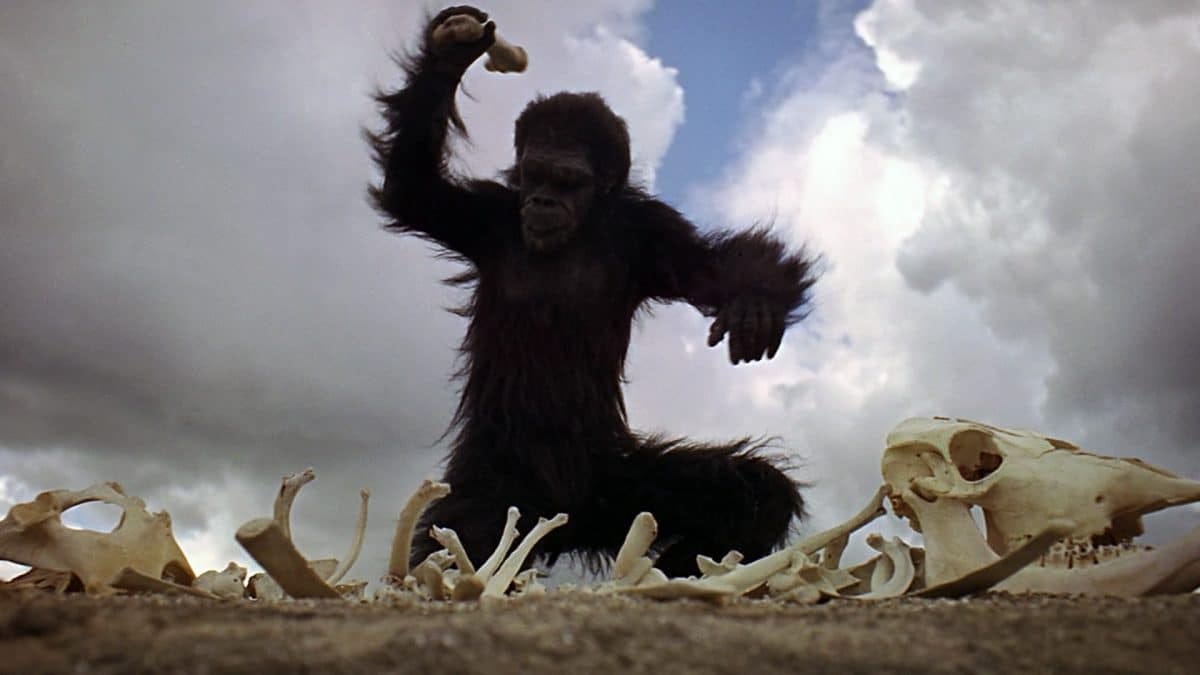
First published as part of an anthology of essays in 1988, The Carrier Bag Theory of Fiction is an important and influential essay on writing by Ursula K. Le Guin. Where 2001: A Space Odyssey posits that the first tool primitive humans devised was a weapon, she suggests that it may have been a bag for carrying things. It’s unlikely we’ll ever know for certain, but humans have been making and using various kinds of containers for at least 100,000 years, possibly millions of years. Weapons are also truly ancient of course, but we may have overemphasized their importance compared to peacetime innovations. A container means you can collect food and take it back with you, rather than only keeping as much as you can carry in your hands and stomach. For the earliest humans, that would have made a world of difference. The hunters who brought down wild mammoths likely weren’t contributing all that much in terms of food that people needed, but they came back with stories much more exciting than those of the gatherers and makers who sustained the tribe.
While the carrier bag theory is a clear contrast with 2001 as it relates to the development of humanity, it’s also a theory of fiction, meaning Le Guin was also advocating for a different kind of storytelling. In that respect, it’s a counter to the Hero’s Journey, asking us to come along for stories that aren’t just about adventure and violent conflict. We can and do tell stories about all the other parts of life, but tales of violent heroes have long overshadowed them. American culture especially tends to lionize men who dispense supposedly righteous violence, to the point where some people seem ill-equipped to live in peacetime. To Le Guin, violence was occasionally a grim necessity but never appealing or heroic. She wrote and advocated for novels to be more like a carrier bag, a medicine bundle that contains words and people, not “heroes.”
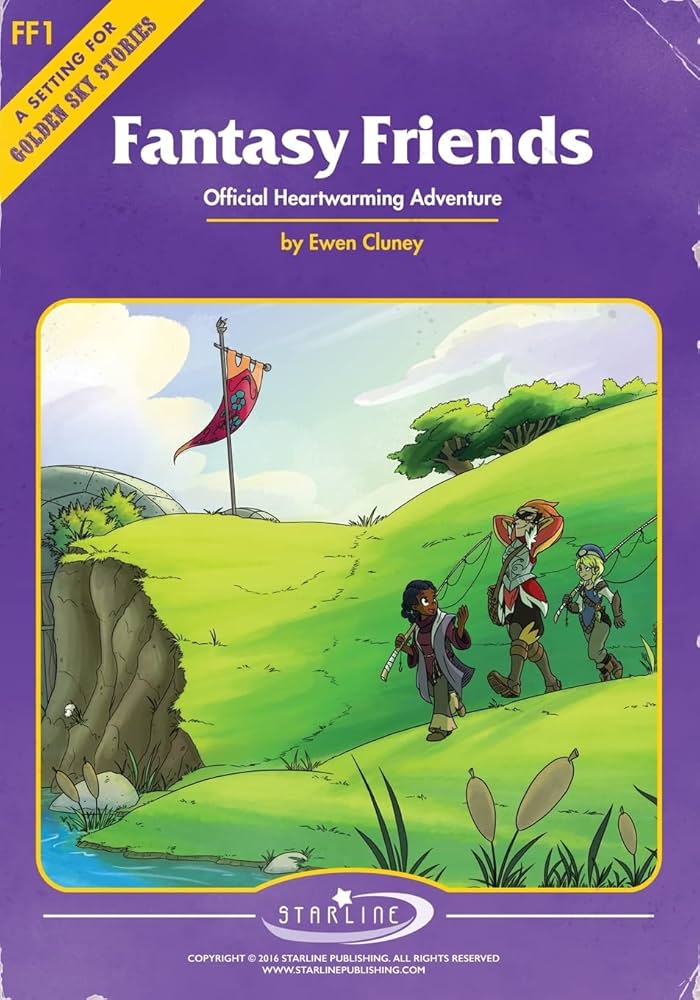
Golden Sky Stories is a tabletop RPG for non-violent, heartwarming stories set in an idealized Japanese countryside, which I translated into English from the original Japanese. I also created an original setting called Fantasy Friends, for stories with that same tone in a small town in a Western fantasy setting. For that book I set myself the task of creating 36 magical items. GSS is a non-violent game though, so I had to come up with magic items that serve exclusively non-combat functions. They can cause problems—in fact it’s better if they have drawbacks that help foster interesting stories—but anything that caused physical harm was out. I ended up buying the four volumes of Encyclopedia Magica, a compendium of every single magic item in Dungeons & Dragons up through its publication during the AD&D 2nd Edition era. Despite having thousands of items to go through, it was still incredibly difficult to come up with non-combat ones. In practice D&D doesn’t have to be nearly as hack-and-slash as some of its critics claim, but its rules and character options do heavily slant towards combat. Despite having that encyclopedia, I still had to look elsewhere for inspiration to fill out the full 36 items.
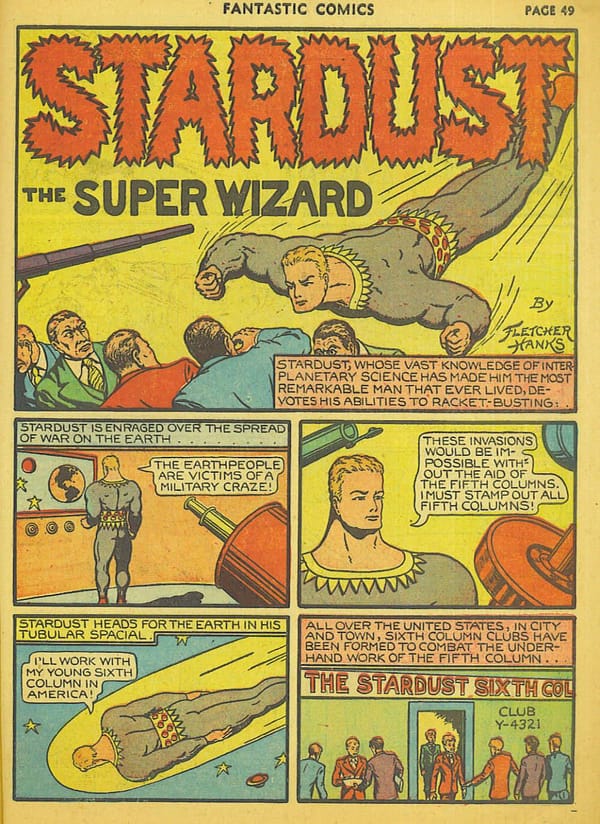
Superhero comics predate D&D by several decades, but they’re part of the same broad culture that prizes heroic violence. The word “hero” is right in the name, and the genre follows the general definition of what that means that was in American culture, and which Joseph Campbell formalized in his Hero’s Journey “monomyth.” As the carrier bag theory demonstrates, this is a narrow view of humanity’s myths and stories, a result of Campbell ignoring or distorting large swathes of folklore. It promotes heroic violence at the expense of every other kind of story, and as with capitalist realism, superheroes are a vector for a much larger cultural movement. People have called superhero stories things like “modern myths.” There’s some truth to that, but even setting aside how folklore isn’t normally in the hands of corporations, they tend to fit Joseph Campbell’s ideas about myth more than what myths as a whole are actually like.
Not unlike with D&D’s magic items, if you look through lists of superpowers in a wiki or TTRPG, you’ll inevitably find that most of them are for fighting. Superpowers are ultimately genre fiction nonsense though, so they can be whatever the writer wants them to be. That means that there can be characters with superpowers who can heal, build, grow, and any number of other non-violent activities with superhuman effectiveness. When I looked up a list of Marvel characters with healing powers, I got some notables whose powers can also heal (Iron Fist, Scarlet Witch, and Silver Surfer have done so on occasion), and several obscure characters I’d never heard of (Triage, Panacea, Elixir, Healer, etc.). It’s not that these things aren’t possible in the worlds of superhero comics; rather, they’re seldom in the spotlight. “Carrier bag” superpowers have enormous potential to help the world at large and for that matter the heroes themselves, but they’re inevitably sidelined.
Ryo Kamiya, the designer of Golden Sky Stories, thinks of his game as part of a wider genre he calls “everyday magic.” Everyday magic is essentially slice of life with fantastical elements, and they show that even characters with special powers can be part of carrier bag stories, tales that sit apart from the Hero’s Journey and its violent clashes. GSS isn't as much of a game for Studio Ghibli-inspired stories as Western fans sometimes assume, but it has precedent in things like the Witch Quest TTRPG and the anime/manga Natsume's Book of Friends.
Most superheroes are in effect vigilantes, acting as civilian law enforcement and rescue workers. Some are more official, acting as a paramilitary on behalf of governments. Rescuing people from burning buildings and runaway trains often figures into a superhero lifestyle, but fighting bad guys is their bread and butter. We occasionally see superpowers used for non-violent purposes, but it’s usually either a minor character or a major character finding an alternative use for their abilities.
Ultimately, I think the paucity of non-combat superpowers has to do with keeping a status quo world rather than engaging in worldbuilding. As things stand, most superheroes would be superfluous in a better world. To the extent that they could change things, they instead protect the status quo; they’re victims of capitalism’s shrunken horizons like everyone else.